





Two illuminated white Southern-style houses with wraparound porches and staircases, framed by a Spanish moss-draped tree on a quiet street at night.

Heat Pump Repair in Saluda, SC

Tell us about the job

Takes about a minute. No obligation.

RepairHeat PumpSaluda County, SC
Step 1 of 2

What ZIP code is the job in?

Saluda County has logged 103 severe weather events between 2015 and 2024, most of it damaging wind. That kind of wind drives branches and loose debris into an outdoor heat pump unit. Hail shows up in the same stretch too, and hail dents coils and bends fan blades without always stopping the unit cold. A heat pump can take a hit like that and keep running for months before the damage turns into a real failure. If yours has been through a storm, have it looked at even if it still blows air.

5 months
November through March, your system heats
5 months
May through September, it cools
35°F
the average winter night it heats against
91°F
the average summer afternoon it cools against
Isometric line illustration of a cutaway house showing interior rooms with furniture, ceiling ductwork, and an outdoor condenser unit connected by lines along the exterior wall.
Your system heats November through March and cools May through September.

NOAA nClimDiv, 1991–2020 normals

Half the homes in Saluda County were built in 1987 or earlier.

An older house doesn't mean an older heat pump. Check what's actually outside before you guess.

November is when a weak heat pump finds out

Cooling runs May through September
Heat runs November through March
Power costs 14.23 cents a kWh statewide

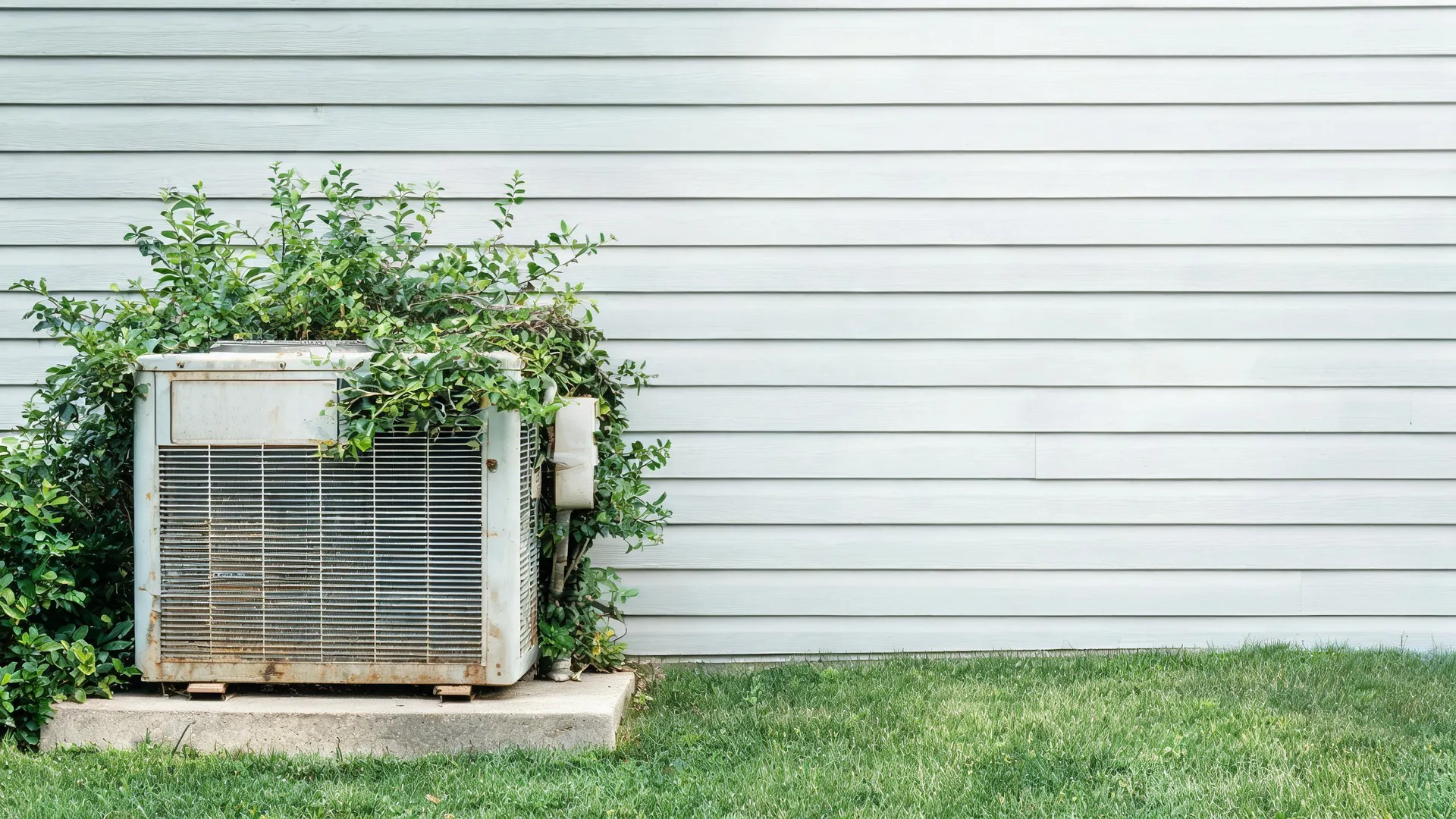
A bent fan blade or a dented coil won't always show up as a dead unit. It shows up as a system that runs longer than it used to, or struggles to hit the temperature you set. If a storm has come through since the outdoor unit was last checked, mention that to whoever comes out, even if the only symptom so far is the system working harder than it should. A tech can tell in a few minutes whether what they're looking at is cosmetic or something that takes the unit down in a month or two.

Get it checked after a storm

Storms hit hard here. If the outdoor unit took hail or debris, have it checked even if it still runs.

Find a contractor
A white mini-split heat pump outdoor unit mounted on a concrete pad beside a gray-sided house, surrounded by gravel and green shrubs.

What runs today decides what breaks next month

A heat pump that's struggling doesn't fail on its own schedule. It fails on a timeline you set by how long you let it run that way. A refrigerant leak starts small, but the compressor keeps pulling on a charge that's lower every week, and a compressor doesn't take that kind of strain forever. A fan motor with a bad bearing will keep spinning for a while, loud and hot, until the bearing seizes and takes the motor with it. Even a dirty coil makes the system run longer to do the same job, and that extra runtime wears on parts that were built for normal cycles, not stretched ones. None of this means shut the system off and wait. A strange noise, a weak flow of warm air, or a longer runtime is the unit telling you something now, while it's still a repair and not something bigger.

Short cycles, warm cycles

A heat pump that shuts off a few minutes after it starts, then kicks back on again soon after, isn't resting. Something is telling it to stop early, a sensor reading wrong or a coil icing over. If the air coming out doesn't feel as warm as it used to, the system may have switched into backup heat without you noticing, and that's a sign the heat pump side isn't carrying the load anymore.
What it means for the call

Tell whoever comes out exactly what you're noticing, not just that something's wrong. Short cycling, lukewarm air, a hissing sound by the outdoor unit, ice on the coil in mild weather. Each of those points a tech toward a different part before they even open the panel.

Most heat pump failures trace back to a handful of parts. The reversing valve is one. It's what switches the system between heating and cooling, and when it sticks, the unit can get stuck blowing the wrong temperature or stop switching modes at all. The capacitor is another. It gives the compressor and fan motors the jolt they need to start, and a weak one leaves you with a unit that hums but won't start, or a fan that spins slow. Refrigerant leaks cause a different kind of trouble, not sudden but slow, as the compressor works harder to make up for a charge it doesn't have. And outdoor coils get blamed less than they should. A dirty or blocked coil can't dump heat properly, so the whole system runs longer and strains parts that weren't built for that kind of duty.

A heat pump that needs a part replaced isn't automatically done for. Compressors and reversing valves cost real money to replace, and once a unit is old enough, a tech may tell you straight that the repair bill is close enough to a new system that it's not worth it. Age matters here because parts further along in their life tend to fail again soon after, even when the immediate problem gets fixed. A system still under warranty is a different conversation than one that's been running for many winters already. Ask the tech what failed and why, not just what it costs to fix. A capacitor or a run of bad refrigerant from a slow leak is a normal repair. A compressor failure on an old unit is the kind of repair worth asking if it's the last one you want to make.