Profile view of a bearded man wearing a black baseball cap and a dark gray T-shirt against a plain light background.

Why your heat pump is blowing lukewarm air in South Carolina

RepairHeat PumpSouth Carolina
Step 1 of 2

What ZIP code is the job in?

Why is my heat pump blowing lukewarm air?

Your heat pump is running, you can feel air moving out of the vents, but it just isn't warm. In South Carolina winters, where most homes heat with electric heat pumps instead of gas furnaces, that lukewarm air usually means the system is struggling right when you need it most to keep the house comfortable for everyone in it.

A heat pump blows lukewarm air when it's stuck in defrost or losing refrigerant

A heat pump warms air by moving heat from outside air into your house, not by burning fuel, so the air coming out of your vents is naturally cooler than what a furnace puts out. That's normal. What's not normal is air that stays cool to the touch for long stretches, or air that turns cold when the system kicks into defrost mode to clear ice off the outdoor coil. A low refrigerant charge, a failing reversing valve, or a dirty outdoor coil can all keep the unit from pulling enough heat out of the air. On a cold morning here, that leaves rooms feeling drafty instead of warm, and it's worth having someone check it before the next cold snap.

A dimly lit bedroom at dusk with a made bed, a table lamp on a nightstand, and a condensation-covered sash window with a dark curtain.

It's past midnight and the room is thick. You kicked the sheet off an hour ago and it's still there, bunched and damp at the foot of the bed. The window's fogged along the edges where the humid August air meets the glass. You get up and stand under the vent, holding your hand to it. Air is moving, you can feel it push against your palm, but it isn't cold. It's barely cooler than the room. Down the hall a door is cracked so the air can reach the other bedroom too, for whatever good that does. You lie back down on the dry side of the mattress and wait to see if it changes.


A gray outdoor condenser unit on a raised pad beside a house with horizontal lap siding, with refrigerant lines, conduit and an electrical disconnect box on the wall, and shrubs on a mulch bed to the left.
A clean heat pump moves air freely around the coil and fan, so it can pull enough heat from the outside air to keep vents warm.
A weathered gray outdoor condenser unit on a concrete pad beside a house with horizontal vinyl siding, with conduit, refrigerant lines, and an electrical disconnect box on the wall behind it.
Dirt packed into the grille and dead leaves piled against the base choke airflow, and that's often why the air coming out stays lukewarm.

A heat pump doesn't burn fuel to make heat. It pulls warmth from the outside air and moves it indoors, so vent temperatures run lower than what a gas furnace puts out even when the system is working the way it should. That's just how the equipment operates. Problems show up as changes on top of that baseline. The outdoor coil can ice over in cold, damp weather, and when it does, the system briefly reverses itself to melt the ice, sending cool air through the vents for a few minutes before switching back. A refrigerant leak means less heat gets carried in from outside at all. A reversing valve that sticks partway leaves the system caught between heating and cooling, neither one fully. The auxiliary heat strips that are supposed to carry the load on the coldest days can fail quietly, leaving the heat pump to struggle alone. And sometimes the thermostat itself is the issue, set to emergency heat or stuck in the wrong mode, with the fan running while the compressor sits idle.

Why the Air Runs Cool

  • A heat pump moves heat instead of making it, so the air at the vent normally runs around 90 to 95 degrees, cooler than a gas furnace's output.
  • When the outdoor coil ices over, the unit switches into defrost and briefly reverses the cycle, pushing cool air through the vents for a few minutes.
  • A low refrigerant charge means less heat gets carried in from outside, so the air reaching the room loses most of its warmth along the way.
  • If the reversing valve sticks partway, the system can run caught between heating and cooling modes, which shows up as weak, lukewarm airflow.
  • Auxiliary heat strips are supposed to kick in when outdoor temperatures drop hard, and if they fail, the heat pump alone may not keep up.
  • A thermostat set to emergency heat or stuck in the wrong mode can leave the compressor off while only the fan runs.
A gray-haired woman in a cream knit sweater stands in a dimly lit kitchen at night, looking to her right, with a round loaf of bread in the foreground and a dark window and potted plant behind her.
A woman and a sleeping child wrapped together in a cream knitted blanket on a couch, with a potted plant, framed photo and lit lamp in the background.
A beige outdoor condenser unit on a gray pad beside a house with gray horizontal siding, with refrigerant lines and an electrical disconnect box on the wall, bordered by dark mulch, a stone retaining wall with shrubs, and a paver walkway.

A local pro for your heat pump repair

Only one pro gets your request, so you hear from one company.

Say what's going on with your heat pump, and a pro who works on them reaches out.

Find a heat pump pro

It costs nothing to send, and you don't have to hire anyone.

A man seen from behind raises his hand to wave at a woman standing in the open front doorway of a single-story house with gray shingle siding, white columns and a gabled porch entry.

What this means for your house

A heat pump stuck on lukewarm air still runs the same amount, maybe more, trying to reach the temperature on your thermostat. Since most homes in South Carolina heat with electricity, that shows up on your next bill before it shows up anywhere else. Meanwhile the rooms farthest from the unit stay cool no matter how long it runs, and whoever is home during the day feels that first.

If the outdoor unit is icing over or the system has lost refrigerant, the problem doesn't fix itself, and it tends to get worse through the rest of the winter. A contractor who works on heat pumps in this area through the cold months knows what tends to fail first in this kind of weather and what to check before anything gets replaced. Once you request service, you're matched with one licensed local contractor, so you're dealing with a single visit from someone who already knows what to look for, not a string of calls to sort through.

A gray upholstered sofa with a textured cushion sits beside a dark round side table holding a vase of green foliage, with a table lamp and sheer-curtained window behind.
A woman with long wavy brown hair in a grey ribbed sweater sits on a couch indoors, looking toward a window, with a potted palm-like plant and fireplace behind her.
A woman with long brown hair wearing a green V-neck top and beige cardigan sits on a light sofa, looking off to the side, with a dining table, lamp and framed picture in the background.
A woman with long dark hair in a cream knit sweater sits on a beige sofa indoors, looking toward a bright window with a houseplant and framed picture in the background.
A woman with long dark hair in a green knit sweater sits on a couch indoors, smiling and looking toward a window with a blurred room behind her.

Is this something you'd notice just walking through the house

You'll likely feel it before you think about it. A room that never quite warms up no matter where you set the thermostat. Vents blowing but the air at your hand feeling closer to room temperature than warm. The unit outside running almost constantly, sometimes still going when you check on it at night. Some households notice the system cycling on and off more than it used to, or a room farther from the unit staying cooler than the rest of the house. If it's been going on for a while, you might also notice the outdoor unit looks iced over more often than it used to, or stays that way longer after defrost. None of this is dangerous on its own, but a system working this hard for this little heat is one that's more likely to fail outright when you need it most.

A gray outdoor heat pump unit with a large fan grille sits on a concrete pad beside a house with horizontal lap siding, next to a green shrub, mulch bed, and lawn.

Running clean

Air moves freely around the coil and fan, so the unit pulls heat from outside air without a fight. The coil stays clear, the fan isn't straining, and the warm air reaching your vents reflects what the system is actually capable of putting out.

An outdoor air conditioning condenser unit with a top fan grille sits on a concrete pad beside a house with horizontal siding and a concrete step.

Choked with grime

Dust and debris cake the coil fins and pack the grille, so the fan works harder to move less air. The unit still runs, the vents still blow, but what comes out has lost most of its heat before it ever reaches you.

Power costs 15.12 cents per kilowatt-hour statewide

At 15.12 cents per kilowatt-hour, a heat pump that's struggling to warm the air runs longer to reach the same setting on your thermostat, and every extra hour it runs adds up at that rate. Getting it fixed instead of letting it limp along keeps that from compounding over the winter.

EIA-861 2025 statewide residential average

A gray outdoor condenser unit on a concrete pad beside a white horizontal-siding house, with refrigerant lines and conduit running to a wall-mounted disconnect box, bare soil in front and a green shrub at left.

Clear pad, open airflow

Nothing sits against the cabinet, nothing blocks the sides. The disconnect box and lines run clean to the house. Air moves through the unit the way it's built to, and the coil can do its job pulling heat out of the cold air.

An outdoor air conditioner condenser unit on a concrete pad beside a house with horizontal lap siding, with a shrub to the left, bare dirt in front, and conduit and a metal disconnect box on the wall.

Crowded and closing in

The shrub bed has grown in close to the cabinet, narrowing the gap the unit needs to breathe. Keep an eye on growth near the coil and the clearance around the base. A unit working to pull air through a tight space is a unit more likely to fall behind on heat.

An outdoor air conditioning condenser unit on a concrete pad beside a house with horizontal siding above a brick foundation, with a flexible conduit running to a wall-mounted disconnect box.
Before you get your heat pump repair
A gray outdoor condenser unit on a concrete pad beside a beige vinyl-sided house, with a wall-mounted disconnect box, flexible conduit, mulch bed, shrubs and a concrete walkway in front.
After you get your heat pump repair
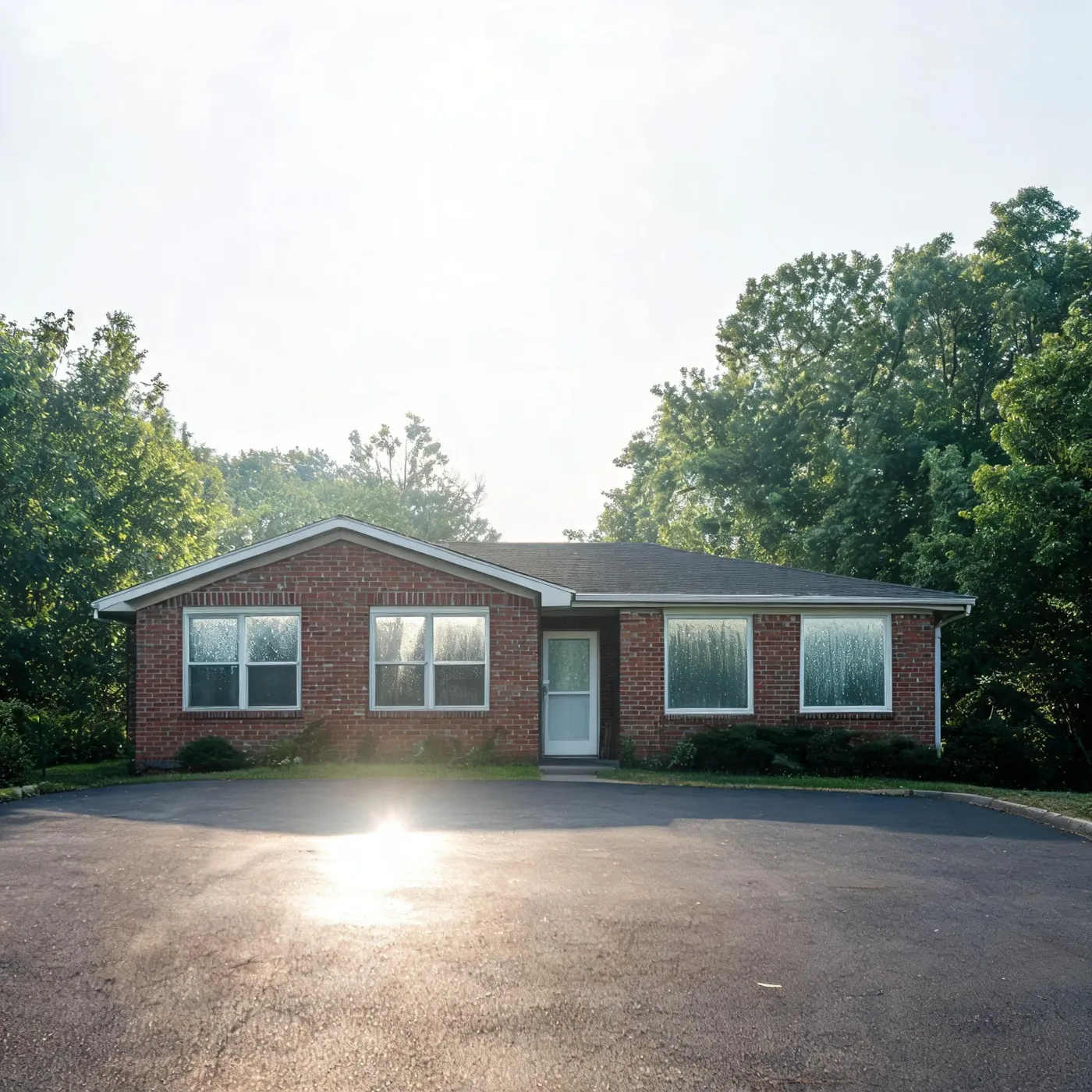
A single-story red brick ranch house with white-framed windows and a white storm door, fronted by a large asphalt parking area and backed by leafy green trees under a bright hazy sky.

That same humidity that fogs up your windows in August works against your heat pump come winter too. A summer dew point averaging 69°F means the outdoor coil spends the warm months pulling moisture out of thick air, and whatever residue that leaves behind doesn't just disappear when the weather turns. Grime on the coil cuts down how much heat the unit can pull from the outside air once winter sets in, which is part of why the air at your vents can end up running lukewarm instead of warm. Source: NOAA.

NASA POWER T2MDEW county cells weighted by homes

A heat pump blowing lukewarm air is telling you something specific: ice on the coil, a stuck reversing valve, a dirty filter choking airflow, or a refrigerant charge that's too low to do the job. None of that fixes itself, and running the system longer to compensate just adds to your electric bill without ever reaching the temperature you set. What helps is someone who works on heat pumps in South Carolina through every winter and knows which of those failures is most likely given what you're describing. When you request service through this page, you're matched with one licensed local contractor, not a handful of companies competing for your callback. That contractor can look at your specific unit, in your house, and tell you what's actually wrong instead of guessing from a list of possibilities. Until then, you know what's happening inside the system even if you can't see it: something is keeping your heat pump from doing the one job it has, which is turning cold outside air into warm air at your vents.

Sunlight falls across a beige upholstered sofa with a textured woven cushion and a chunky knit throw, beside a dark wood cabinet holding a ceramic vase with green leafy branches, near a white-framed window.
A sunlit corner of a room with a wooden side table holding a ceramic vase of green foliage and a wooden bowl, beside a light upholstered sofa with a knit throw and rust-colored pillow, with window shadows cast on a beige wall.
A sunlit room corner with beige walls, a white-framed window with sheer cream curtain, wood floor with a light rug, and a woven basket holding a knit blanket.
A beige ceramic vase holding a leafy green branch sits on a wooden cabinet in a corner, with sunlight through a sheer curtain casting leaf shadows on the wall.
A grey upholstered sofa with a rust-orange velvet cushion and a textured throw sits beside a window with linen curtains, next to a wooden side table holding a pale ceramic vase of olive branches.

Get the right pro for your heat pump

Your request stays with one local pro.

Get a local pro

No charge to send it. You decide if you hire them.