
Heat pump blowing cold air in Charleston, SC

RepairHeat PumpCharleston County, SC
Step 1 of 2

What ZIP code is the job in?

Why is my heat pump blowing cold air?

You've got the heat on, or you're trying to, and the air coming out of the vents feels cool instead of warm. In Charleston, where most homes heat with electricity through a heat pump, this is one of the most common calls a contractor gets once the weather turns cooler. Before you assume something is broken, it helps to know how a heat pump actually behaves compared to a furnace.

It's probably running normally, or it's stuck in defrost or backup mode

A heat pump doesn't produce the hot blast a furnace does. It moves heat from outside air into your home, so the air coming out of the vents is warm compared to the air in the room, not hot to the touch. That can feel cold on your hand even when the system is working fine. If the air feels truly cold, not just lukewarm, check whether the outdoor unit is running and whether it's covered in frost or ice. A heat pump that's frozen up, stuck in defrost, or running on the backup heat strips with a tripped breaker will push cold air through the house. Winters here are mild, so the unit isn't under heavy strain, which makes a true cold-air problem more likely a sign something needs attention than normal cold weather behavior.

A dark gray outdoor condenser unit on a concrete pad beside a house with beige horizontal siding, with a gray electrical disconnect box and conduit on the wall, mulch beds, a hosta plant, a shrub, and mowed lawn in front.

Running normally

A heat pump like this one cycles on and off through the day, and the outdoor unit stays reasonably clean, with the fan running free and the area around it clear. Set the thermostat to heat and the air at the vents should feel warm within a few minutes, not cold or lukewarm.


A weathered outdoor condenser unit on a concrete pad beside a house with light horizontal siding, surrounded by bare dirt and a shrub.

Signs of trouble

Grime caked across the grilles like this chokes off airflow to the coil, and a unit that looks like this often struggles to pull heat from the outside air. Add a refrigerant leak at that line and the system can run constantly while the house stays cold, which is when it needs a licensed technician to look at it.

Why does my heat pump need to work so well when it blows cold air here?

  • Winter nights average 41°F

    Winter nights here average 41°F, not freezing, but cold enough that a heat pump stuck on cold air won't keep a house comfortable overnight.

  • Heat runs November through March

    Heat runs November through March in Charleston County, so a heat pump blowing cold air during those months leaves you without warmth for days if it sits unfixed.

  • Cooling runs May through October

    Cooling runs May through October here, which means the same heat pump works most of the year and needs to switch modes reliably when fall comes.

NOAA nClimDiv 1991-2020

A white outdoor heat pump unit on rubber feet atop a concrete pad beside a light stucco wall, with gray siding and a small shrub at the left edge.

Defrost cycles feel like this

Every heat pump switches to cooling mode for a few minutes to melt frost off the outdoor coil, then switches back. During that time the air at your vents runs cold, sometimes with steam rising off the outdoor unit. If it clears up on its own and warm air comes back within ten or fifteen minutes, that was a defrost cycle working the way it should, not a breakdown.

A gray outdoor heat pump unit with a large circular fan grille sits on a concrete pad beside a house with horizontal siding, surrounded by gravel and grass, with a conduit and junction box on the wall.

Reversing valve stuck is different

The reversing valve is what switches the system between heating and cooling. If it sticks in the cooling position, the unit will run and the outdoor fan will turn, but every cycle brings cold air instead of warm, not just a short stretch during defrost. That's a mechanical failure inside the unit, not a frost issue, and it takes a licensed technician to open the unit and replace the valve.

A closed silver laptop and a white cup of coffee on a saucer sit on a wooden table in front of a wooden chair, a plain beige wall, a potted leafy plant and a window with greenery outside.

What this means for your house tonight

If the air stays cold past a few minutes, your house will keep losing ground. With heat running November through March here, a system stuck on cold air can't hold the inside temperature once the sun goes down, and on a 41°F night that shows up fast, especially in rooms farthest from the thermostat. Run it long enough and you're also running up a power bill in a place where electricity already costs more than most places you've lived, for air that isn't doing its job.

You could start calling around, explain the same problem to three different companies, and wait to see which one actually works on heat pumps instead of just furnaces and AC. Or you could put in one request and get matched with a licensed Charleston County contractor who already knows what tends to fail on these systems in this climate, the reversing valve stuck in the wrong position, a low charge, a thermostat set wrong for heat pump mode, and goes to your house knowing what to check first.

A large weathered ceramic vase and a shallow wooden bowl sit on a rustic wooden table beside a window with linen curtains, with a blurred sofa with cushions and a hanging fabric panel in the background.
A single-story red brick building with a hipped shingle roof and several white-framed windows, fronted by a large empty asphalt lot with sun flare, surrounded by green trees under a bright hazy sky.

Summer air in Charleston County holds a dew point around 72°F, according to NOAA climate records, which is high enough that the air feels wet even standing still. A heat pump works harder against air like that, and it leans on its reversing valve and defrost control all season just to keep up. When one of those parts starts to fail, cold air at the vents in July can be the first sign, not just a winter problem. Instead of sorting through that yourself, calling around to find someone who knows this equipment, and explaining the issue more than once, a local contractor who works on heat pumps through this heavy, humid air all summer can look at the pattern and know where to check first.

NASA POWER T2MDEW

Skip calling around

A stuck reversing valve or a defrost control that won't switch back isn't something you fix by waiting it out. It takes someone who can test the valve, check the sensor, and tell you which part failed instead of guessing. Finding that person yourself means searching, calling a few companies, explaining the same problem each time, then sitting with quotes to see who actually knows heat pumps and who just services furnaces. This page skips that. One request goes to a licensed contractor working in Charleston County, someone who sees this exact complaint every winter here and knows whether it's the valve, the board, or the sensor before they even open the panel. You're not fielding calls from five companies trying to win the job. Tonight, with the temperature dropping and your vents still blowing cold, that's the part worth not doing yourself.

Call around until you find someone who'll come out

Or get matched with a licensed local contractor who works on heat pumps all year in this area and already knows what a reversing valve stuck in cooling mode looks like in a Charleston winter.

A woman with shoulder-length dark brown hair in a cream knit cardigan sits in an upholstered armchair beside a window, looking off to the side, with a white bookshelf and potted plant blurred behind her.
A woman with her hair in a bun sits wrapped in a beige knitted blanket on a couch, holding a sleeping child against her chest in a warmly lit room with a lamp and houseplant in the background.

A heat pump makes warm air and cold air with the same parts, running them in reverse. The piece that decides which way it runs is the reversing valve, a slide of metal that shifts position depending on whether the system is set to heat or cool. A small solenoid coil pushes that slide one way or the other. When the coil weakens, the slide can stop halfway, or lodge on the cooling side and stay there. The defrost control board adds another layer. It watches for ice building on the outdoor coil, flips the system into cooling for a few minutes to melt it off, then is supposed to flip it back. If the sensor feeding that board is bad, the board can think the coil is still frozen long after it's clear, and it just leaves the system in cooling. Low refrigerant pressure causes a version of the same problem, since the valve needs the right pressure behind it to slide cleanly. In every case, the fault sits past the thermostat, so turning the dial up and down does nothing to fix it.

What's actually happening inside the unit

  • The reversing valve is a sliding metal valve that redirects refrigerant so the system can run either heating or cooling off the same outdoor unit.
  • A small solenoid coil pulls the valve's slide one way or the other, and when that coil weakens or sticks, the valve can lodge in cooling mode.
  • The defrost control board decides when to reverse the cycle to clear ice off the outdoor coil, then decides when to switch back to heat.
  • A failed defrost sensor can tell the board the coil is still frozen when it isn't, so the system stays in cooling far longer than it should.
  • Refrigerant pressure has to be correct for the reversing valve to shift cleanly, and a low charge can leave it stuck halfway between positions.
  • Once the valve or the board misreads the cycle, nothing at the thermostat will correct it, since the fault sits downstream of the thermostat's call for heat.
A middle-aged man with grey hair and a beard, wearing a grey knit sweater, sits on a light sofa in a sunlit living room with a houseplant, wooden cabinet and framed landscape picture behind him.
A man with greying hair and a beard in an olive sweater sits on a sofa in a living room, looking to his left, with an armchair, round side table and large glass doors onto trees behind him.
A gray-haired bearded man in a dark blue shirt over a white t-shirt sits on a leather sofa in a living room with built-in shelves, a floor lamp, an armchair and large windows, looking off to the side.
A man with gray-brown hair and stubble in a dark sweater sits on a light-colored sofa in a living room, looking off to the side, with a houseplant, framed picture, shelving and a sunlit window behind him.

Getting Warm Air Back

  • Warm air at the vents within a few minutes of setting the thermostat to heat is the sign the system is working again.
  • Cold air that lasts longer than a short defrost cycle usually points to a stuck reversing valve or a defrost control that won't switch back.
  • A licensed local contractor who services heat pumps all winter in the Charleston area can test the valve and sensor and name the failed part.
  • Working with one contractor instead of several means you explain the problem once instead of repeating it on call after call.
  • Someone who works on this equipment every winter here has likely already seen a reversing valve stuck in cooling mode and knows where to check first.
  • Getting the valve or control fixed is what brings the system back to holding your house warm overnight through the winter months.

A heat pump blowing cold air almost always comes down to two things. Either it's in a defrost cycle and will switch back in a few minutes, or the reversing valve or defrost control is stuck and it won't switch back on its own. You can tell which one you're dealing with by how long the cold air lasts. A few minutes with frost melting off the outdoor unit is normal. Longer than that, and the system needs a hand.

That's not something to wait out, especially once nights here drop into the 40s and your house needs real heat to hold its ground. It takes someone who can test the valve, check the sensor, and tell you which part actually failed. A contractor who works on heat pumps all winter in the Charleston area has likely already run into a reversing valve stuck in cooling mode more than once, and knows where to start looking before pulling the unit apart.

Getting matched with one licensed local contractor means you explain what's happening once, not three or four times to three or four different companies. No comparing quotes, no repeating yourself on the phone. Just someone local, familiar with this equipment and this climate, who can get the valve or control fixed and the air at your vents running warm again. Once that's done, your system goes back to doing what it's supposed to do, holding your house warm through the rest of the winter.

Corner of a room with a white window at left, a white fireplace mantel with dark stone surround at right holding a weathered clay vase of leafy branches, and a cream upholstered sofa with a knit throw and tan pillow in the foreground.
A cushioned window seat with a brown lumbar pillow beside a white-framed window overlooking green trees, next to built-in cream cabinetry with shelves holding ceramic vessels and a wooden bowl.
An entryway with a dark wood console table holding a stone vase of olive branches and a shallow wooden bowl, a woven basket on the lower shelf, a framed landscape print on the wall, and a glass-paned wood door at left.
A wooden vanity cabinet with dark knobs and a beige stone countertop holding a round terracotta vase with leafy branches, beside a wood-framed mirror and a white sink.
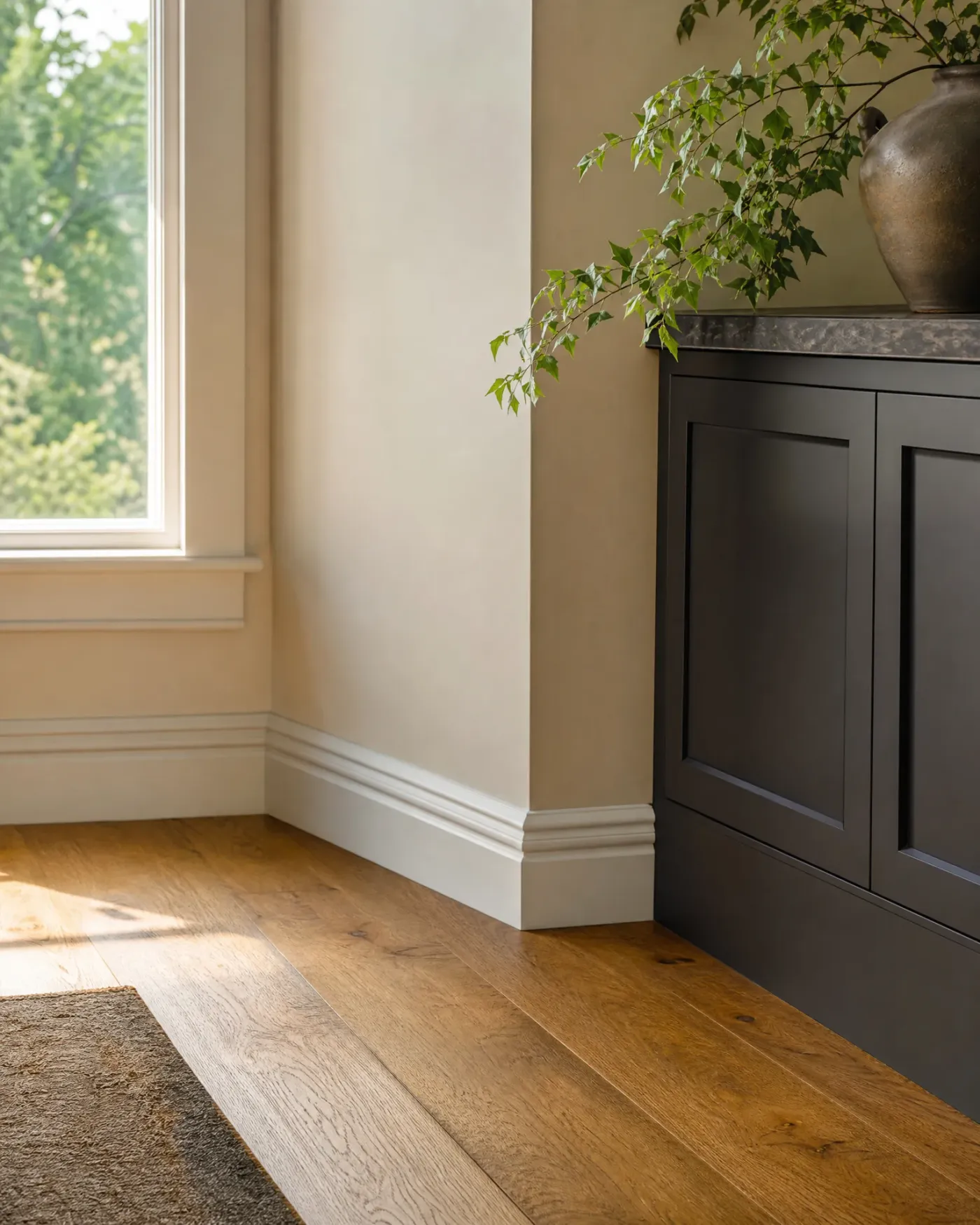
Sunlit room corner with wide-plank oak flooring, white baseboard molding and beige walls, a window at left showing green trees, and a dark cabinet at right topped by a stone vase holding a leafy branch.

Describe it once

A licensed pro who repairs heat pumps in Charleston County gets your request.

Fill out one form

You're not committing to anything by asking.