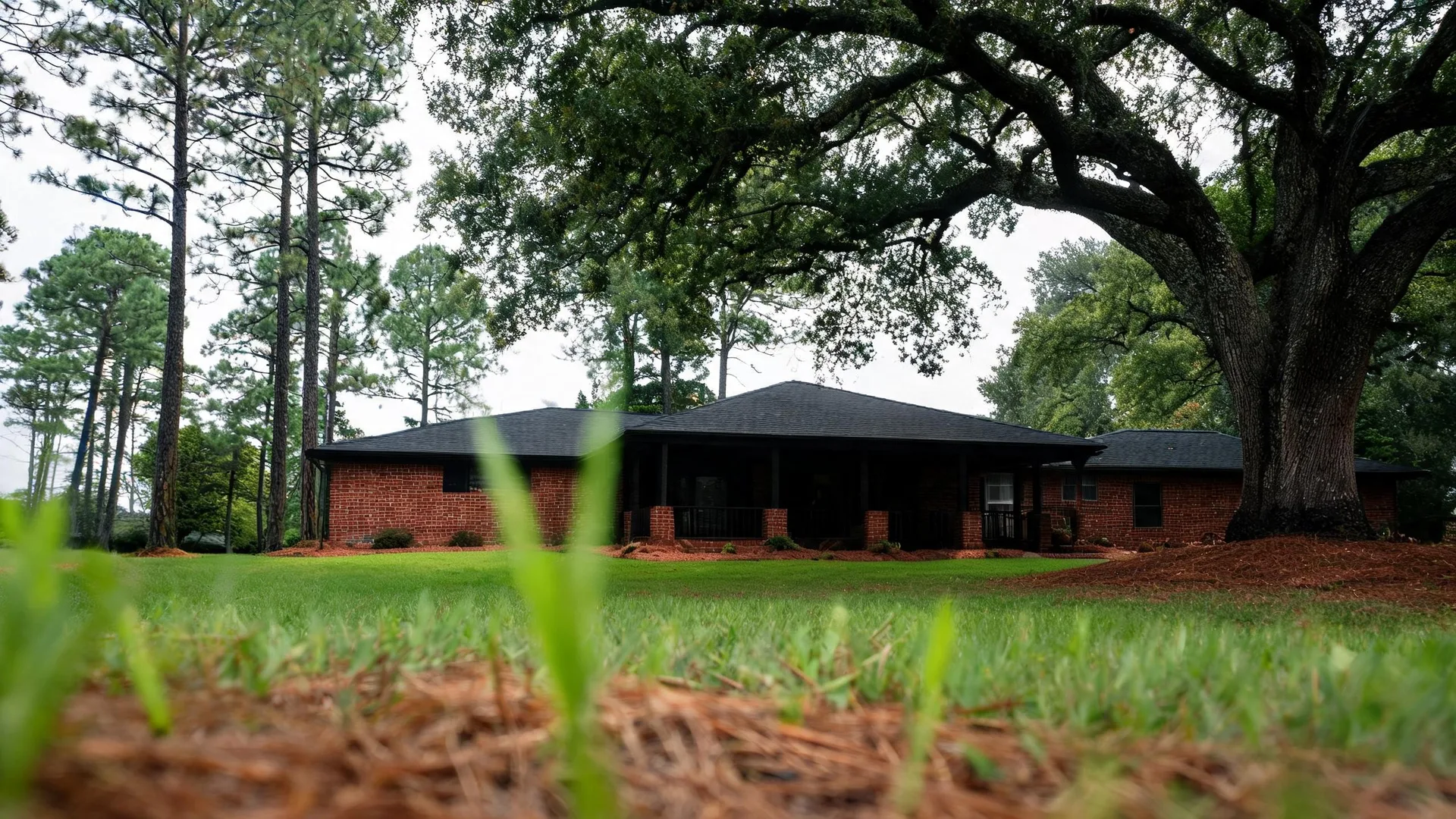


A single-story brick house with a dark hipped roof and covered porch, seen from a low angle across a lawn with blurred grass in the foreground, framed by pine trees and a large spreading oak on the right.

Heat Pump Repair in Manning, SC

Tell us about the job

Takes about a minute. No obligation.

RepairHeat PumpClarendon County, SC
Step 1 of 2

What ZIP code is the job in?

A tech starts outside at the outdoor unit, checking the compressor, the reversing valve and the refrigerant charge. That valve is what lets the system switch between heating and cooling, so if your heat pump is blowing cold air when it should be warm, that's one of the first things checked. Inside, the tech looks at the air handler, the coil and the blower motor, and pulls the filter to see if restricted airflow is part of the problem. They'll also check the defrost cycle and the sensors that control it, since a heat pump that won't come out of defrost, or won't go into it when it should, is a common complaint. Electrical connections and the capacitor get checked too, since a weak capacitor can make the unit struggle to start without shutting it down completely. By the end, the tech should be able to tell you exactly what's failing and what it takes to fix it.

5 months
November through March, your system heats
5 months
May through September, it cools
37°F
the average winter night it heats against
91°F
the average summer afternoon it cools against
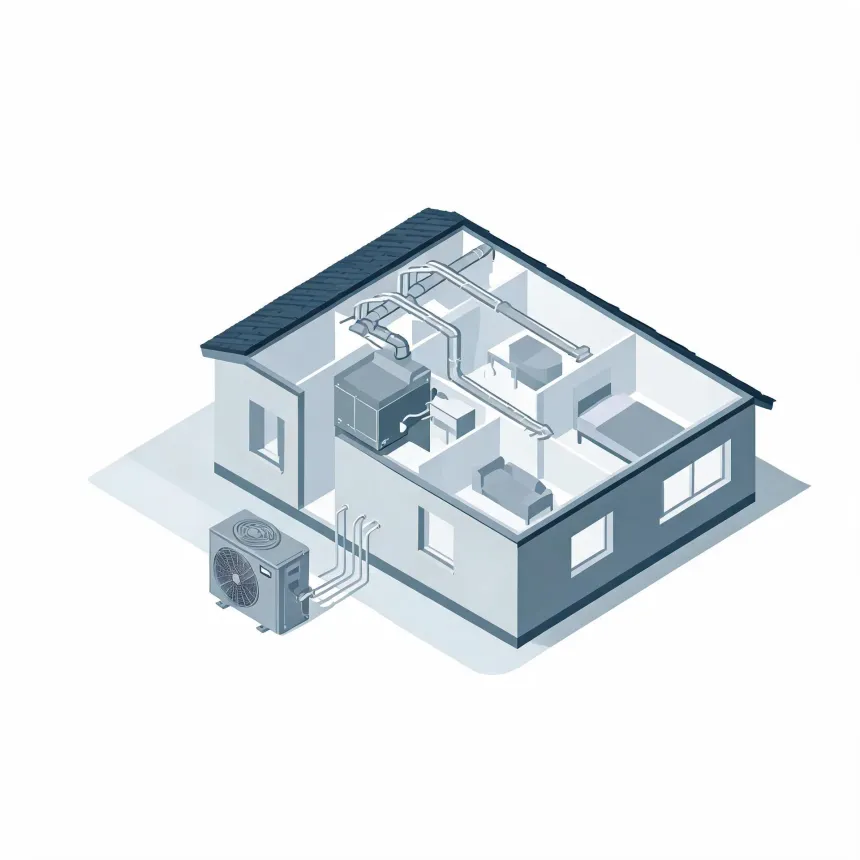
Isometric cutaway illustration of a single-story house showing interior rooms with ductwork, an indoor air handler unit, and an outdoor condenser unit connected by lines along the exterior wall.
Your system heats November through March and cools May through September.

NOAA nClimDiv, 1991–2020 normals

Half the homes in Clarendon County were built in 1990 or earlier, half in 1990 or later.

A heat pump's age matters more than the house around it. A worn capacitor or a stuck reversing valve shows up in old units and new ones alike.

November is when heat pumps here earn their keep. The unit switches over from cooling to heat, and that's when a weak part finally gets tested. A reversing valve that was sticking a little in September can fail outright the first cold morning it has to hold position. A capacitor that was marginal all summer may not have the strength to start the compressor once the system is working harder. If your heat pump struggled at all last spring, October is the time to get it looked at, before it has to run heat for the first time this winter.

Get the usual fix

Nothing about this area is especially hard on it. It's most likely the usual problem with the usual fix.

Find a contractor
A person in a dark long-sleeve shirt and tan work pants, seen from behind, carries a canvas tool bag while stepping up porch stairs toward a dark blue front door.
A white mini-split heat pump outdoor unit mounted on a concrete pad beside a gray-sided house, surrounded by gravel and green shrubs.

Outside, where the wind gets to it

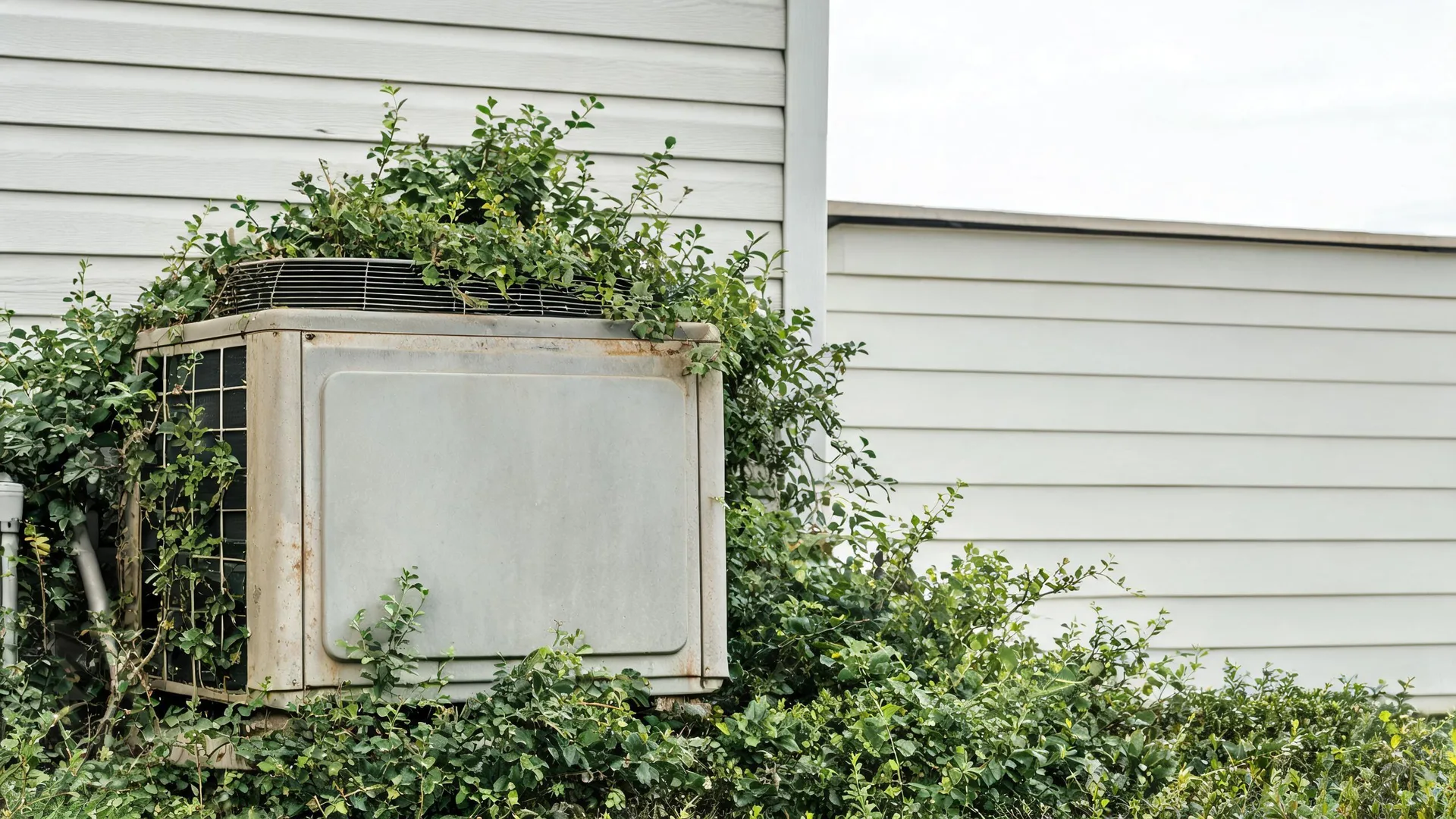
Clarendon County saw damaging wind 98 times between 2015 and 2024. That's the outdoor unit's problem more than anyone's inside the house. The fan, the coil fins, the refrigerant lines running to it all sit out in the open. Wind like that also knocks out power, and a heat pump that loses power mid-cycle doesn't always come back cleanly on its own. If yours has been acting up since the last storm, that's likely why.

A struggling compressor keeps drawing on itself

A compressor starting hard on a weak capacitor does not fail the first time it happens. Every hard start heats the windings a little more, and that heat breaks down the insulation on the wiring inside. Keep running it that way and a bad capacitor, a simple swap, ends up taking the compressor down with it.
Low refrigerant charge punishes the parts around it

A heat pump low on charge does not just heat or cool less. The compressor runs hotter trying to make up for it, and refrigerant that should stay in the lines can come back as liquid instead of gas, washing oil out of the compressor. Every day it keeps running low, that wear adds up on a part that was never the original problem.

A heat pump in trouble rarely hides it. You'll notice it running longer than it used to, or kicking on and off more often than it should. Air coming out of the vents that feels cool when it should feel warm is one of the clearest signs, especially if the outdoor unit is caked in frost and never seems to defrost. Some units start making a new noise, a clicking, a buzz, a hard knock when the compressor tries to start. Ice building up on the lines or the outdoor coil, even when it isn't cold enough to justify it, usually means the defrost cycle isn't doing its job. A unit that used to keep the house at an even temperature and now leaves some rooms noticeably warmer or cooler than others is worth a second look too.

Age by itself doesn't tell you whether to fix a heat pump or replace it. What matters more is which part failed and what else it may have damaged on the way down. A bad capacitor or a failed run sensor is a cheap, contained fix regardless of how old the unit is. A compressor that's failed, or a coil that's leaking refrigerant, is a different conversation, because those jobs can cost close to what the rest of the system is worth. The pattern matters too. One part failing once is a repair. The same unit bringing a tech back every season, for a different part each time, is usually the system telling you it's done. If a repair is only going to buy a season before the next part goes, that's worth knowing before you pay for it.