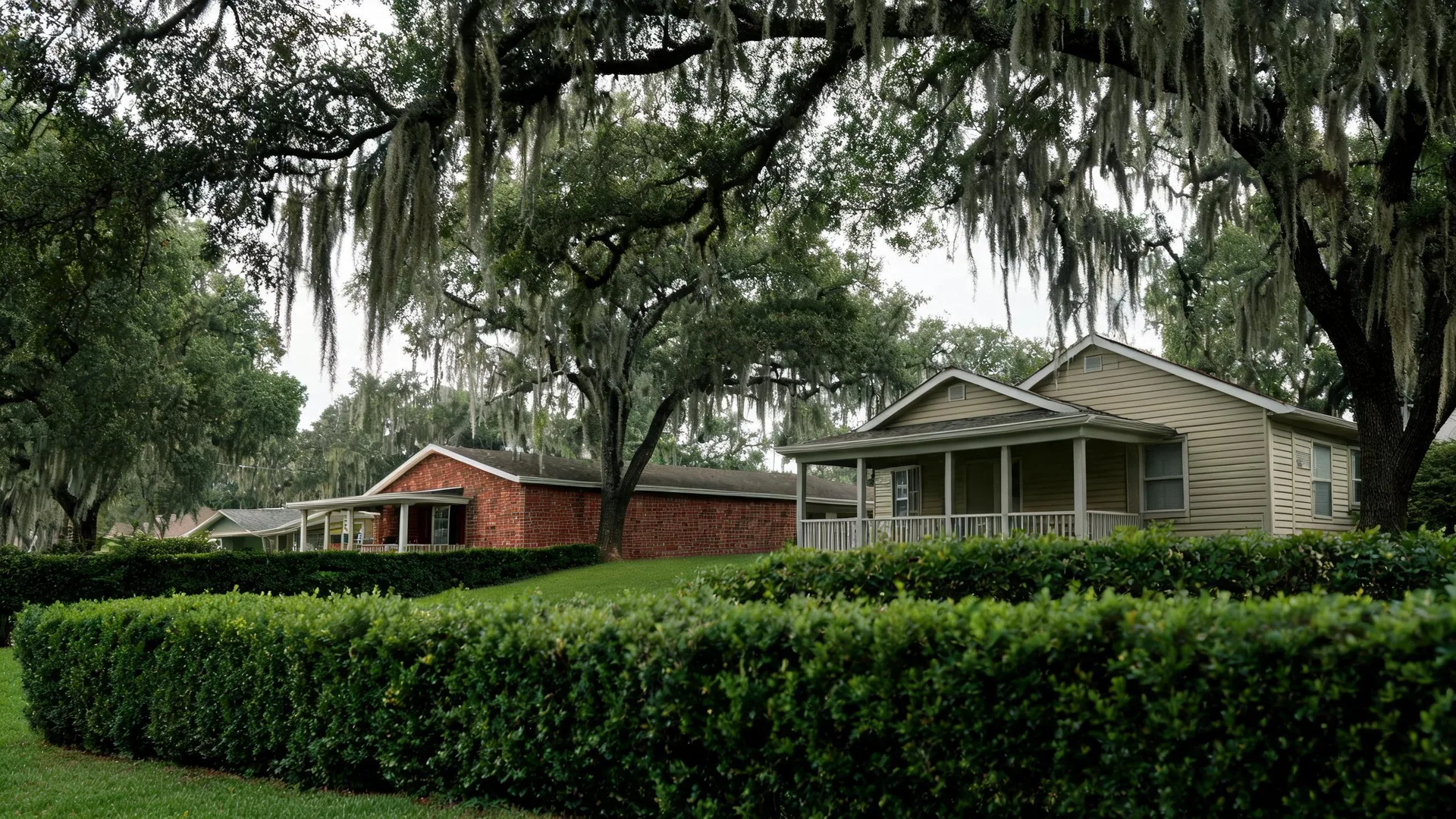
Single-story houses with a covered porch and a brick building behind a trimmed hedge and lawn, under large oak trees draped with Spanish moss.

Heat Pump Repair in Laurens, SC

Tell us about the job

Takes about a minute. No obligation.

RepairHeat PumpLaurens County, SC
Step 1 of 2

What ZIP code is the job in?

Warm air in winter means trouble

A heat pump in heating mode should put out air that feels warm at the vent, not just lukewarm. Air that feels barely different from room temperature often means the reversing valve is stuck or the system is low on refrigerant. Ice building up on the outdoor unit that never melts between cycles points the same direction.


Short cycling wears out the parts that start it

A heat pump that kicks on and shuts off every few minutes, instead of running a full cycle, puts extra wear on the compressor and the contactor every time it starts. Left alone, that pattern tends to end with one of those parts failing outright instead of just acting up.

5 months
November through March, your system heats
5 months
May through September, it cools
34°F
the average winter night it heats against
89°F
the average summer afternoon it cools against
Isometric cutaway illustration of a house showing interior ductwork, an indoor air handler, and beds, with an outdoor condenser unit connected by lines outside the wall.
Your system heats November through March and cools May through September.

NOAA nClimDiv, 1991–2020 normals

Heat pumps in Laurens County switch over to heating in November.

October is the month to get a weak one looked at, before the first cold stretch finds the part that was already failing.

Half these homes were built by 1985, and that's not what breaks a heat pump

Half the homes here were built by 1985
59 damaging wind events from 2015 to 2024
Power costs 14.23 cents a kWh statewide

Laurens County stays warm most of the year with only a short, mild winter, so a heat pump here spends more of its time cooling the house than heating it. That's normal for this part of the state, and it's not what wears a system down early. What does show up on the record here is wind. Laurens County has had damaging wind 59 times between 2015 and 2024. An outdoor unit that's been through one of those storms is worth a look even if it still runs, since a bent fan blade or a knocked loose line can act up weeks later instead of failing on the spot.

Get it looked at early

Problems tend to show up in the first weeks of the season, when the load hits a part that was already weak.

Find a contractor
A man in a cap, dark jacket and tan work pants carries a canvas tote bag as he steps up concrete stairs toward a blue front door, with a potted shrub beside him.
A dark gray heat pump unit mounted on a concrete pad next to a house with gray siding and a stone veneer wall.

A system that still runs is not a system that's fine

A weak capacitor still lets the compressor start most of the time, so the system keeps running and the owner keeps using it. Each hard start heats the windings a little more than a clean start would. A refrigerant leak behaves the same way. The system keeps producing some heat, so nobody shuts it down, while the compressor runs low on charge and low on the oil that charge carries back to it. A reversing valve that's starting to stick will still switch most of the time, until the day it doesn't. None of these show up as a dead system. They show up as a system that still runs, which is exactly why they get worse instead of getting fixed.

Check the filter first

A filter clogged with dust chokes airflow across the indoor coil. The system has to run longer to move the same amount of heat, and in bad cases the coil ices up from the lack of airflow. Pull it out and hold it to the light. If you can't see through it, that's likely part of the problem.

Look at the outdoor unit

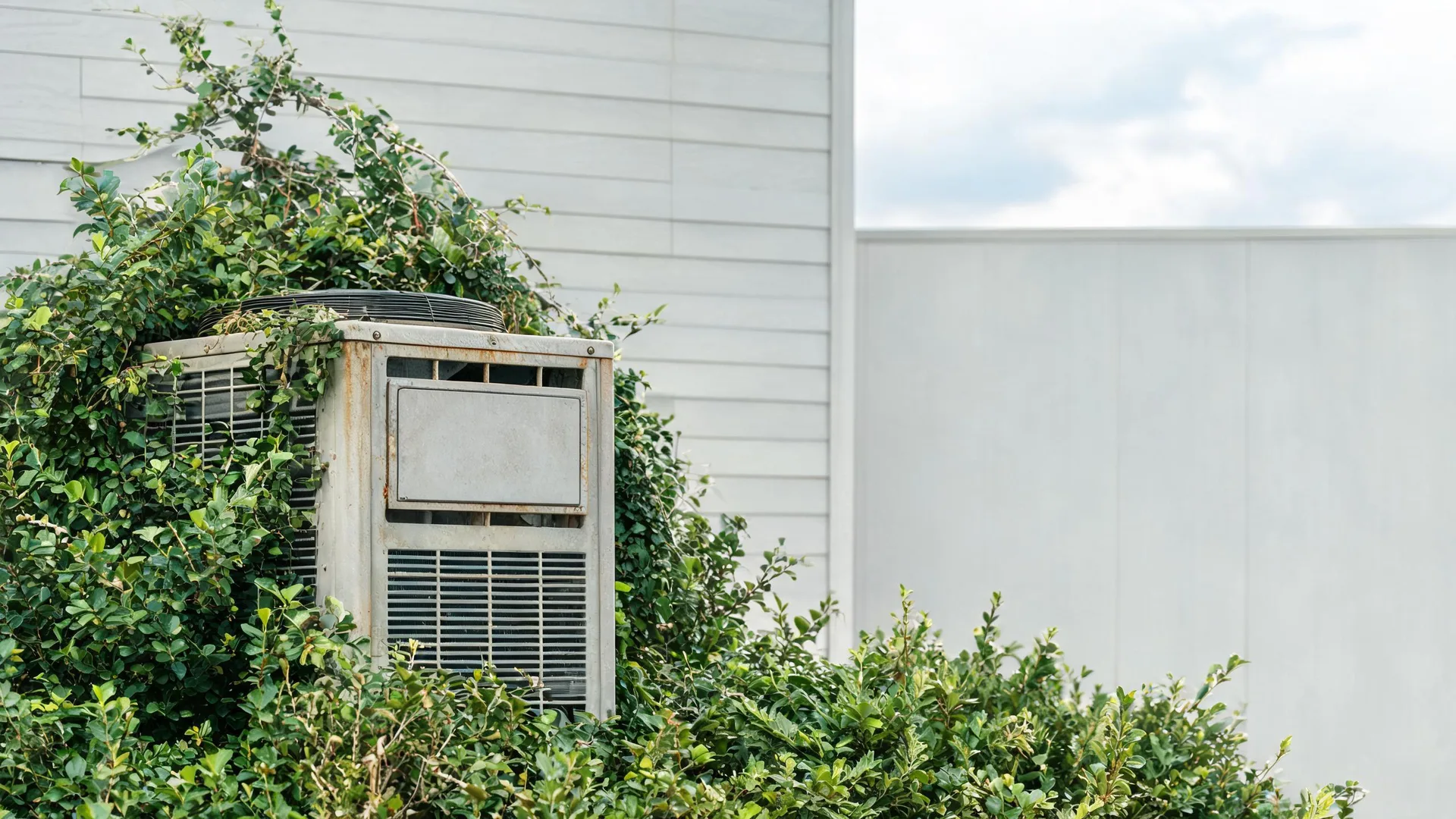
Walk outside and check the outdoor unit itself. Leaves, mulch, or a trimmed hedge growing in close can block airflow the same way a dirty filter does. Clear any debris packed against the coil fins or sitting on top of the cabinet. If the fan isn't spinning at all, or it's grinding instead of turning smoothly, that's not something to clear away. That's a call.

Most heat pump failures trace back to a handful of parts that do the hardest work. The compressor takes the brunt of it, especially when it's forced into repeated hard starts by a weak capacitor or low refrigerant. The reversing valve fails differently. It's the part that switches the system between heating and cooling, and the coil inside it can stick from corrosion or debris after years of switching back and forth. Fan motors wear out from bearings that dry out over time, which shows up as grinding or a fan that spins slower than it should. Defrost controls fail too, either the sensor that tells the system ice has built up or the board that reads it, and when that happens the outdoor unit can ice over and stay that way. None of these parts fail on a schedule. They fail when something smaller has already gone wrong and nobody caught it.

A diagnostic visit starts outside, watching the unit run through a full cycle rather than just glancing at it. A tech checks the refrigerant pressure and the temperature of the air coming off the coil, since those numbers say more than how the system sounds. The electrical side gets checked too. That means the capacitor's output against what it's rated for, the contactor for pitting, the wiring for anything scorched or loose. If the complaint is weak heat, the reversing valve gets tested directly, since a valve that's stuck partway can act almost normal otherwise. Whatever the cause turns out to be, the point of the visit is to find the one part that's actually failing instead of replacing parts until something works.