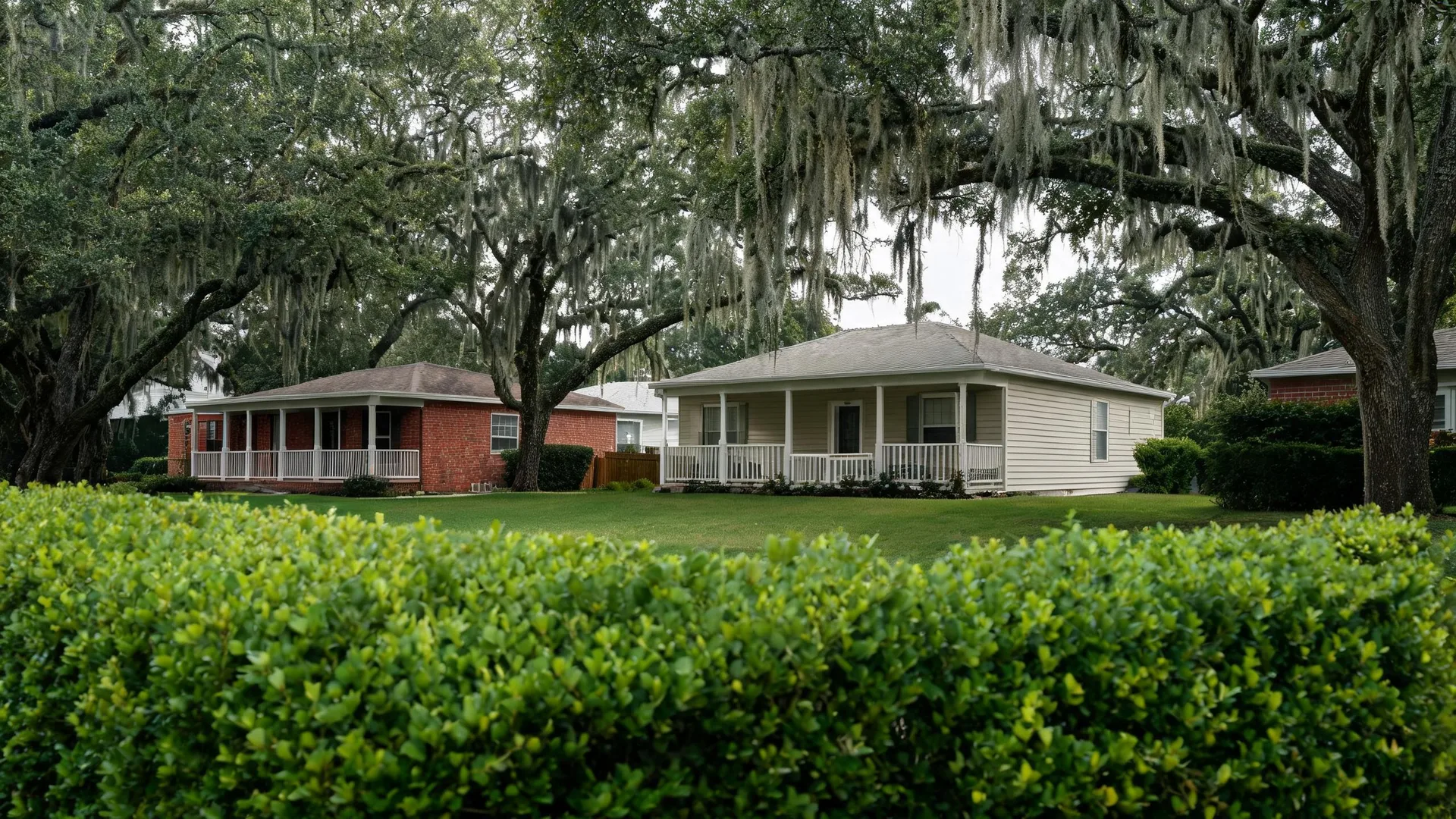
Two single-story houses, one brick and one with light siding, both with covered front porches, set behind a mowed lawn and a tall green hedge under large moss-draped oak trees.

Heat Pump Repair in Hartsville, SC

Tell us about the job

Takes about a minute. No obligation.

RepairHeat PumpDarlington County, SC
Step 1 of 2

What ZIP code is the job in?

Air that doesn't feel warm

A heat pump in heating mode puts out air that feels cooler than a furnace would, so that alone isn't a problem. The sign to act on is air barely moving from the vents, or the outdoor unit running constantly without the house catching up to the thermostat. That points to a refrigerant or compressor issue, not just the normal feel of heat pump heat.


Ice on the outdoor unit

Some frost on the outdoor coil during a defrost cycle is normal. What isn't normal is a thick layer of ice that stays put, or ice that builds back up right after a defrost finishes. That usually means the reversing valve or the defrost control isn't doing its job, and the unit needs a technician before it keeps running itself into the ground.

5 months
November through March, your system heats
5 months
May through September, it cools
35°F
the average winter night it heats against
90°F
the average summer afternoon it cools against
Isometric line illustration of a cutaway house showing interior rooms, an air handler with ductwork in the attic space, and an outdoor condenser unit beside the exterior wall.
Your system heats November through March and cools May through September.

NOAA nClimDiv, 1991–2020 normals

Half the homes in Darlington County were built in 1984 or earlier.

A heat pump that's been running since then has had a lot of defrost cycles. The reversing valve or control board is a fair place to start looking.

Most heat pump trouble here shows up the first cold snap in November

Cooling runs May through September
Heat runs November through March
129 damaging wind events from 2015 to 2024
Hartsville weather asks a lot of a heat pumpDarlington County took damaging wind 129 times from 2015 to 2024.

A compressor or reversing valve failure is usually a replace decision, since either job costs enough that putting it into an old unit rarely makes sense. A bad capacitor, a failed contactor, a low charge from a small leak, those are repairs, and a heat pump that's otherwise running fine is worth fixing for any of them. Age matters less than how the unit has been running up to now. One that's needed a tech out every season is telling you something different than one that's been quiet for years and just hit a rough patch. If the repair bill starts to rival what the unit is worth, that's the point to ask the technician directly whether they'd fix it themselves or put the money toward a new system.

Get the usual fix

Nothing about this area is especially hard on it. It's most likely the usual problem with the usual fix.

Find a contractor
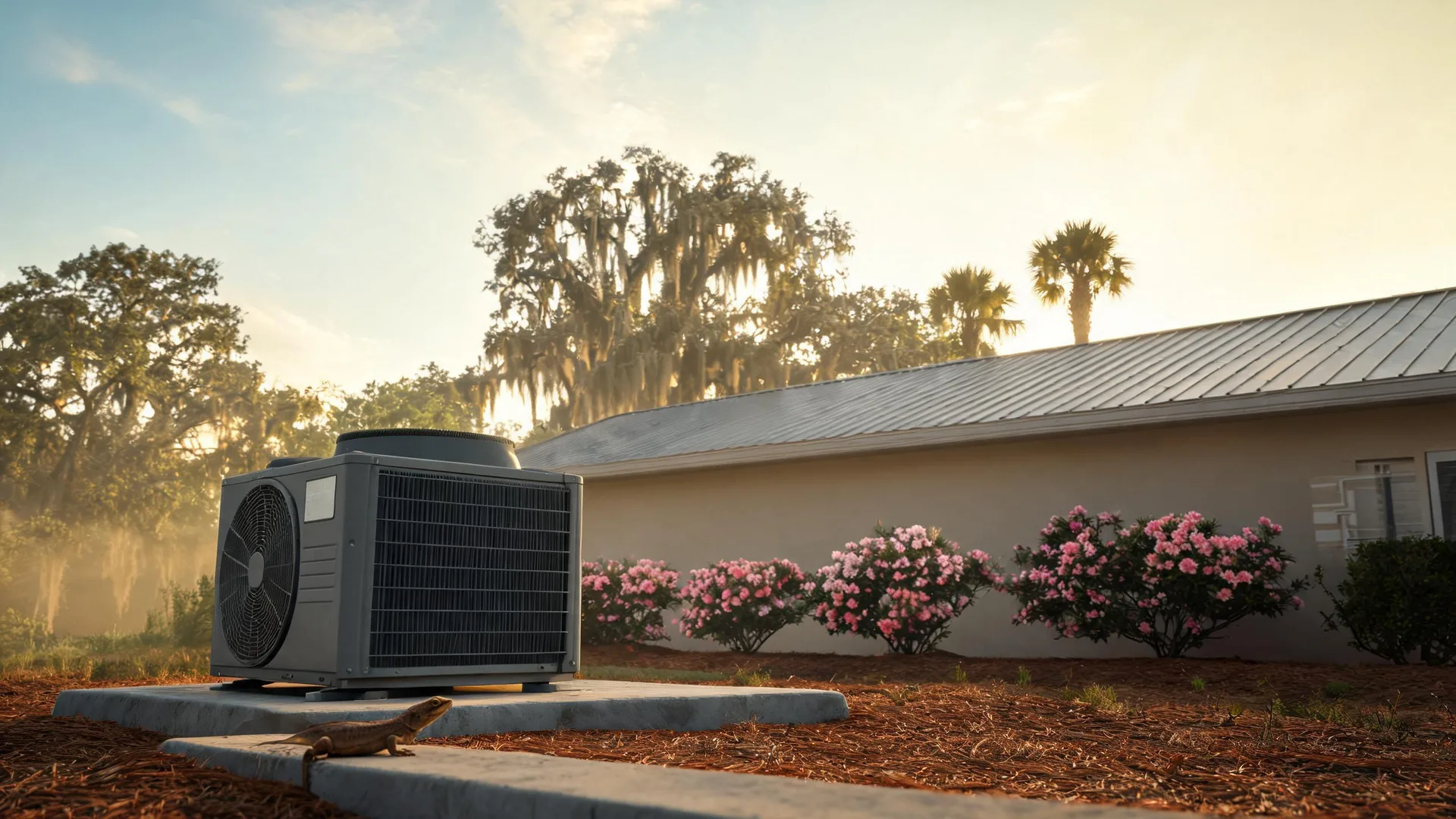
A residential heat pump outdoor unit mounted on a concrete pad next to a house with gray vinyl siding.

What to check before the call

Before anyone comes out, check the thermostat is set to heat and the temperature is actually set above room temperature. Check the breakers for the indoor air handler and the outdoor unit, since either one tripping will stop the system cold. Walk out to the outdoor unit and clear away leaves, mulch or anything stacked against it. Airflow in and out of that coil is how the system moves heat at all. Pull the air filter and swap it if it's dirty, since a clogged filter chokes airflow on the indoor side the same way debris chokes it outside. If the outdoor unit is caked in ice beyond what a normal defrost cycle leaves behind, don't knock it off or hose it down. That's a sign for a technician, not a project for you. None of this fixes a bad reversing valve or a low charge, but it rules out the simple stuff first.

Most failures are electrical, not mechanical

A capacitor weakens, a contactor's contacts pit and stick, or a low-voltage wire works loose from vibration. These parts fail far more often than a compressor does, and they're what a technician checks first. The symptom looks the same either way, a system that won't start or won't run right, but the fix is nothing like a compressor job.

The reversing valve takes the abuse

Every defrost cycle asks the reversing valve to switch the flow of refrigerant, then switch it back. That's thousands of cycles over the years, and it's a common place for a heat pump to start sticking or failing outright. A valve stuck in one position is why a unit might blow cold air in heating mode or never fully defrost.

A heat pump that's struggling still moves some heat, so it's tempting to let it run while you wait for a technician. That's usually fine for a weak capacitor or a dirty filter. It's not fine for a compressor working against a low charge. Refrigerant doesn't get used up, so a system that's low has a leak somewhere, and running a compressor short on charge overheats it and wears it out faster than normal operation would. A reversing valve that's sticking can get worse the same way, since every extra cycle is another chance for it to stop moving at all. None of that means shut the system off and wait in the cold. It means a unit showing one of these signs should get looked at before it runs long enough to turn a repair into a replacement.

A diagnostic visit starts before the technician touches the unit. They'll ask what it's doing, when it started, and whether anything changed first, a breaker trip, a power outage, a strange noise. Then they check the thermostat call and confirm the system is actually responding to it. Outside, they'll check the contactor and capacitor, check refrigerant pressures, and watch a full defrost cycle if the complaint points that way. Gauges on the lines tell them whether the charge is right or whether there's a leak to chase down. Only after that do they open anything up, and only if the readings point to a part that needs replacing rather than a wire that worked loose.