







A row of single-story houses, one brick and others with pale siding and covered porches, behind a trimmed hedge and lawn, under large oak trees draped with Spanish moss.

Heat Pump Repair in Hardeeville, SC

Tell us about the job

Takes about a minute. No obligation.

RepairHeat PumpJasper County, SC
Step 1 of 2

What ZIP code is the job in?

The question isn't just whether your heat pump can be fixed. Almost anything can be fixed. The real question is whether it's worth doing given the age of the unit and what else is likely to go next. A compressor failure on an older system is the classic case where repair is technically possible but throwing money at a unit that's already tired in other ways. A bad capacitor or a failed contactor, on the other hand, is cheap and quick and has nothing to do with the rest of the system's health. Ask the tech what's actually wrong, not just what it'll cost to fix it, before you decide which way to go. If the same problem keeps coming back, or if you're being told the coil or compressor is involved, that's usually the point where replacement starts making more sense than another repair.

5 months
November through March, your system heats
6 months
May through October, it cools
40°F
the average winter night it heats against
90°F
the average summer afternoon it cools against
Isometric cutaway illustration of a single-story house showing interior ductwork, an indoor air handler and furnace unit, and an outdoor condenser connected by a line, on a white background.
Your system heats November through March and cools May through October.

NOAA nClimDiv, 1991–2020 normals

Jasper County took 206 damaging wind hits between 2015 and 2024.

Your heat pump sits outside through all of that, so wind-driven wear is usually the real reason behind the repair call.

November is when a weak heat pump here gets found out

Cooling runs May through October
Heat runs November through March
206 damaging wind events from 2015 to 2024
Jasper County's homes run newer than mostHalf the homes in Jasper County were built in 2003 or later.

A heat pump that's struggling still tries to do its job, and that's what causes the second failure. A compressor low on refrigerant runs hotter than it should, every cycle, because it's working to move heat it doesn't have enough refrigerant to carry. Keep running it that way and the compressor windings take the damage, which turns a refrigerant leak into a compressor replacement. A failing fan motor behaves the same way. The compressor still fires even when the fan can't clear heat off the coil properly, and that backed-up heat is what cooks a compressor that was otherwise fine. Short cycling does similar harm over time, since every start draws more current than the run itself does, and a system cutting on and off every few minutes is starting far more than it should. None of this happens on the first bad cycle. It's the weeks of running in that condition that turn a part replacement into a compressor job.

Get the outdoor unit checked, not just the symptom

That wind count is the outdoor unit's problem more than the house's. A tech can check the coil and fan for storm wear and confirm whether what's wrong now is a quick fix or the start of something bigger.

Find a contractor
A man in a cap, gray long-sleeve shirt and brown pants carries a canvas tool bag up porch steps toward a dark front door, beside a potted shrub.
A gray heat pump outdoor unit mounted on a concrete pad next to the stone-accented exterior wall of a house.

It never really gets a season off

A heat pump runs every day of the year, not just in winter. It switches to cooling in warm weather and back to heat when it's cold, so the compressor and reversing valve almost never get a season off the way a furnace does. That steady use is why the parts that start the compressor wear on a schedule instead of at random. The capacitor loses its charge gradually. The contactor's points wear down from opening and closing every single cycle, all year. Usually there's some warning before either one quits outright. The unit hums when it tries to start. The fan takes a moment longer to kick on than it used to. The outdoor unit cycles on and off more often. Catching that early is what keeps a weak start from turning into a damaged compressor.

Check the obvious before you dial

Look at the thermostat first. Make sure it's set to heat, not cool, and that the set temperature is actually above room temperature. Check the breaker panel too. A heat pump trips its own breaker sometimes, separate from the air handler's breaker, so both need to be on. Then look at the outdoor unit itself. If it's buried in leaves, iced over, or the fan can't spin freely, that alone can cause the system to run poorly or shut down.
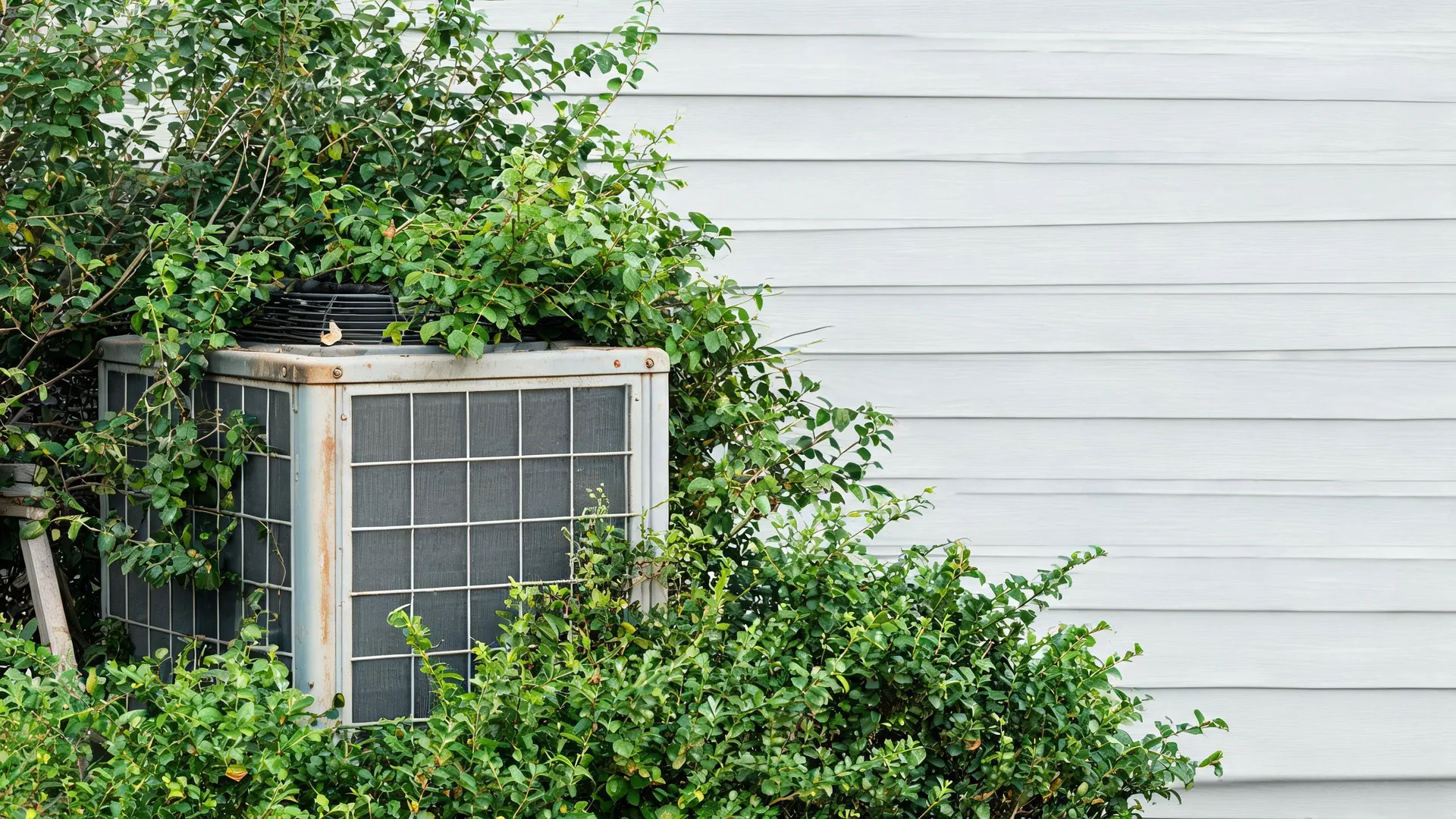
Know what you're listening for

A heat pump blowing air that feels cool to the touch isn't necessarily broken. In heat mode, the air coming out is often still cooler than your skin even when the system is working right. What's worth noting instead is short cycling, the unit turning on and off every few minutes, or a loud bang or grinding sound at startup. Write down what you hear and when it happens. That detail helps a tech narrow down the problem before they even get to the unit.

Most heat pump failures trace back to a handful of parts, and they fail for ordinary reasons. The capacitor loses its charge over time and stops giving the compressor or fan motor the kick it needs to start, so the unit hums or clicks but doesn't run. A contactor's contacts pit and burn from years of making and breaking the circuit, until one day it doesn't close. The reversing valve, the part that lets a heat pump switch between heat and cool, can stick, and when it does the system may blow the wrong temperature air or get stuck in one mode. Refrigerant leaks show up slowly, usually at a fitting or coil joint, and the system loses capacity long before it quits outright. The outdoor fan motor wears out from running constantly in open weather, and a failing one often sounds different before it actually stops. None of these have much to do with each other. A dead capacitor says nothing about the condition of the coil or compressor.

A diagnostic visit starts outside, not at the thermostat. The tech checks the outdoor unit first, looking at the coil, the fan, and the refrigerant lines before touching anything inside. From there it's a process of elimination. Low voltage gets tested at the contactor and capacitor to see if the compressor and fan are getting the signal to start. If the system runs but doesn't heat right, the tech checks refrigerant pressure and watches the reversing valve to see if it's switching the way it should. A tech who's done this a long time can often narrow things down by sound and feel before the gauges come out. A certain hum points to the capacitor. A certain clatter means the fan motor is on its way out. The point of the visit is to tell you what's actually wrong, not just whether the system runs when they leave.