A row of single-story houses with porches behind a manicured lawn and trimmed hedges, framed by large oak trees draped with Spanish moss.

Heat Pump Repair in Greenwood, SC

Tell us about the job

Takes about a minute. No obligation.

RepairHeat PumpGreenwood County, SC
Step 1 of 2

What ZIP code is the job in?

What the repair history tells you

A heat pump that's had an occasional issue is still worth fixing when something new comes up. One that keeps tripping the same fault, or needs a refrigerant top off every so often, is telling you the system is wearing out as a whole. Patching the latest problem on a unit like that often just buys time until the next part gives out.


What the compressor means for the decision

The compressor is the one part expensive and central enough to change the math. If it fails on an older unit, a contractor will usually walk you through replacing the whole system rather than the compressor alone, since the rest of the unit has logged the same years of run time. A failed capacitor, contactor, or fan motor doesn't carry that weight. Those get replaced on their own without it being a referendum on the whole system.

5 months
November through March, your system heats
5 months
May through September, it cools
35°F
the average winter night it heats against
90°F
the average summer afternoon it cools against
Isometric line illustration of a cutaway house showing interior rooms with furniture, a furnace or air handler with overhead ductwork, and an outdoor condenser unit connected by lines outside the wall.
Your system heats November through March and cools May through September.

NOAA nClimDiv, 1991–2020 normals

Heat pumps in Greenwood County go into November carrying whatever was already wearing thin.

A unit that struggled through September often shows the same trouble the first cold week of November.

Half the homes here are old enough to need a repair, not a replacement

Half the homes here were built by 1977
Power costs 14.23 cents a kWh statewide
Climate zone 3A

Greenwood County has logged 69 severe weather events between 2015 and 2024, and damaging wind accounted for most of them. That matters for a heat pump because the outdoor unit sits outside, exposed, with coil fins that bend easily and a fan that debris can nick or jam. Hail has hit the county in that same stretch too, and a dented cabinet or bent fin doesn't always show up as a problem right away. A unit that took a hit can keep running for weeks before the real trouble shows up as a refrigerant leak or a fan working harder than it should. Power cuts add to it. A heat pump that lost power mid-cycle sometimes needs a reset or a closer look before it's trusted again. If your outdoor unit has been through a storm, worth having someone check it even if it still turns on.

Get it looked at early

Problems tend to show up in the first weeks of the season, when the load hits a part that was already weak.

Find a contractor
A gray heat pump condenser unit mounted on a concrete pad against the gray lap-siding exterior wall of a house.

What to listen for before it quits

A heat pump that needs attention usually tells you before it quits outright. The first sign is often sound. A clatter from the outdoor fan, a hum that doesn't turn into a start, a clicking that repeats instead of settling. Short cycling is another one. The system kicks on, runs a few minutes, and shuts off before the house feels any different. That's hard on the compressor no matter what's causing it. Airflow dropping off at the vents while the outdoor unit keeps running points at a different problem than the whole system blowing warm air. If the unit is in heat mode but the air coming out feels cool, that's worth a call rather than a wait and see. Same if the outdoor coil is caked in frost outside of a normal defrost cycle.

A weak start wears the compressor

A capacitor that's fading makes the compressor struggle every time it starts. The motor draws more current than it should trying to get going, and that heat adds up cycle after cycle. Keep running it and you can turn a capacitor swap into a compressor failure.

A refrigerant leak feeds on itself

Low refrigerant makes the compressor work harder to move what's left, and that extra strain shows up as heat it wasn't built to handle. Run it long enough on a slow leak and you're not looking at a refrigerant top off anymore. You're looking at the compressor itself.

Most heat pump failures trace back to a handful of parts. The capacitor is one. It gives the compressor and the fan motor the jolt they need to start, and it weakens with age until one day it can't deliver that jolt at all. The contactor is another, the switch that sends power to the outdoor unit each time the thermostat calls for heat or cool. Contacts on it pit and burn from years of making and breaking that connection, until the unit stops answering the call. The reversing valve is what makes a heat pump a heat pump, switching the flow of refrigerant so the same unit can heat in winter and cool in summer. When it sticks, the system keeps running but stuck in one mode. And the outdoor fan motor just wears out from spinning in the heat and weather, bearings going dry, windings breaking down. None of these announce themselves ahead of time. They just stop working, usually at the worst moment.

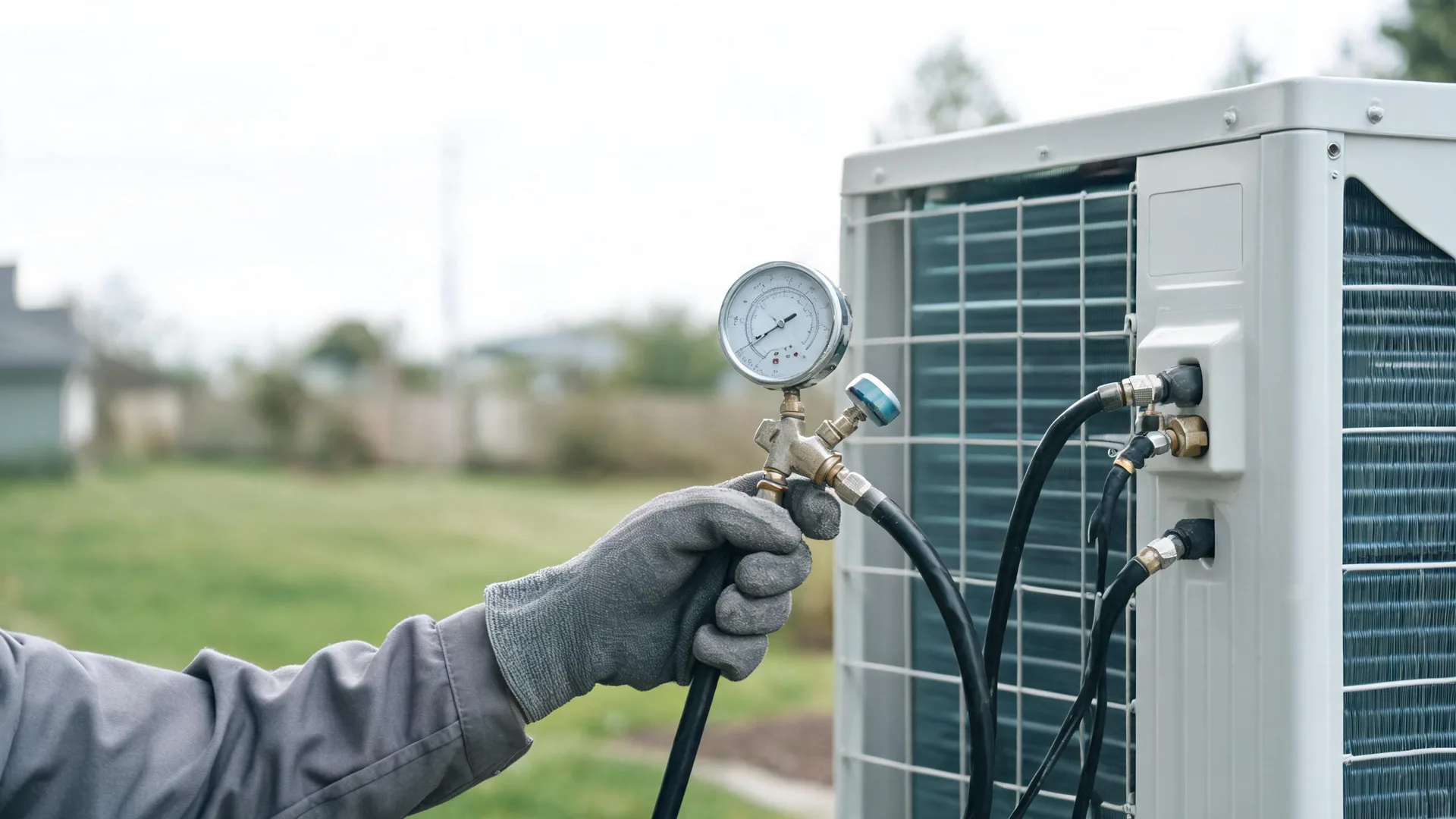
A diagnostic visit starts outside at the condenser, not inside at the thermostat. A contractor checks refrigerant pressure, amp draw on the compressor and fan motor, and whether the contactor is pitted or still making clean contact. Inside, they'll check the air handler for a frozen coil, a clogged filter, or a blower that's not moving the air it should. If the system runs in the wrong mode, heating when it should cool or the reverse, the reversing valve gets tested directly rather than guessed at. Most of this comes down to taking actual readings, not just listening and watching. A unit can sound fine and still be low on charge or drawing more current than it should, and that only shows up once someone puts a gauge or a meter on it.