




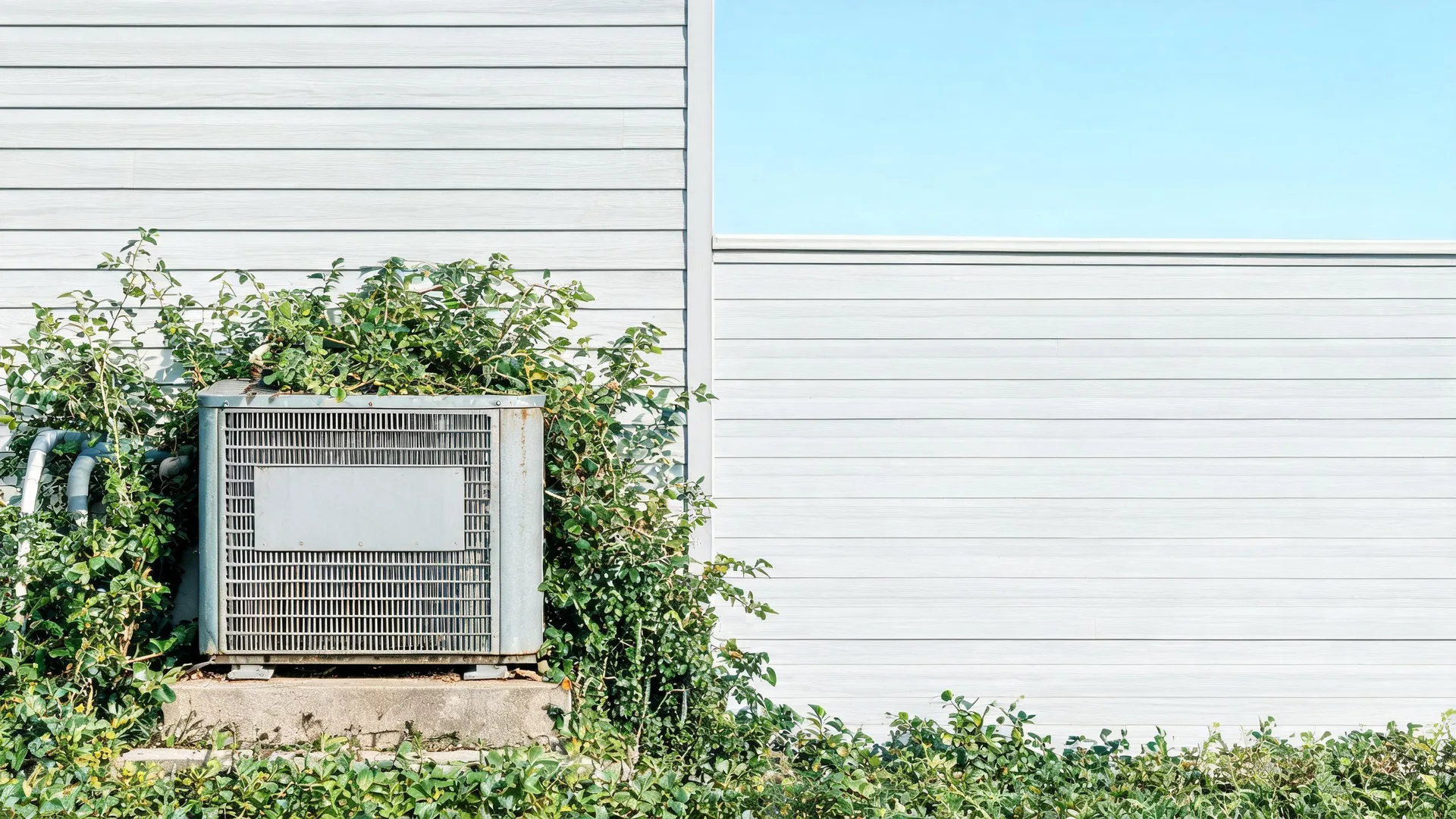
A gray outdoor HVAC condenser unit mounted on a concrete pad in the front yard of a two-story suburban house.

Heat Pump Repair in Florence, SC

Tell us about the job

Takes about a minute. No obligation.

RepairHeat PumpFlorence County, SC
Step 1 of 2

What ZIP code is the job in?

A heat pump that's struggling usually tells on itself. Air coming out of the vents feels cool when it should feel warm, or the system runs and runs without the house actually getting comfortable. Outside, the unit might ice over even when it's not cold enough for that to make sense, or you'll hear it clicking as it tries to switch between heating and cooling and can't quite get there. Some units get stuck running in one mode no matter what the thermostat is set to. A hissing sound can mean refrigerant is escaping, and that's not something that fixes itself. If the outdoor fan isn't spinning but the unit is making noise, the compressor is working against itself and that shortens its life fast. Any of these is worth a call before it turns into a bigger repair.

5 months
November through March, your system heats
5 months
May through September, it cools
36°F
the average winter night it heats against
90°F
the average summer afternoon it cools against
Isometric line illustration of a cutaway single-story house showing interior rooms, ceiling ductwork, an indoor air handler unit, and an outdoor condenser connected by a line set.
Your system heats November through March and cools May through September.

NOAA nClimDiv, 1991–2020 normals

November is when heat pumps here switch over to heating mode after months of sitting idle on that side.

A weak part that made it through summer often fails in the first cold snap, so a heat pump acting up in November is doing exactly what the season predicts.

Built for the life aheadHalf of Florence County's homes were built in 1986 or later.

Florence County has logged 120 severe weather events between 2015 and 2024, most of it damaging wind. The outdoor unit sits through all of it, with nothing but a thin metal housing between the coil and whatever the storm throws at it. A dented cabinet doesn't always mean a damaged coil, but it can. A heat pump that still runs after a storm isn't proof it came through clean. Bent fins restrict airflow slowly, and a cracked fan blade can throw itself off balance over weeks before it fails outright. If a storm has come through recently, it's worth having the outdoor unit looked at even if the house still feels fine.

Get it checked after a storm

Storms hit hard here. If the outdoor unit took hail or debris, have it checked even if it still runs.

Find a contractor
A man in a dark long-sleeved shirt and olive work pants carries a canvas tool bag up steps toward a blue-gray front door of a shingled house, with a potted shrub beside the entry.
A gray air-source heat pump mounted on a concrete pad next to a house with gray vinyl siding, surrounded by gravel and flanked by green shrubs and white hydrangea flowers.

Why running it longer makes it worse

A heat pump that is losing a refrigerant charge or struggling to defrost does not fail all at once. It fails a little more each hour it keeps running. A slow leak gets worse under the strain of constant cycling, and a system low on charge works its compressor harder to make up for it, which wears the compressor faster than the leak itself would have. Ice that isn't clearing on the outdoor coil blocks airflow across it, so the system runs longer to move the same heat, and that longer runtime feeds more frost onto the coil. A reversing valve that's hunting between modes is also straining the compressor every time it tries to shift. Shutting the system off when something's clearly wrong doesn't fix it, but it stops that part from getting worse while it waits for a tech to look at it.

What you can check yourself

Check the thermostat is set to heat and the temperature is actually above room temperature. Check the outdoor unit isn't buried in leaves or blocked by anything close to the cabinet. Check the air filter, since a clogged one can starve the system of airflow and make it seem like the heat pump itself has failed. Check breakers at the panel if the unit won't turn on at all. These take a few minutes and rule out the simplest causes before anyone needs to open the cabinet.
What to leave alone

Don't take the outdoor cabinet apart or reach inside it. The compressor and the electrical connections inside can hold a charge even with the power off. Don't pour water on ice buildup or chip at it, since that can bend fins or crack the coil underneath. If the system is tripping a breaker repeatedly, stop resetting it and leave it off until someone can look at it. Flipping it back on again and again can turn a simple part failure into a compressor replacement.

Most heat pump failures trace back to a handful of parts that wear out doing the same job over and over. The reversing valve is the one unique to heat pumps, and it's what switches the system between heating and cooling. When it sticks, the system can get stuck in one mode or hunt back and forth without settling. Capacitors wear out from the daily work of starting the compressor and fan motors, and a weak one makes the outdoor unit hum and strain without starting. Refrigerant leaks don't get better on their own, since the system doesn't use up refrigerant the way a car uses gas. Any loss means a leak somewhere in the line. The defrost control is another common failure point, since it's what tells the unit when to melt off the ice that forms on the outdoor coil in cold weather. When that fails, ice builds up and never clears. None of these parts failing means the whole system is bad. They're individual components that can be replaced on their own.

A diagnostic visit starts outside at the unit itself. The technician checks refrigerant pressures and electrical readings before anything gets taken apart. The system gets run in the mode it's failing in, since a problem that only shows up in heating won't always show itself in cooling. The capacitor's actual output gets checked against what it's rated for. The reversing valve's solenoid gets tested on its own. The defrost control gets watched to see if it calls for a cycle when it should. Gauges on the refrigerant lines show whether the charge is correct, low, or overfilled from some past repair. Airflow gets checked too, since a weak reading at the vents can come from a dirty coil or a failing blower motor rather than anything on the refrigerant side. By the end, the failing part is usually narrowed down to one thing, not a guess at several.