Single-story brick house with a dark shingled roof set behind a lawn and tall pine and moss-draped trees, photographed low to the ground with pine straw in the foreground.

Heat Pump Repair in Easley, SC

Tell us about the job

Takes about a minute. No obligation.

RepairHeat PumpPickens County, SC
Step 1 of 2

What ZIP code is the job in?

Check the thermostat and the breaker first

Set the thermostat well past the current room temperature and listen for the outdoor unit to kick on. Check the breaker box too, since a tripped breaker shuts the whole system down and looks like a bigger problem than it is. Both checks rule out the simplest causes before anyone needs to come out.

Look at the outdoor unit and the filter

Walk outside and see if the outdoor unit is caked in leaves, covered in ice, or has a fan that isn't spinning. Then check the filter, since one packed with dust chokes airflow and can make the whole system struggle or freeze up. Knowing which of these applies tells the contractor where to start.

7 months
October through April, your system heats
5 months
May through September, it cools
33°F
the average winter night it heats against
87°F
the average summer afternoon it cools against
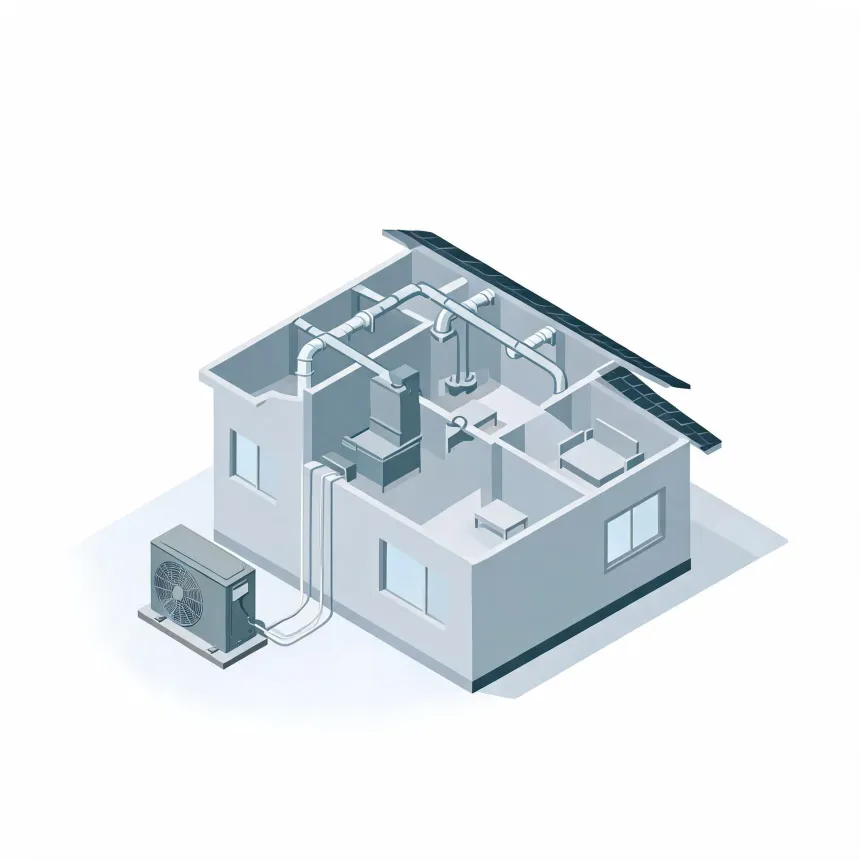
Isometric cutaway illustration of a single-story house showing interior ductwork, an air handler and rooms, with an outdoor condenser unit connected by refrigerant lines on a plain white background.
Your system heats October through April and cools May through September.

NOAA nClimDiv, 1991–2020 normals

Pickens County winters stay short and mild, so a heat pump here never has to push against deep cold.

A heat pump with an easier job behind it is usually worth repairing instead of replacing.

Half the homes here were built in 1989 or later

Half the homes here were built by 1989
Climate zone 3A
Power costs 14.23 cents a kWh statewide

A heat pump fails in a few predictable spots. The reversing valve can stick, so the system blows cold air when it should heat or won't switch over at all. The defrost board can fail, which lets frost build on the outdoor coil until airflow stops. Low refrigerant from a slow leak shows up as weak heating or cooling and ice on the outdoor unit even when it isn't cold out. The outdoor fan motor wears out from running year round, and when it slows down or stops, the whole system loses its ability to move heat in either direction. A capacitor going weak is one of the most common reasons a unit hums but won't start.

It's usually worth repairing

It has an easier job here than in most places, so your heat pump is often in decent shape. Repair is usually worth it.

Find a contractor
A residential heat pump outdoor unit mounted on a concrete pad next to a house with gray vinyl siding.

What matters is how the hours were spent, not just how many

A heat pump doesn't keep a tally of its own age the way a car's odometer does. What matters is how it has spent its running hours, not just how many it has logged. A compressor that has spent its life cycling on and off normally is in a different spot than one that has spent a good stretch of that time straining against a weak capacitor or starting up against low refrigerant. Healthy hours are cheap on the machine. Hours spent running with a fault underneath cost more than the ones before them, because the strain doesn't stay with the one part causing it. A system worth repairing is one that has mostly had the easy kind of hours behind it.

What you'll notice first

One room runs warmer or colder than the rest of the house, or the air out of the vents feels lukewarm instead of properly hot or cold. Some homeowners hear it before they feel it. A clicking from the outdoor unit, a hum with no fan movement, or a system that starts, runs a short while, and shuts off again on its own.

What it tells the contractor

Lukewarm air points toward the reversing valve or a refrigerant leak. A unit that hums but never starts usually means a failing capacitor. A system that keeps shutting itself off and restarting can mean a bad defrost board or a sensor misreading the air. Telling the contractor exactly what you noticed, and when it happens, points them straight at the likely cause.

A heat pump left running with a fault doesn't fix itself, it just lets the fault damage other parts. Weak refrigerant means less heat moved per cycle, so the system runs longer to get the same result, and that extra runtime wears the compressor. Frost on the outdoor coil from a bad defrost cycle blocks airflow more the longer it sits, until the compressor is working against a coil that can't exchange heat at all. A failing capacitor makes the compressor strain on every start, and a motor that strains repeatedly runs hotter and wears out sooner. None of this gets better by waiting. The fault stays, something nearby pays for it, and the fix gets bigger the longer it sits.

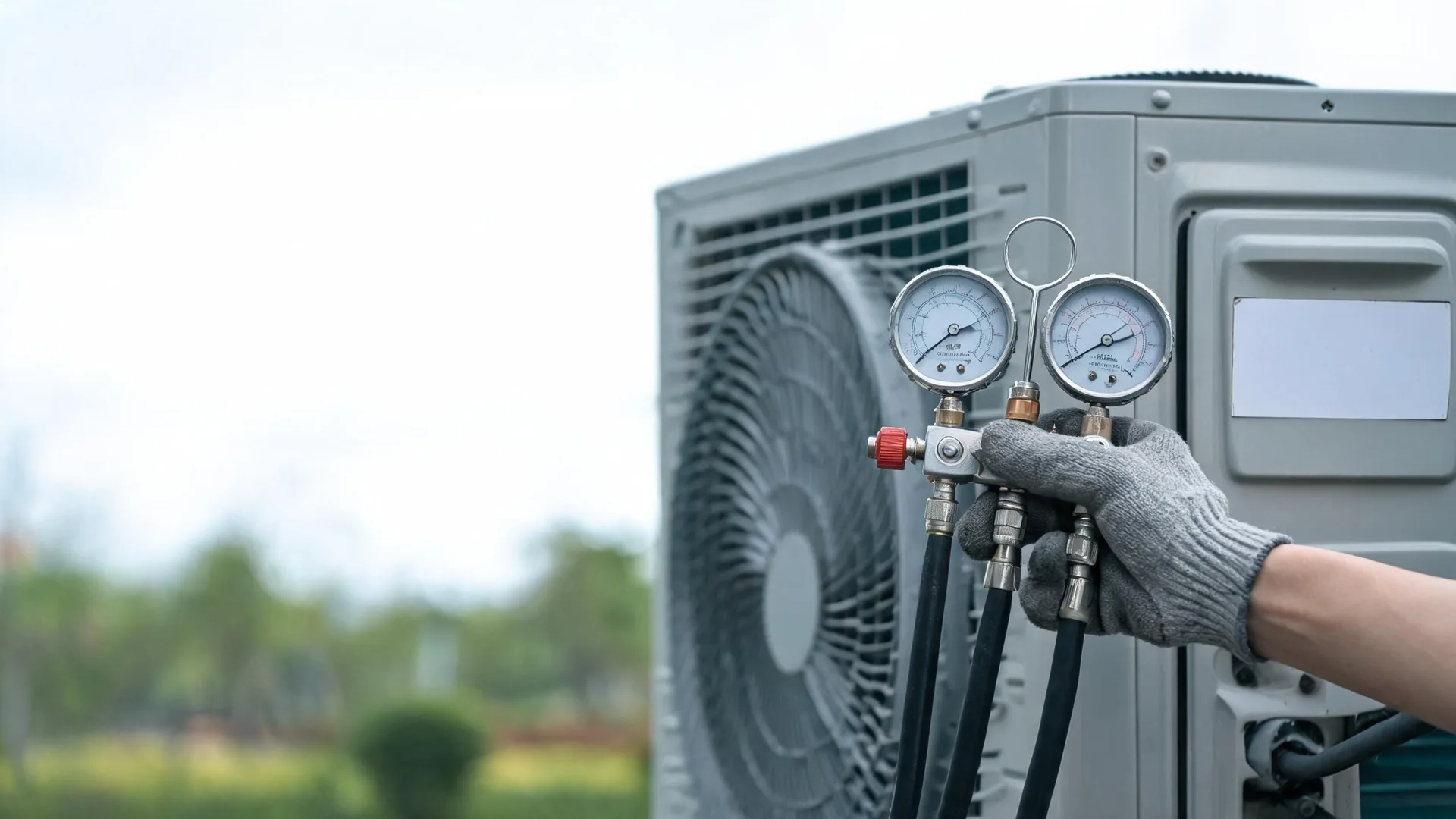
A diagnostic visit starts outside at the unit, watching it run through a full cycle before any tools come out. The tech listens for where the sound changes and checks the pressures with gauges. Low pressure on one side points toward a refrigerant leak. A capacitor gets tested against its rated range rather than judged by eye, since a weak one can still look fine sitting still. The reversing valve gets checked by calling for heat, then cooling, and watching whether the system actually switches over. Electrical readings on the compressor and fan motor rule those parts in or out without guessing. Most of this has to happen with the unit running, because a fault that only shows up under load stays hidden with everything sitting idle.