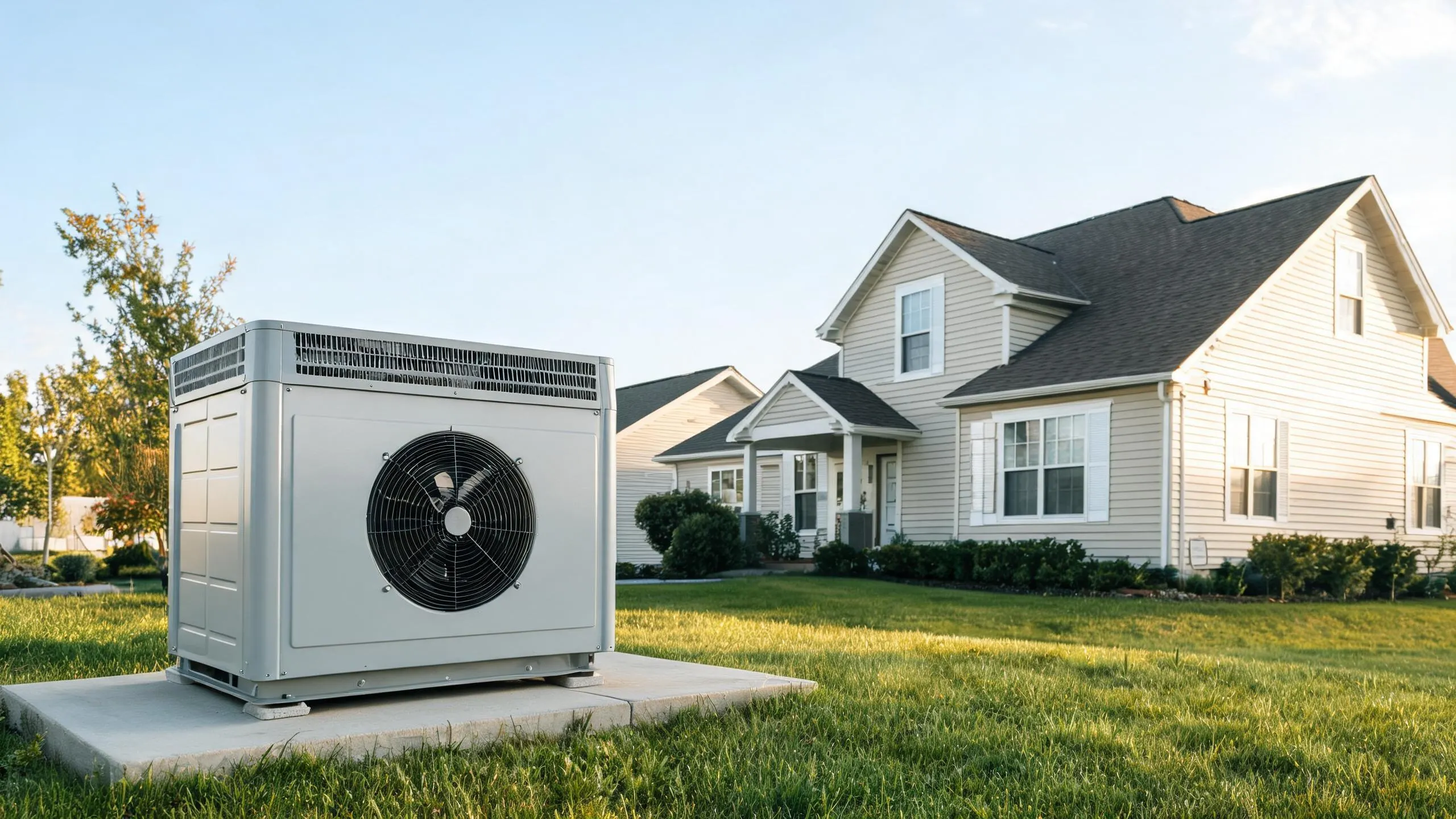
An outdoor heat pump unit mounted on a concrete pad in the front yard of a gray suburban house.

Heat Pump Repair in Columbia, SC

Tell us about the job

Takes about a minute. No obligation.

RepairHeat PumpRichland County, SC
Step 1 of 2

What ZIP code is the job in?

Warm air in heat mode means trouble

A heat pump in heating mode should put out air that feels warm at the vent, not just less cold. If the air feels close to room temperature or barely different from what's coming back through the return, the system may be stuck in defrost, low on refrigerant, or losing help from the backup heat strip. That's worth a call, not a wait.


Listen for what changes, not just noise

A heat pump that starts making a new sound, grinding, clicking that wasn't there before, or a hum without the fan actually turning, is telling you a motor or a relay is on its way out. Catching that before the part seizes completely is usually the difference between a repair and a full replacement of that component.

5 months
November through March, your system heats
5 months
May through September, it cools
36°F
the average winter night it heats against
91°F
the average summer afternoon it cools against
Isometric illustration of a cutaway single-story house showing interior ductwork, an indoor air handler and simple furniture, connected by lines to an outdoor condenser unit beside the building.
Your system heats November through March and cools May through September.

NOAA nClimDiv, 1991–2020 normals

Half the homes in Richland County were built in 1989 or later.

A heat pump that came with a newer house still has a lot of working life in it, so repair is usually the right first call.

Wind and hail both land on Richland County outdoor units

360 damaging wind events from 2015 to 2024
49 hail events from 2015 to 2024
Climate zone 3A

Heat pumps in Richland County run heat from November through March, so October is the month to get yours checked before that load hits. All summer it's been running in cooling mode. Come November it has to reverse itself and carry the full heat load right away, and a weak capacitor or a tired relay that got through September often won't make that jump. If yours struggled at all last winter, or nobody's looked at it yet, October is the time to catch it, before it's working hard every day through the cold months.

Repair it

If your system came with a newer house, it likely has plenty of life left. Repair is usually the right call.

Find a contractor
A man in a cap, dark t-shirt and worn tan work pants walks up steps toward a dark front door, carrying a canvas tool bag filled with tools, beside a potted shrub.
A dark gray heat pump unit mounted on a concrete pad next to a house with gray siding and a stone veneer wall.

Still early in its working life

If your heat pump came with the house, check when that house was built. A newer unit hasn't logged the years an older one has, and that's what decides whether a failed part is worth fixing. Get the part that failed replaced and the rest of the system keeps running.

Check the outdoor unit first

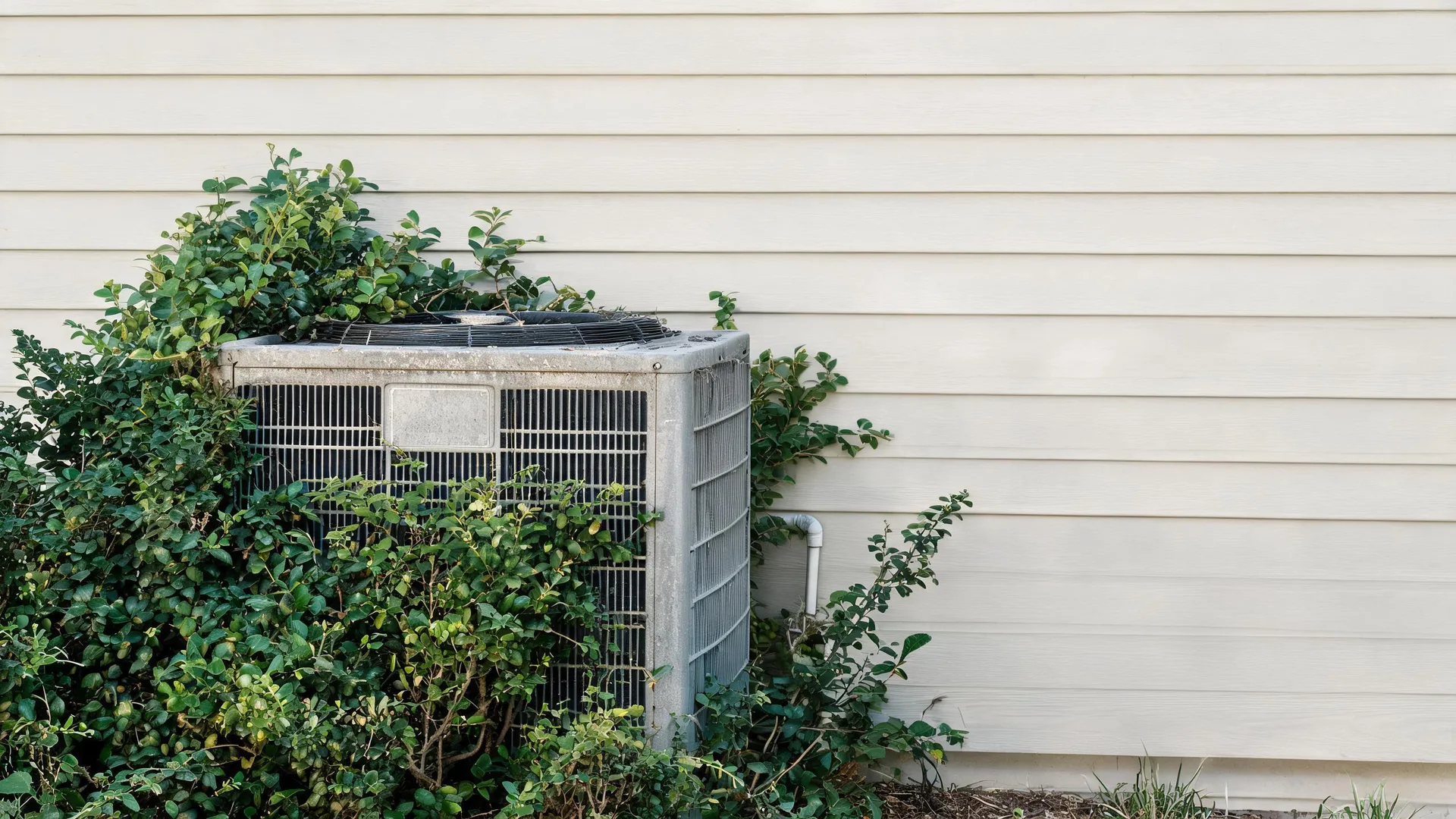
Walk outside and look at the outdoor unit. Leaves, pine straw, or a fence line too close to the cabinet block the airflow it needs to move heat. If the coil fins are packed with debris or the whole unit is iced over with no defrost cycle kicking in, clearing the area around it and changing a dirty filter inside are fair to try before calling anyone.

Check the thermostat before the unit

Make sure the thermostat is set to heat, not auto, and that the setpoint is actually above room temperature. A battery running low or a schedule that got changed by accident can look exactly like a failing heat pump. If the thermostat checks out and the air still isn't warming up, the problem is in the system itself, not a setting you can fix.

A heat pump that's losing refrigerant or struggling to defrost doesn't fail all at once. It keeps running, trying to hit the setpoint, and leans harder on the backup heat strip to make up the difference. That strip can carry the load for a while, so the house stays warm and nothing seems urgent. Underneath that, the compressor is working against a charge it shouldn't have to, and running that way wears it faster than normal. A problem that starts as a bad capacitor or a stuck reversing valve can end as a dead compressor if it keeps running unfixed. The part that would have been a simple swap early on turns into a bigger job the longer the system is left to compensate for it.

Age is the main thing to weigh, but it is not the only one. A unit that has needed repeated service calls over a short stretch is telling you something even if each fix was small and cheap on its own. Look at what actually failed too. A capacitor or a run relay is a normal wear part, and replacing one doesn't say anything bad about the rest of the system. A compressor or a leak inside the coil is a different story, since those point to the core of the machine rather than a part bolted onto it. If the refrigerant type it uses is being phased out, that's worth asking about directly, because parts and refrigerant for older systems get harder to find as time goes on. When a failure is isolated and the rest of the system has been running fine, fixing that one part is almost always the right move.