






A nighttime street scene featuring a row of lit white colonial-style houses with wrap-around porches, flanked by oak trees draped in Spanish moss.

Heat Pump Repair in Charleston, SC

Tell us about the job

Takes about a minute. No obligation.

RepairHeat PumpCharleston County, SC
Step 1 of 2

What ZIP code is the job in?

A diagnostic visit starts outside at the condenser, checking refrigerant pressure and the compressor before anything gets opened up further. The tech will check both the heating and cooling sides, since a heat pump runs the same cycle in reverse and a problem on one side often shows up on the other. Expect the reversing valve to get tested too. That's the part that switches the system between heating and cooling, and when it sticks, the unit can blow cold air when it should be warming the house or run constantly without catching up. They'll also check the defrost cycle and the outdoor coil for frost buildup, since a coil that won't defrost properly is one of the more common reasons a heat pump stops keeping up in cold weather. Airflow gets checked at the indoor unit too, since weak airflow can look like a refrigerant problem when it's really just a dirty filter or a blocked return.

5 months
November through March, your system heats
6 months
May through October, it cools
41°F
the average winter night it heats against
89°F
the average summer afternoon it cools against
Isometric line illustration of a cutaway single-story building showing interior rooms, ceiling ductwork, an indoor air handler, and an outdoor condenser unit connected by refrigerant lines.
Your system heats November through March and cools May through October.

NOAA nClimDiv, 1991–2020 normals

Half the homes in Charleston County were built in 1991 or later.

A heat pump that age still has years left in it, so repairing it is usually the right call.

Heat pumps break when the season turns, not in the middle of it

Cooling runs May through October
Heat runs November through March
304 damaging wind events from 2015 to 2024

A newer heat pump is a repair, not a replacement

If your heat pump came with the house, get it looked at before you assume it needs to be replaced. A system that age still has the years left to be worth fixing.

Find a contractor
A man in a dark long-sleeve shirt, tan work pants and a cap climbs porch steps toward a gray door, carrying a canvas tool bag in his right hand, with a potted shrub to the right.
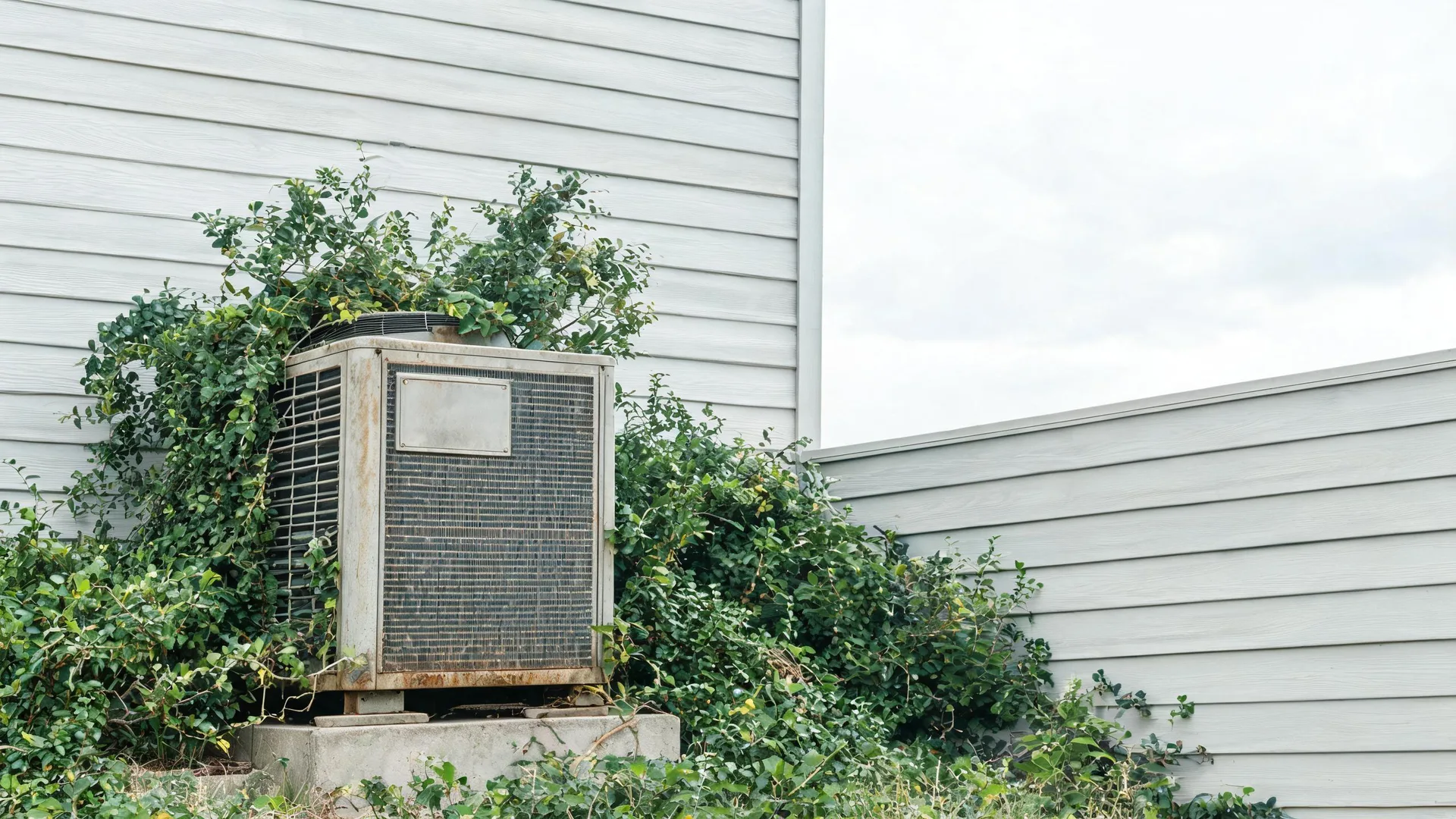
A gray heat pump condenser unit mounted on a concrete pad against the gray lap-siding exterior wall of a house.

Left alone, a small problem makes the system work harder to hide it

A heat pump that's struggling doesn't fail all at once. It keeps running because the thermostat keeps asking for more heat or more cool, and the system keeps trying. A low charge gets worse under load, since the compressor runs hotter and longer to chase a setpoint it can't reach, and that heat is what burns out a compressor early. A coil that's icing over blocks airflow more with every cycle, so the system draws harder and still falls short. Weak airflow from a dirty filter makes the indoor coil run colder than it should, which can freeze it solid if nobody catches it. None of this fixes itself by waiting. The unit runs longer to do less, and the parts working hardest to make up the difference are the ones that wear out first.

What you'll notice first

A heat pump that needs attention usually tells you through the house, not the unit itself. Rooms that won't hold temperature, air coming out of the vents that feels barely warm or barely cool, or the system running long stretches without the house catching up. Some homeowners hear a hissing or clicking from the outdoor unit, or find ice on it outside of a normal defrost cycle. Any of these is worth a call before the next one shows up.
A symptom is rarely the whole problem

By the time you notice something, the system has usually been compensating for a while. A unit running constantly to chase a setpoint is already putting extra strain on the compressor, since that's the part doing the work of trying to catch up. An odd noise or weak airflow caught early is a smaller job for the tech than the same problem left to run for weeks.

Before you call, check the filter. A filter clogged with dust chokes airflow across the indoor coil, and that alone can make a heat pump blow weak air or ice up outside. Next, walk around the outdoor unit and clear anything piled against it, leaves, mulch, a fence line too close, since it needs open air on all sides to move heat. Look at the outdoor coil itself for a heavy coat of ice that isn't melting off during normal operation. Check the thermostat batteries and the setting, since a heat pump asked to drop several degrees fast will run long and still feel like it's not catching up, and that's normal, not a fault. If a breaker tripped, reset it once. If it trips again, stop and leave it off until a tech looks at it.

Age isn't the only thing that decides this. A compressor that's failed outright is usually the end of the line, since replacing one costs close to what a new system runs, and a tech will tell you straight when that's the case. A bad capacitor, a low charge from a slow leak, a failed fan motor, a stuck reversing valve, these are all repairs, not reasons to replace a working unit. What matters more is how the system has been running up to now. One breakdown after years of working fine is a repair. A system that's needed a tech out every season, or one where the last fix didn't really hold, is telling you something the next repair won't fix either. Ask what failed and why before you ask what it costs to fix.