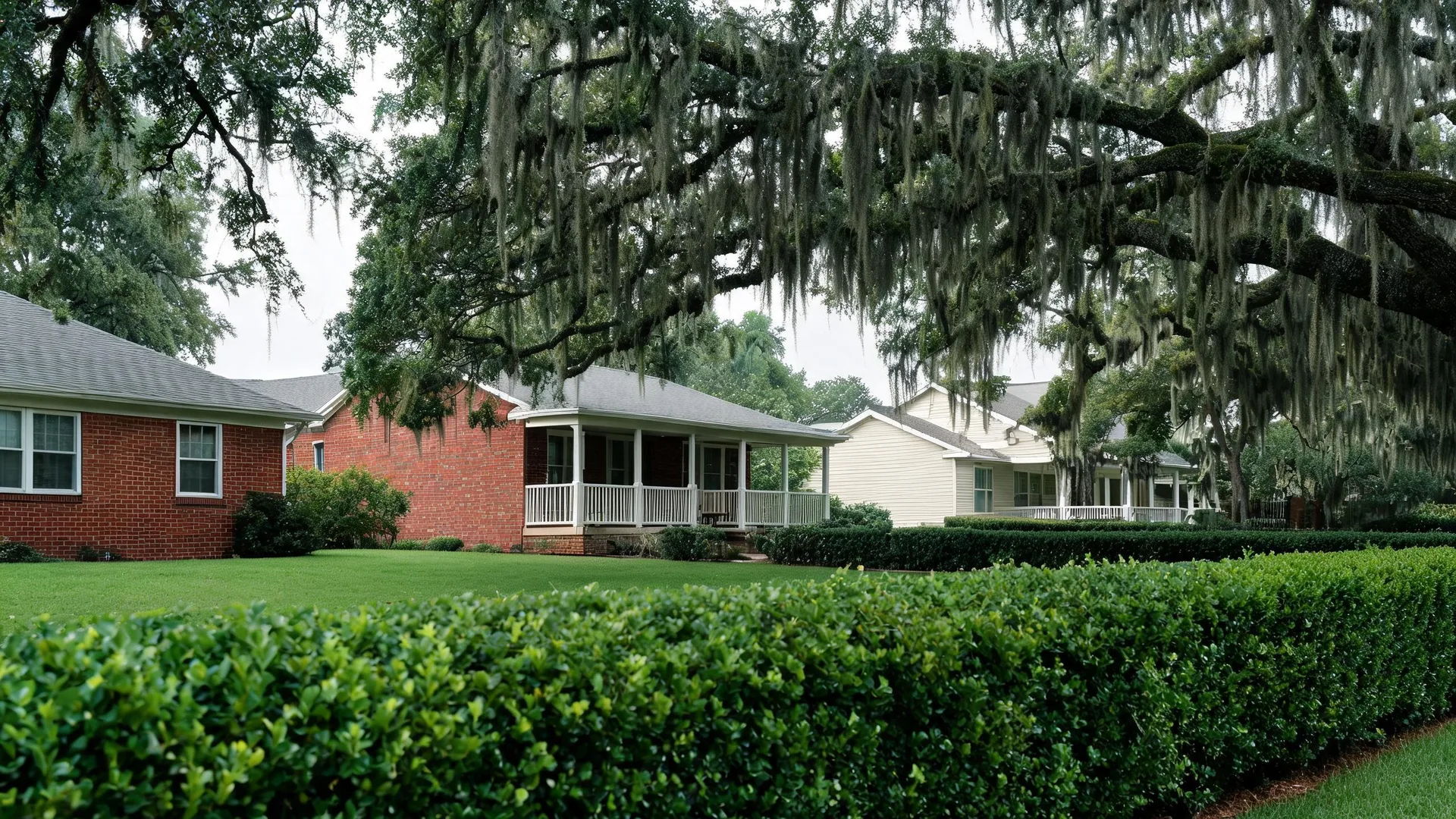
A row of single-story houses, one of red brick and others with light siding and a covered porch, behind a mown lawn and a trimmed hedge, under large moss-draped tree branches and an overcast sky.

Heat Pump Repair in Anderson, SC

Tell us about the job

Takes about a minute. No obligation.

RepairHeat PumpAnderson County, SC
Step 1 of 2

What ZIP code is the job in?

Warm air in winter means something is wrong

A heat pump in heating mode should feel warm at the vents, not cool or barely there. Air that feels room temperature or cooler usually means the reversing valve is stuck in the wrong position, the refrigerant charge is low, or the outdoor unit has iced over and cannot pull in heat. This is not something to wait out, because the system can keep running that way while doing almost nothing useful.


A heat pump that won't stop running is working too hard

Short cycling or nonstop running points to a failing capacitor, a dirty outdoor coil, or a thermostat sending bad signals to the compressor. The longer a compressor runs under strain, the closer it gets to burning out, and a compressor failure turns a repair into a full system replacement. Catching the cause early is what keeps the job small.

5 months
November through March, your system heats
5 months
May through September, it cools
34°F
the average winter night it heats against
89°F
the average summer afternoon it cools against
Isometric grayscale illustration of a cutaway house showing interior rooms, ceiling ductwork connected to an indoor air handler, and an outdoor condenser unit beside the exterior wall.
Your system heats November through March and cools May through September.

NOAA nClimDiv, 1991–2020 normals

Half the houses in Anderson County were built in 1988 or later.

A heat pump installed with a newer home is often a repair job, not a replacement.

November is when a weak heat pump gets found out

Cooling runs May through September
Heat runs November through March
111 damaging wind events from 2015 to 2024

Anderson County doesn't put any unusual strain on a heat pump. Winters are short and mild, summers are long, and the system is built to handle exactly that kind of load. When a heat pump here breaks down, it's almost always one of the ordinary causes. A failing capacitor, a low refrigerant charge, a reversing valve stuck in the wrong spot, a dirty outdoor coil. The county does see its share of wind and hail, so a tech checking the outdoor unit will look it over for storm damage along with everything else. Most repairs still trace back to a part that wears out on any heat pump, anywhere, after enough years of running.

Repair it

If your system came with a newer house, it likely has plenty of life left. Repair is usually the right call.

Find a contractor
A man seen from behind in a dark long-sleeve shirt, olive work pants and brown boots climbs porch steps toward a gray front door, carrying a waxed canvas tool bag with tools in its outer pockets, beside a potted shrub.
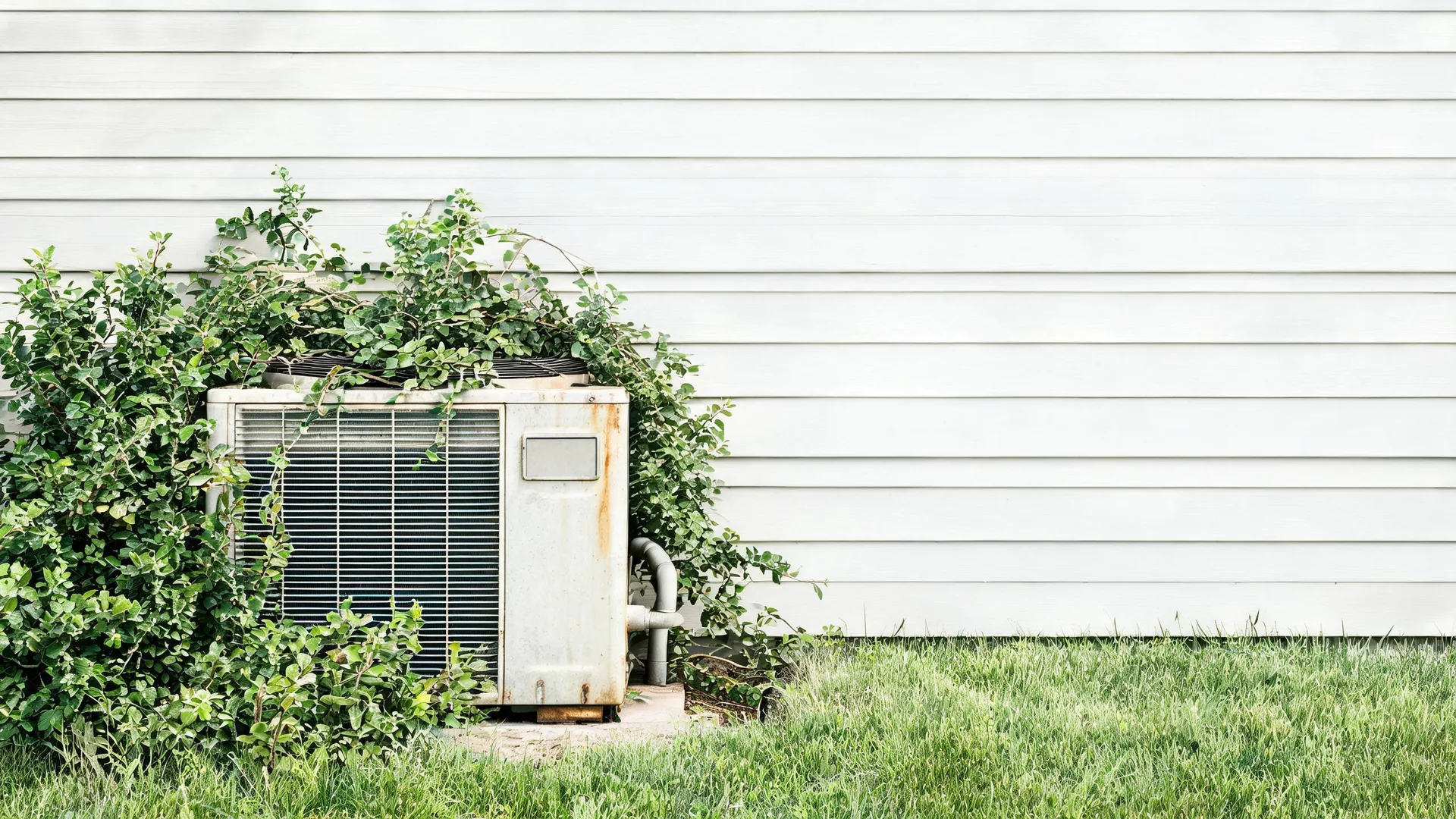
A gray heat pump condenser unit mounted on a concrete pad against the gray lap-siding exterior wall of a house.

A newer system still has years left to run

If your heat pump is original to the house, check the paperwork before you assume the worst. A unit installed within the last decade or so still has most of its working life ahead of it, which is exactly why a broken part is worth fixing rather than a reason to replace the whole system.

A stuck reversing valve won't fix itself

If the heat pump is blowing cool air because the reversing valve is stuck, every hour it runs is an hour the compressor works without doing its job. That strain falls on the compressor itself, and a compressor that fails turns a simple valve repair into a full system swap.

Ice on the outdoor unit spreads the damage

A coil that ices over blocks the airflow the system needs to pull in heat. Left alone, the unit may try to run through the ice, and that extra load on the compressor and fan motor can wear out parts that had nothing to do with the original problem.

A heat pump fails the same handful of ways no matter whose yard it sits in. The capacitor that kicks the compressor and fan motor into motion loses its charge over time, and once it's weak the system struggles to start or stops partway through a cycle. Refrigerant doesn't get used up, so a system that's low almost always has a leak somewhere in the line set or coil, and that leak won't seal itself. Contactors pit and stick from years of electrical arcing, which can leave a unit running nonstop or not starting at all. The outdoor coil collects leaves, grass clippings and dirt until it can't shed heat properly, and the system labors to make up for it. None of this is particular to one brand or one install. It's just what happens to a heat pump that's been cycling on and off for years.

A diagnostic visit starts outside, at the unit itself. A tech checks refrigerant pressure, tests the capacitor and contactor, and watches how the compressor and fan motor behave when the system cycles on. Inside, they check the air coming off the vents against what the thermostat is calling for, and look at the reversing valve to see if it switches when it should. A weak capacitor, a failing motor, a control board sending the wrong signal, all of these show up as electrical readings outside the normal range. If the outdoor coil is iced over, that gets cleared before anything else gets tested, because no other reading means much until air can move through the coil again. The point of the visit is to find the one part actually causing the trouble, not to start swapping parts and see what helps.