





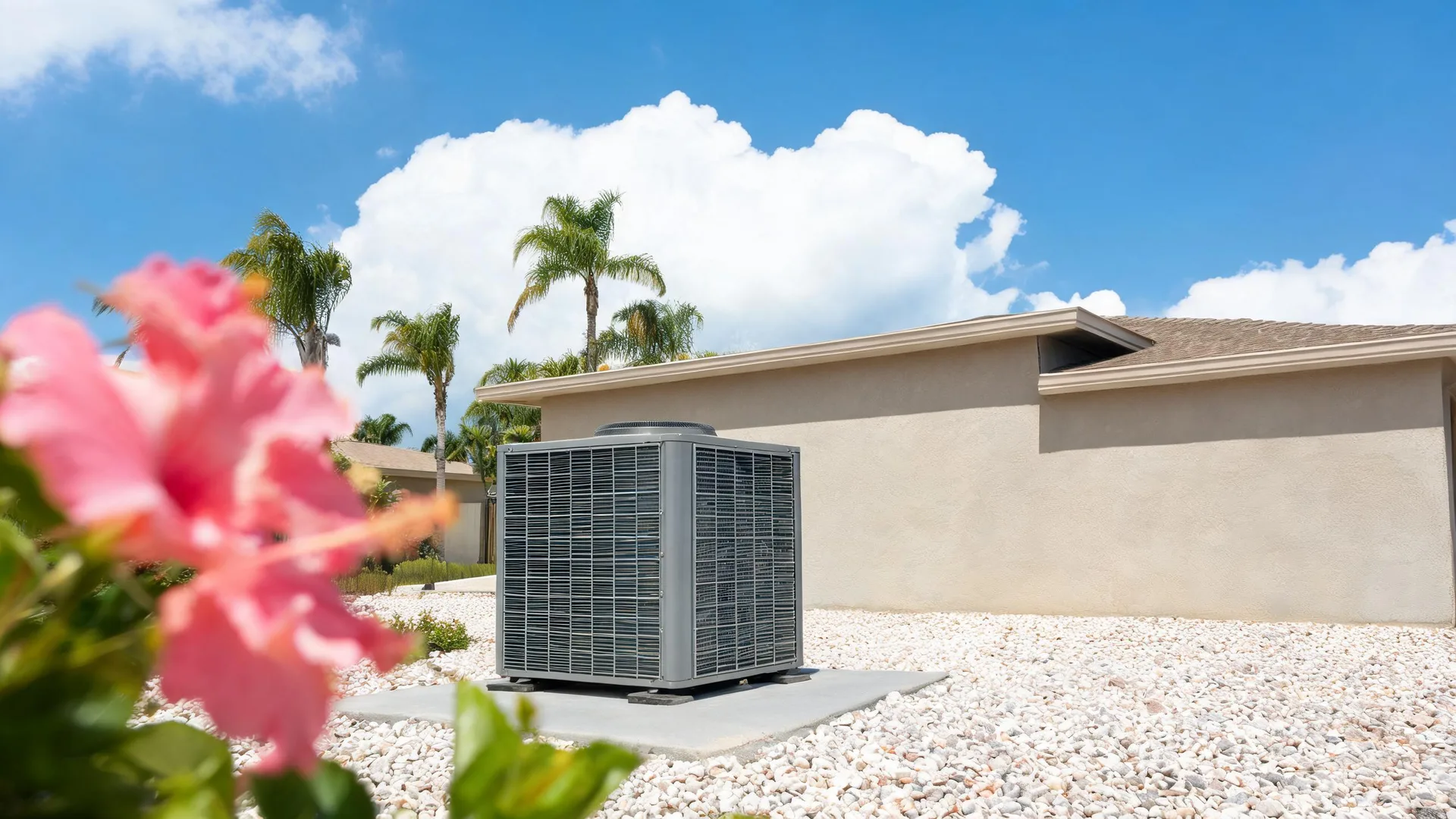
An outdoor air conditioning condenser unit mounted on a concrete pad in front of a single-story suburban house.

Heat Pump Installation in Charleston, SC

Tell us about the job

Takes about a minute. No obligation.

New system or replacementHeat PumpCharleston County, SC
Step 1 of 2

What ZIP code is the job in?

Most homes in Charleston County heat with electricity, at 75.9%. Gas heat is the exception here, at 20.2%. A heat pump fits the way this area already runs, pulling heat from the outside air instead of burning fuel. The tradeoff is that it leans on the power grid, and this is a place where the power grid doesn't always hold up. Worth asking any contractor how the system you're looking at handles an outage, and what happens to heat and cooling until the power comes back.

5 months
November through March, your system heats
6 months
May through October, it cools
41°F
the average winter night it heats against
89°F
the average summer afternoon it cools against
Isometric line illustration of a cutaway house showing interior rooms with furniture, ceiling ductwork connected to an indoor air handler, and a line running outside to an outdoor condenser unit.
Your system heats November through March and cools May through October.

NOAA nClimDiv, 1991–2020 normals

A heat pump in Charleston runs April through October for cooling, then November through March for heat.

Get it installed before April and you're not stuck choosing a system in a heat wave with the old one already dead.

Power here runs 14.23 cents a kilowatt-hour, cheaper than most of the country, so a high-efficiency heat pump earns its keep slower. What it does for a hurricane or a hailstorm matters more than what it does for the power bill.

Power costs 14.23 cents a kWh statewide
304 damaging wind events from 2015 to 2024
61 hail events from 2015 to 2024

So don't spend the install budget chasing the highest SEER2 number on the spec sheet. Ask instead what happens when a storm knocks out a transformer and the unit sits outside through wind and flying debris. Ask what the warranty covers if a hailstone dents the cabinet or a tree limb takes out the condenser fan. A contractor who can answer that is worth more here than one who can only talk efficiency ratings. The best unit for a place like Charleston earns its keep by still running after the next storm, not by shaving a few cents off a bill that's already low.

Charleston's climate zone sets the floor for what you can install

Any heat pump installed here now has to hit 14.3 SEER2 and 7.5 HSPF2, the federal minimum as of January 2023. Charleston falls under zone 3A, so a straight swap for whatever is already outside your house isn't guaranteed to qualify. A federal tax credit is available for qualifying equipment, worth asking a contractor about before you settle on a unit.

Find a contractor
A gray outdoor HVAC unit mounted on a concrete pad beside a house with gray lap siding and a stone foundation.

This unit doesn't get a season off

A furnace only fires when it's cold out. A heat pump works the whole time, because the same equipment handles heat and cooling both. That means the compressor and the outdoor fan are cycling on through the stretch most people think of as off season for a heating system. There's no part of the year where this equipment just sits. That's part of why sizing it right matters so much. A unit sized too big for the house will short cycle, kicking on and off instead of running a steady stretch. One sized too small will run flat out trying to keep up and never quite get there. Either way shortens its life. A contractor should size it off a load calculation done on the house itself, not by matching the tonnage of whatever unit is already outside. Equipment that's sized right for the place it's in holds up a lot better over years of running nearly nonstop than equipment sized by guesswork.

Ask what the ductwork can handle

A heat pump moves more air at a lower temperature than a furnace does, running longer stretches at a gentler heat. Ducts sized for a furnace sometimes can't move enough air for a heat pump to keep up, and a contractor should check the duct sizing and layout before quoting equipment, not after it's installed.
Ask about the backup heat source

A heat pump loses capacity as the outdoor air gets colder, and most systems pair with a backup heat strip or furnace for the coldest stretches. Find out what kicks in, how it's controlled, and whether that backup source is included in the quote or an add-on.

The old system doesn't get left in place to make the swap easier. A contractor disconnects the refrigerant lines, pulls the indoor coil, and takes the outdoor unit off its pad. Refrigerant gets recovered into a tank, not vented, because releasing it into the air is against the law. If the old system ran on gas, the gas line to it gets capped off and the vent gets sealed. Most contractors haul the old equipment away as part of the install rather than leaving it for the homeowner to deal with. Worth asking upfront whether removal and disposal is included in the quote or billed separately.

Install day starts with the refrigerant lines and the electrical disconnect, then the old equipment comes out before the new goes in. The outdoor unit sits on a pad, and a contractor checks that pad is level before setting the new one down, because a unit sitting crooked wears its compressor unevenly over time. Inside, the air handler or coil gets swapped and the line set gets connected, then the whole system gets pressure tested before any refrigerant goes in. Once it's charged, a contractor runs the system through a full cycle, heat and cooling both, checking the temperature split at the vents and the pressures on the gauges. That startup check is what catches a bad connection or a charge that's off, not a guess at how the system is running. Walk the thermostat settings with whoever does the install before they leave, since a heat pump's controls aren't wired the same way a furnace's are.