Single-story brick and siding houses with lawns behind a long trimmed hedge, framed by large oak branches draped with Spanish moss under an overcast sky.

Furnace Repair in Charleston, SC

Tell us about the job

Takes about a minute. No obligation.

RepairFurnace or heatingCharleston County, SC
Step 1 of 2

What ZIP code is the job in?

What's failing matters more than how old it is

A cracked heat exchanger means the furnace needs to come out. A bad igniter, a failed flame sensor, or a blower motor on its way out are all repairs a tech can make in a single visit. Age alone doesn't decide this. What part failed and whether it's still available does.

A furnace that keeps coming back is telling you something

One repair is just a repair. But if the same furnace needs a tech out every winter, or the repairs keep hitting different parts, that pattern matters more than any single fix. A furnace that ran fine for years and then had one failure is a different situation than one that's never been reliable at all.

5 months
November through March, your furnace is on duty
41°F
the average winter night it heats against
1 winter storms
in ten years, the nights a failure hurts most
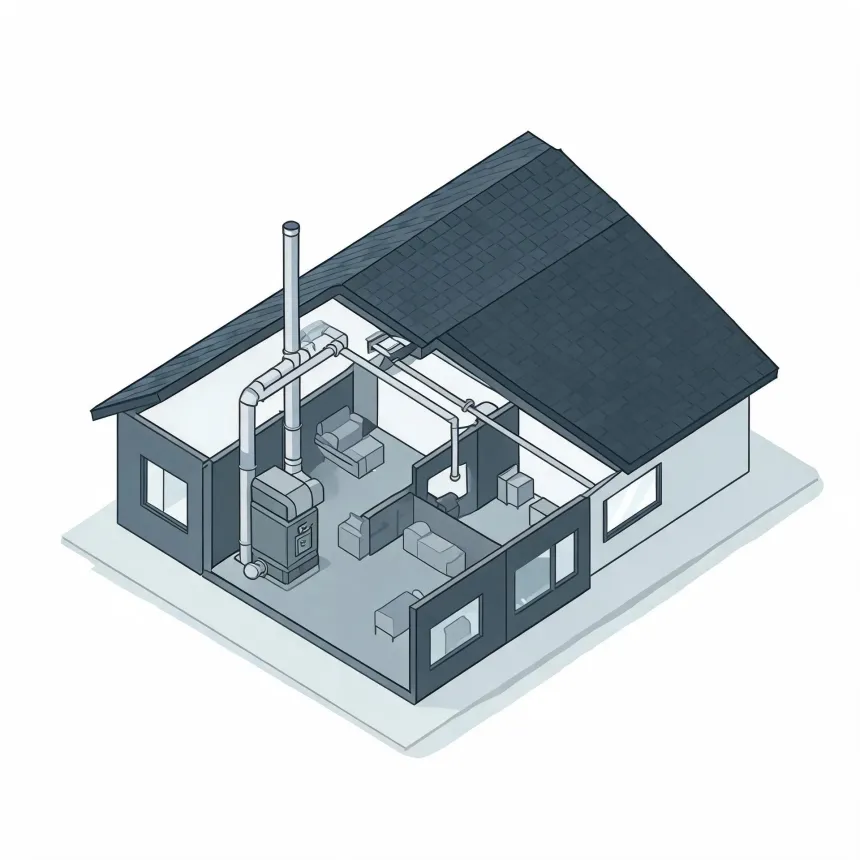
Isometric cutaway illustration of a single-story house showing interior rooms with furniture, a furnace unit connected to ducting and vertical flue pipes running through the roof.
Your furnace works hardest from December through March.

NOAA nClimDiv, 1991–2020 normals

Half the houses in Charleston County were built in 1991 or later.

A furnace that came with a newer house still has years in it, and that's usually a repair.

Charleston doesn't push a furnace hard. November through March, winter nights near 41°F, is an easy job.

Heat runs November through March
Winter nights average 41°F
Climate zone 3A
An easy job for a furnaceHeat runs five months here, and winter nights average 41°F.

October is worth a call before the furnace starts up in November. A part that's been marginal all year, a weak igniter or a flame sensor losing its reading, tends to give out the moment it has to run again after months of sitting idle. It's not that the furnace works hard here. It's that anything already failing has had all summer to fail quietly, and the first startup is what exposes it. Catching it in October means a tech can get to it on a normal schedule instead of you waiting on one during the first cold week.

Repair it

If your system came with a newer house, it likely has plenty of life left. Repair is usually the right call.

Find a contractor
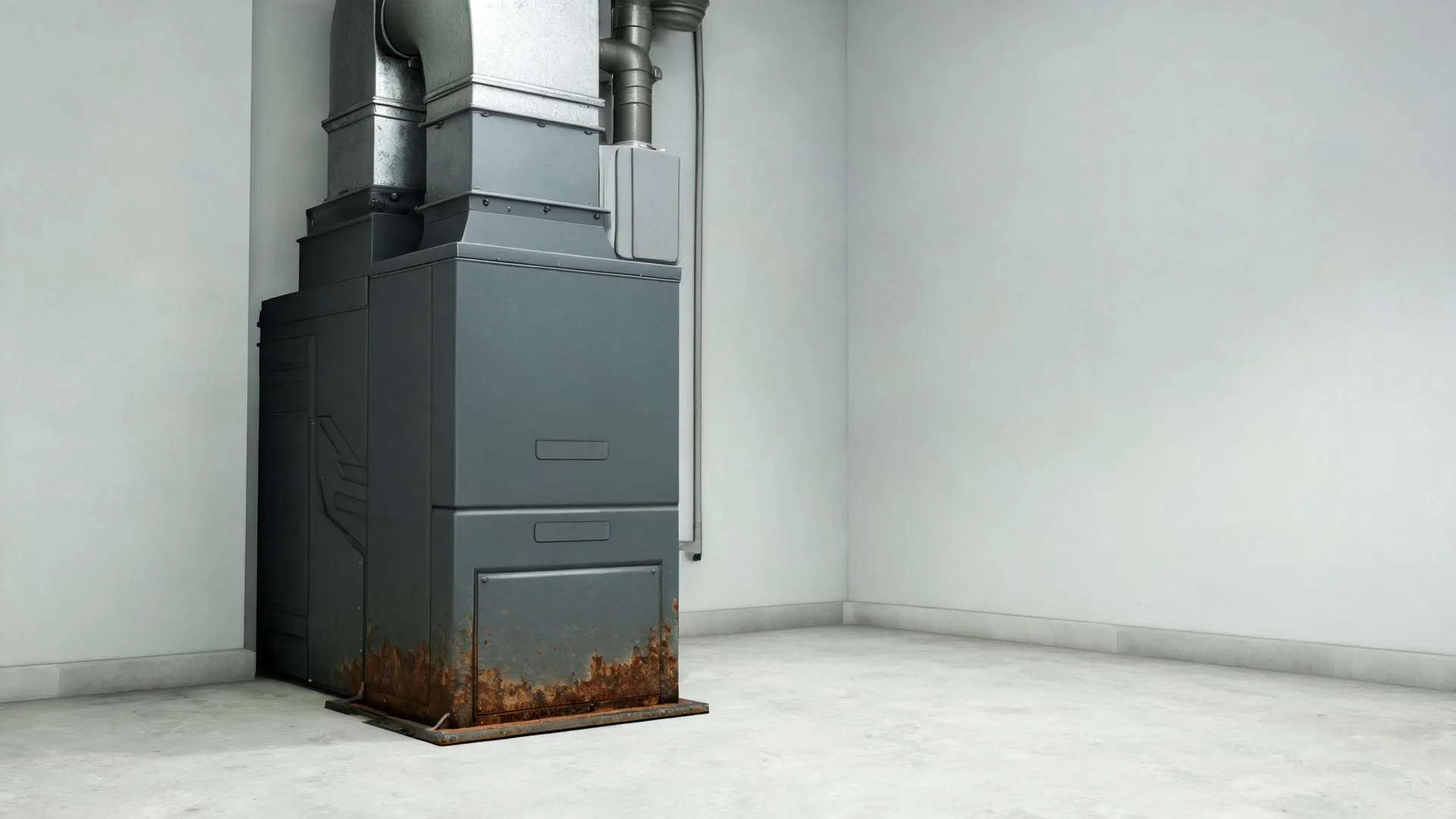
A gray residential gas furnace installed in an unfinished basement, connected to sheet-metal ductwork and PVC pipes.

Still early in its working life

A furnace that's only had to get through a handful of mild winters hasn't put in the hours that wear parts down. If yours came with the house and the house is recent, a tech out for a repair call is working on equipment that's still early in its life. That's worth knowing before anyone talks about replacing it instead.

A small problem can take out a bigger part

A flame sensor that's not reading clean will make the furnace shut off early, and that's the furnace protecting itself. Keep resetting it and forcing it to run anyway, and the next failure can be the blower motor or the heat exchanger instead of a sensor on its own.

Some failures mean stop, not restart

A furnace that shuts off on its limit switch or trips its pressure switch repeatedly is overheating or not venting right. Running it anyway can crack a heat exchanger that was fine a week before. That one doesn't get repaired. It means a new furnace.

Before anyone comes out, check the simple things. Make sure the thermostat is set to heat and set above room temperature, not just on. Check the filter. A filter clogged with dust chokes off airflow, and a lot of furnaces will shut themselves down rather than run that way. Go to the furnace itself and look for a light on the control board. A steady light usually means it's fine. A blinking light is the furnace telling you what's wrong in code, and the pattern is usually printed right on the inside of the access panel. Check that the switch on the furnace itself, the one that looks like a light switch, hasn't been bumped off. If it's gas, make sure the gas valve is open and other gas appliances in the house are working. None of this fixes a cracked heat exchanger or a failed blower motor, but it rules out the things that aren't actually broken.

A tech starts by asking what the furnace was doing before it quit. Short cycling, no heat at all, a burning smell, cold air out of the vents, each of those points somewhere different. Then the cover comes off and the furnace gets watched through a full cycle if it will do one. That means ignition, flame sense, the blower coming on, and whether it holds or trips out partway through. A meter checks what you can't see by eye. Voltage at the control board. Resistance across a flame sensor or limit switch. Amp draw on the blower motor if it sounds weak. Gas pressure gets checked at the valve, and the venting gets checked too, because a furnace drafting wrong will keep tripping its pressure switch no matter what else is fine. Most of this points to one part before the panel goes back on.