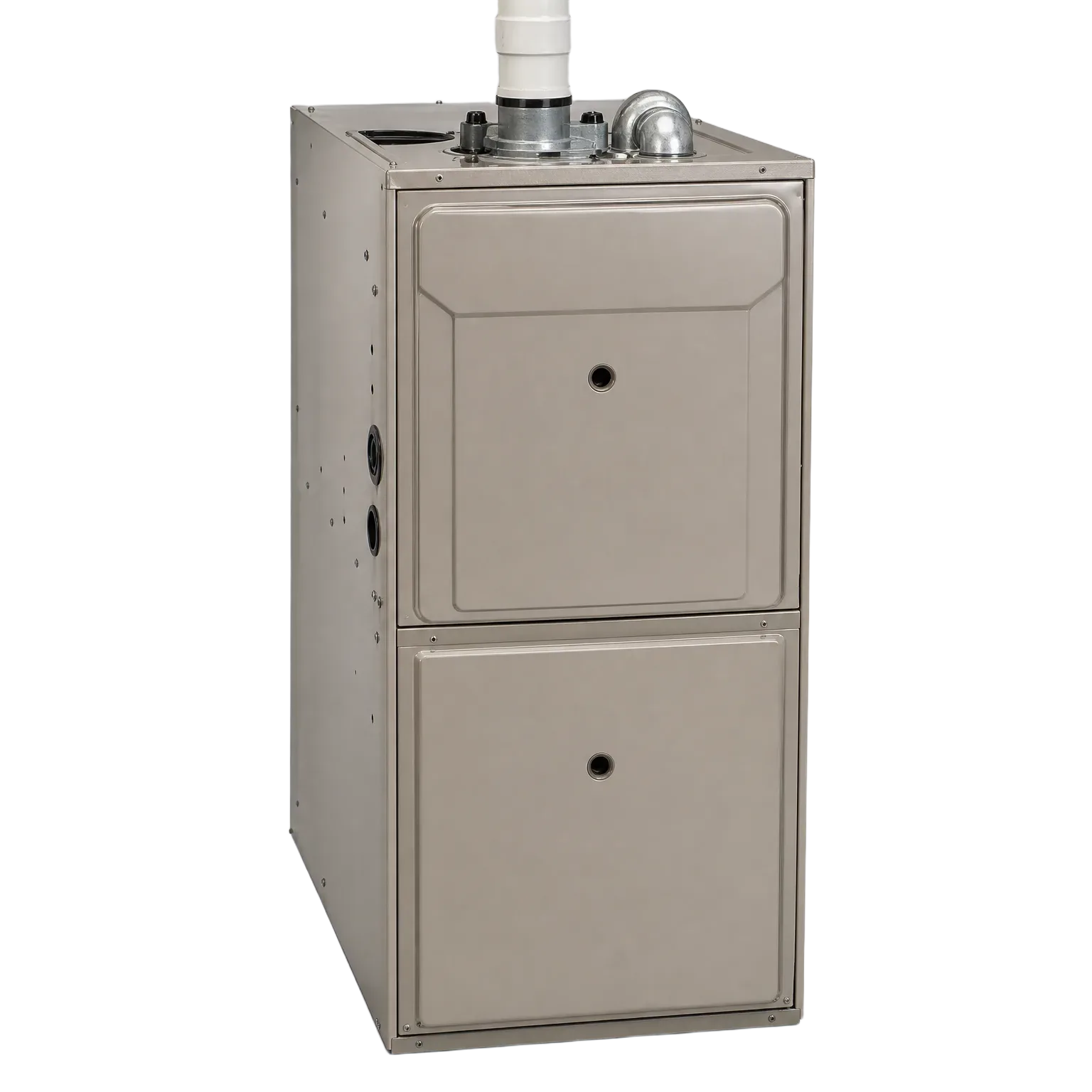

A gas furnace already in the house
If your house was built with gas heat and ductwork already run, a new high-efficiency furnace is a straightforward swap. The vent pipe and gas line are in place, and most of the install cost is the unit itself.
A local installer who puts in furnaces gets your project.
Find a furnace proProbably not, if your house already heats with electricity, which most houses in Charleston County do. A high-efficiency gas furnace saves money by burning less fuel over a long, cold winter, and winters here are mild. Charleston rarely asks a furnace to work hard, so there are fewer months and fewer degrees for the higher efficiency to claw back what it costs over a standard model. If you already have a gas furnace and it needs replacing, the math still depends on how much you actually run it, not on the rating printed on the unit. For most homes here, the bigger cost and comfort question is the air conditioner and the heat pump, since those run for most of the year in this climate. A furnace upgrade matters more if you heat with gas and run it often, less if electric heat or a heat pump is already doing the job.

If your house was built with gas heat and ductwork already run, a new high-efficiency furnace is a straightforward swap. The vent pipe and gas line are in place, and most of the install cost is the unit itself.

An older furnace like this one still does the job, but dust and age catch up with any unit eventually. Since the gas line and ducts already exist, replacing it with a high-efficiency model costs less than adding gas heat where there is none.




Charleston furnaces run a few months a year at most. A high-efficiency model burns less gas per hour, but with so few hours logged, the extra cost takes longer to earn back.
If your house heats with electric resistance or a heat pump, there is no gas furnace burning fuel to begin with, so a high-efficiency gas unit has no bill to shrink.
Winter nights average 41°F
Winter nights average 41°F. That's cold enough to want heat, not cold enough to push a furnace hard night after night.
Heat runs November through March
Heat runs November through March here. A furnace sized and fueled for that stretch doesn't have much ground to make up efficiency gains on.
75.9% of homes heat with electricity
75.9% of homes in Charleston County heat with electricity. If yours is one of them, there's no gas bill for a high-efficiency furnace to shrink.
NOAA nClimDiv 1991-2020 · ACS 2020-2024
Cold air returns through the ducts to the furnace.
Gas burners ignite and heat the heat exchanger.
The inducer motor pulls exhaust through a second heat exchanger.
That second pass wrings more heat from the exhaust.


Most of what decides this question isn't the furnace. It's what's already under your house or behind your walls. If you heat with electricity now, there's no gas line to tap into and no vent pipe already run to the outside. Putting in a high-efficiency gas furnace from scratch means the gas utility, a new line, new venting, and in some cases duct changes, all before the furnace itself gets installed. That's a different project than a furnace swap, and it costs accordingly.
If gas heat is already in the house, the math looks different. The line is run, the vent is in place, and a contractor is mainly pulling one furnace and setting another where it already sits. That's the case where the upgrade tends to pay for itself faster, because most of the expense is the equipment, not the infrastructure around it.
Charleston winters cut into the payback either way. Heat here runs maybe five months a year, and on a lot of those nights it barely needs to run at all. Fewer hours means fewer chances to recover what a high-efficiency unit costs over a standard one.
Before deciding, look at what you've actually got. A gas line already there changes the answer. No gas line, and electric heat already doing the job, changes it back.


Send the form and the search for an installer is over.
You only hire the pro if you want to.
A house with a gas furnace already has the vent pipe, the gas line and the ductwork in place. Moving to high-efficiency means swapping the unit and running new PVC intake and exhaust pipe where the old metal flue used to go. The upgrade pays toward itself through November to March, and in a mild Charleston winter, that stretch is short. If the old furnace is on its way out anyway, replacing it with a high-efficiency model costs little more than replacing it with a standard one, and the fuel it saves over the next however many winters is real, even if it's modest here.
A house that heats with electric resistance or a heat pump has no gas furnace to upgrade. Getting to high-efficiency gas means a gas line run to the house, new venting, and work on the ductwork if it isn't already sized for a furnace, before the furnace itself goes in. That's a bigger project than swapping an old furnace for a new one, and it only makes sense if something about electric heat isn't working for the house already, high bills on cold nights, a heat pump struggling below freezing, or a system near the end of its life. Short of that, there's no gas furnace to make more efficient.


A high-efficiency furnace recovers its extra cost by burning less gas, hour after hour, all winter. In a place where the furnace runs from November through March and the nights get into the 30s and 40s, those hours add up and the unit gets worked enough to pay back the difference. In Charleston, the furnace sits idle most of the year and only sees real use on the coldest nights. Fewer hours of runtime means fewer gallons of gas saved, and that slows down however many years it would normally take to earn back the higher price of the unit.
A high-efficiency furnace still cuts your gas bill every month it runs, even if that's only a few months a year. It also tends to be better built, with a sealed combustion chamber and a second heat exchanger that squeezes more heat out of the same gas. If the furnace you have now is old enough to need replacing anyway, paying a bit more up front for the efficient version costs little extra over the life of the unit, and you get lower bills on the nights you do need it.
41°F is a cold night, not a hard freeze. Your furnace will click on, run long enough to take the chill off, and shut back down. That's a light load, and it's part of why a high-efficiency model has fewer hours to earn its keep.
NOAA nClimDiv 1991-2020

For most houses in Charleston County, no. Electric heat is what most homes here run, and a high-efficiency gas furnace has nothing to save against if there's no gas bill in the first place. For the houses that already have a gas furnace, ductwork and a vent pipe in place, the upgrade is a straightforward swap, and the short, mild winter still limits how fast it pays for itself.
Where you land depends on what's already in your house, not on anything you did wrong or should change. If you're not sure whether your setup makes this a real option or a long shot, a contractor who knows the local gas and electric split can look at your house specifically and tell you where you stand. Send in your details and one will reach out to walk through what your house actually has to work with.


Get matched with a furnace pro in Charleston County