Furnace won't turn on in Charleston, SC

A Charleston County pro who repairs furnaces gets your request.

Get matched

Most homes in the Charleston area heat with electricity, so when a furnace won't turn on, the problem is usually electrical rather than a gas or pilot issue. Start with the thermostat: check that it's set to heat and the setting is above room temperature. Next check the breaker panel. A tripped breaker or a blown fuse will shut the whole system down with no warning at all. If power is reaching the unit, the trouble is often a safety switch that's cut the circuit, a failed igniter, or a blower motor that won't start. Some of these are a five-minute fix. Others mean a part has worn out and needs replacing. Since winters here are mild, a furnace that sits unused for months can develop a problem that only shows up the first cold morning you need it. Catching it early, before you're without heat on a cold night, is worth the call.

A woman in a gray turtleneck sweater stands near a window with snow outside, in a dimly lit living room with a lit Christmas tree, table lamp, sofa and bookshelf.
A woman in a cream knit sweater with her hair in a bun stands in a dimly lit living room looking out a large window at snow-covered evergreen trees, with a lamp, sofa, framed picture and lit candle behind her.
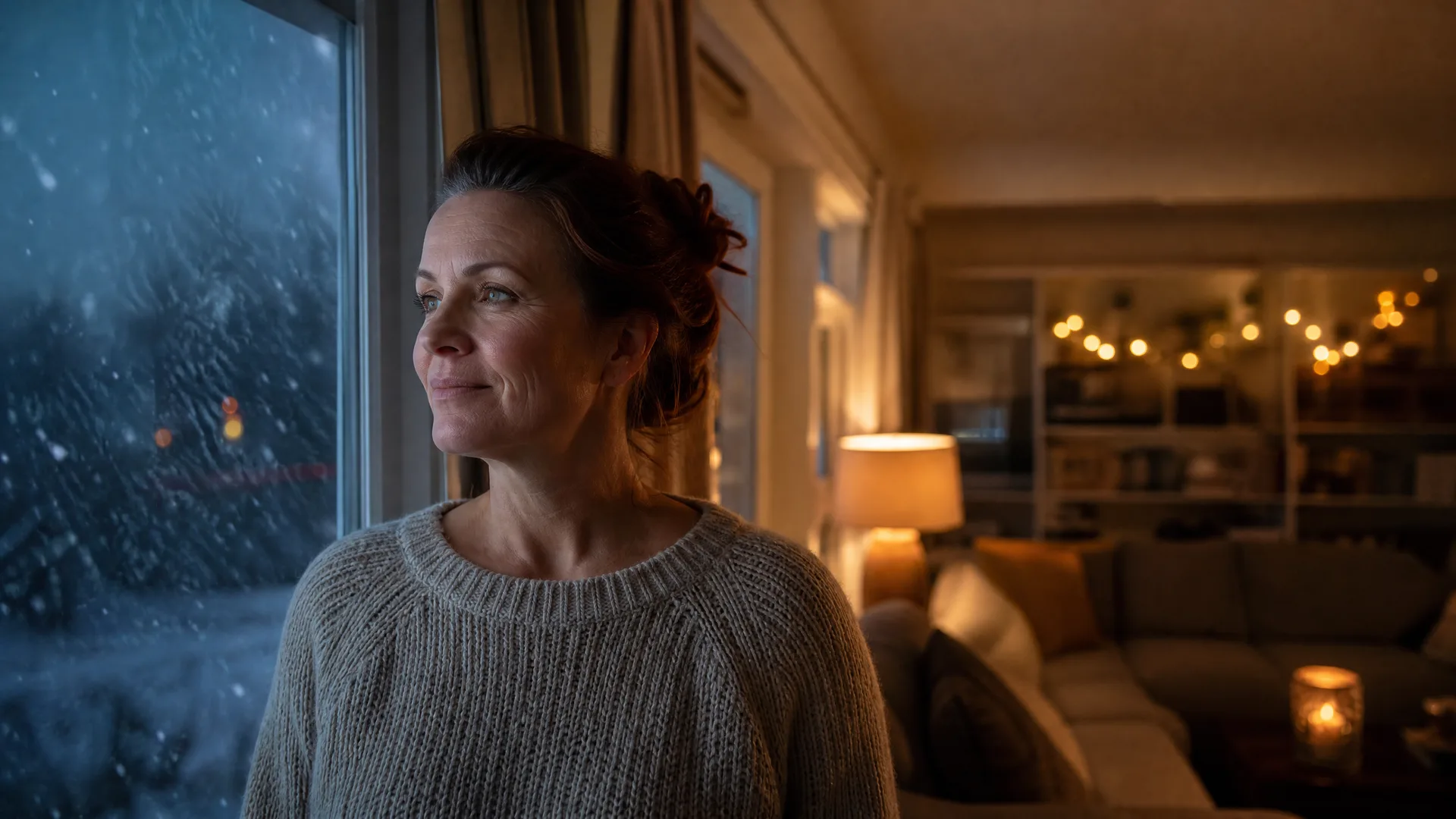
A woman in a thick gray knit sweater stands beside a window looking out at falling snow, with a dimly lit living room containing a lamp, sofa, string lights and a candle behind her.
A woman in a gray turtleneck sweater stands in a dimly lit room with a lit table lamp, framed picture and sofa, looking toward a window with snow outside.

Why won't the heat come on at all?

You bump the thermostat up and nothing happens. No air moving, no sound from the unit, nothing warm coming out of the vents. Maybe the display on the thermostat itself is blank or won't respond when you press it. Maybe you hear a click when it kicks on, then silence again a few seconds later. If the breaker for the furnace has tripped, you might notice other things on that circuit are also out. None of this is normal, and if the house is cooling off while this sits, a mild Charleston winter still means your floors and rooms get noticeably cold, and anything plumbed near an exterior wall is more exposed to that cold than usual.

  1. Thermostat calls for heat and sends power to the control board

  2. Control board checks the limit switch and safety circuits first

  3. Blower door switch confirms it's shut before anything fires up

  4. Igniter or pilot lights and the burners start heating the air

How cold does it actually get, and how often does your furnace need to work?

  • Winter nights average 41°F

    Winter nights here average 41°F in December, January and February. That's cold enough to run heat most nights, but not cold enough to push a failing system to its limit fast.

  • Heat runs November through March

    Heat runs November through March, about five months a year. A furnace that won't start now may sit broken for a while before the cold makes it obvious.

  • 75.9% of homes heat with electricity

    Electricity heats 75.9% of homes in Charleston County. If yours is one of them, a furnace that won't turn on usually points to a breaker, a switch, or a thermostat, not a gas line.

NOAA nClimDiv 1991-2020 · ACS 2020-2024

A beige high-efficiency furnace in an unfinished basement, with white PVC vent pipes, a yellow gas line, metal ductwork, and exposed wood framing on a concrete floor.

Furnace running right

This is what a working setup looks like. Power gets to the board, the blower door switch is shut, and the burners light on command. The gas line and electrical junction box are routed clean, so nothing is pinched or loose where it could cut the signal.

An older beige furnace with two louvered vent panels stands on a concrete basement floor, connected to galvanized ductwork and a metal flue pipe, with gas piping and flexible conduit on the wall behind.

Furnace that won't start

An older unit like this can fail quietly. Iron gas pipe and flexible conduit corrode over years, a connection loosens, and the board never gets what it needs to fire the burners. No sound, no warm air, and no obvious sign why from outside the cabinet.

Fix It Yourself or Call a Tech

Call a repair tech

  • A local tech can test the control board and limit switch in one visit and tell you which part failed.
  • Most furnace no-start problems come down to a blown fuse, a tripped switch, or a bad igniter, all of which get fixed the same day.
  • Someone who works on these systems all winter knows which part on your model tends to go first.
  • You get a straight answer on whether the unit is worth fixing instead of guessing from the internet.
  • If the blower motor or board is the issue, a tech has the tools to confirm it without taking the whole furnace apart.

Keep troubleshooting yourself

  • Checking the thermostat setting and the breaker costs nothing and solves the problem often enough to be worth doing first.
  • Resetting a tripped switch or flipping a breaker back on takes a minute and needs no tools.
  • If the furnace stays dead after the easy checks, you're guessing at parts you can't test without the right equipment.
  • Opening the unit without knowing what you're looking at risks missing a safety switch that's doing its job correctly.
  • Waiting it out in a mild Charleston winter is possible, but a dead furnace on a cold night still leaves the house cold until someone looks at it.
An older gas furnace with two louvered front panels stands on a concrete basement floor beside galvanized sheet-metal ductwork, pipes, and a weathered concrete wall.
Before you get your furnace repair
A gray high-efficiency furnace in a basement, connected to sheet-metal ductwork on the left and white PVC vent pipes above, with black gas and drain piping and an exposed wood-stud wall with OSB sheathing on the right.
After you get your furnace repair
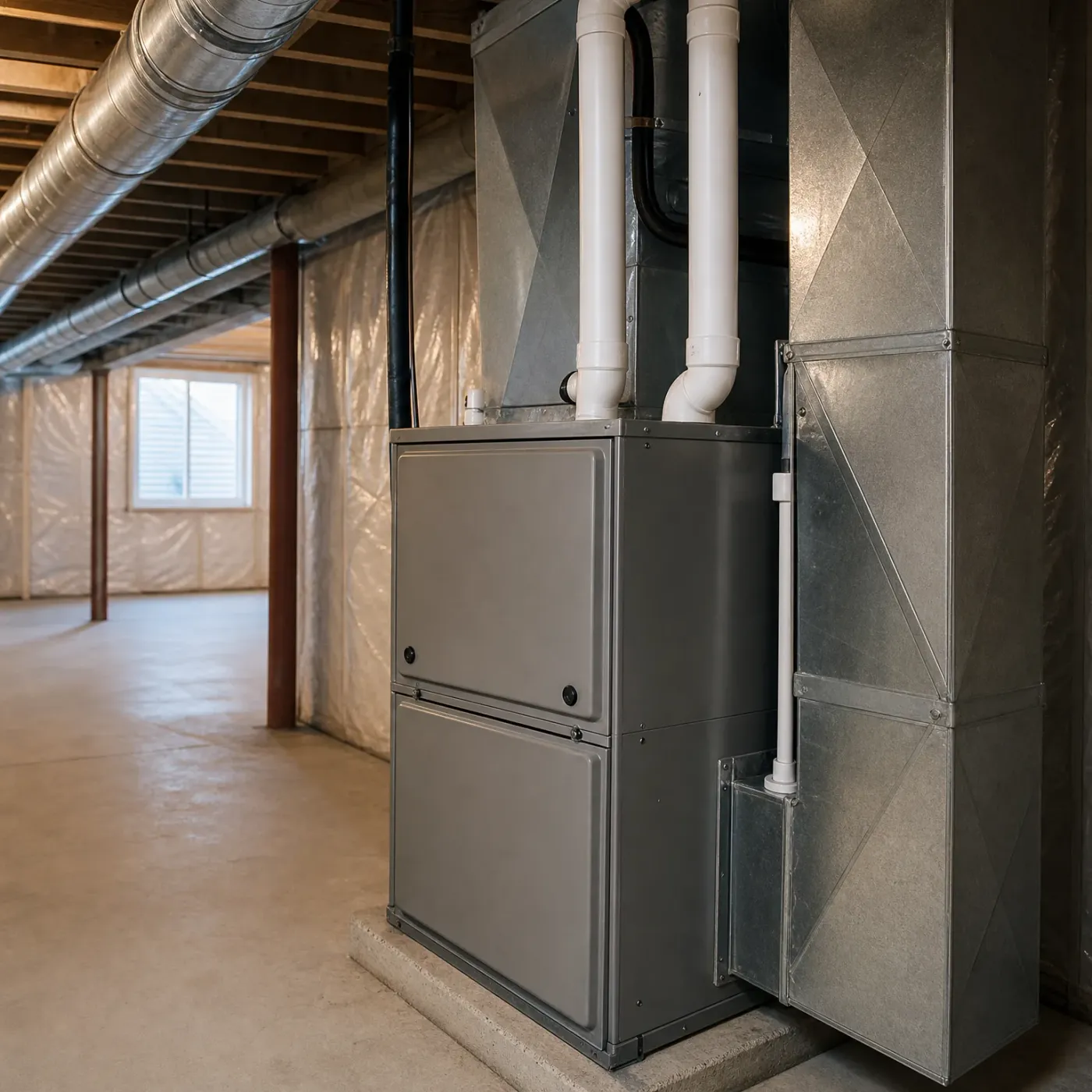
A gray high-efficiency furnace on a concrete pad in an unfinished basement, with white PVC vent pipes, galvanized sheet-metal ductwork, insulated walls and a small window in the background.

Get matched with a furnace pro in Charleston County

The pro who gets in touch is licensed in South Carolina and works in Charleston County.

Your request goes to a Charleston County pro who takes furnace jobs.

Reach a local pro

It costs nothing to send, and you don't have to hire anyone.

A woman in a long cream cardigan and jeans stands at an open wooden front door of a gray shingled house with stone-based porch columns, with a second person visible inside, and potted flowers and shrubs beside the entry.

What a dead furnace means for your house

A furnace that won't fire doesn't just mean a cold room. If yours runs on electric strip heat or ties into a heat pump, the same panel that failed to start the furnace may be feeding other things in the house, so check whether you've lost power anywhere else before you assume it's just the furnace. A blank thermostat display is worth noting for whoever comes to look, since it points toward the breaker or the transformer rather than the burners.

Charleston winters don't demand much of a furnace most nights, which is exactly why a bad part can sit there for weeks before you notice. The system might only need to run a few hours overnight, so a tripped switch or a cracked igniter can go unnoticed until a colder stretch finally calls for real heat and nothing happens. A tech who works this equipment around Charleston County regularly has seen that pattern before and knows where to look first. You'll be matched with one contractor local to your area, not a handful competing for the job, and that person will reach out directly once you request service.

Interior corner with sheer white curtains at a window, a brown upholstered sofa in the foreground, and a wooden multi-drawer cabinet holding a round ceramic vase with leafy branches.
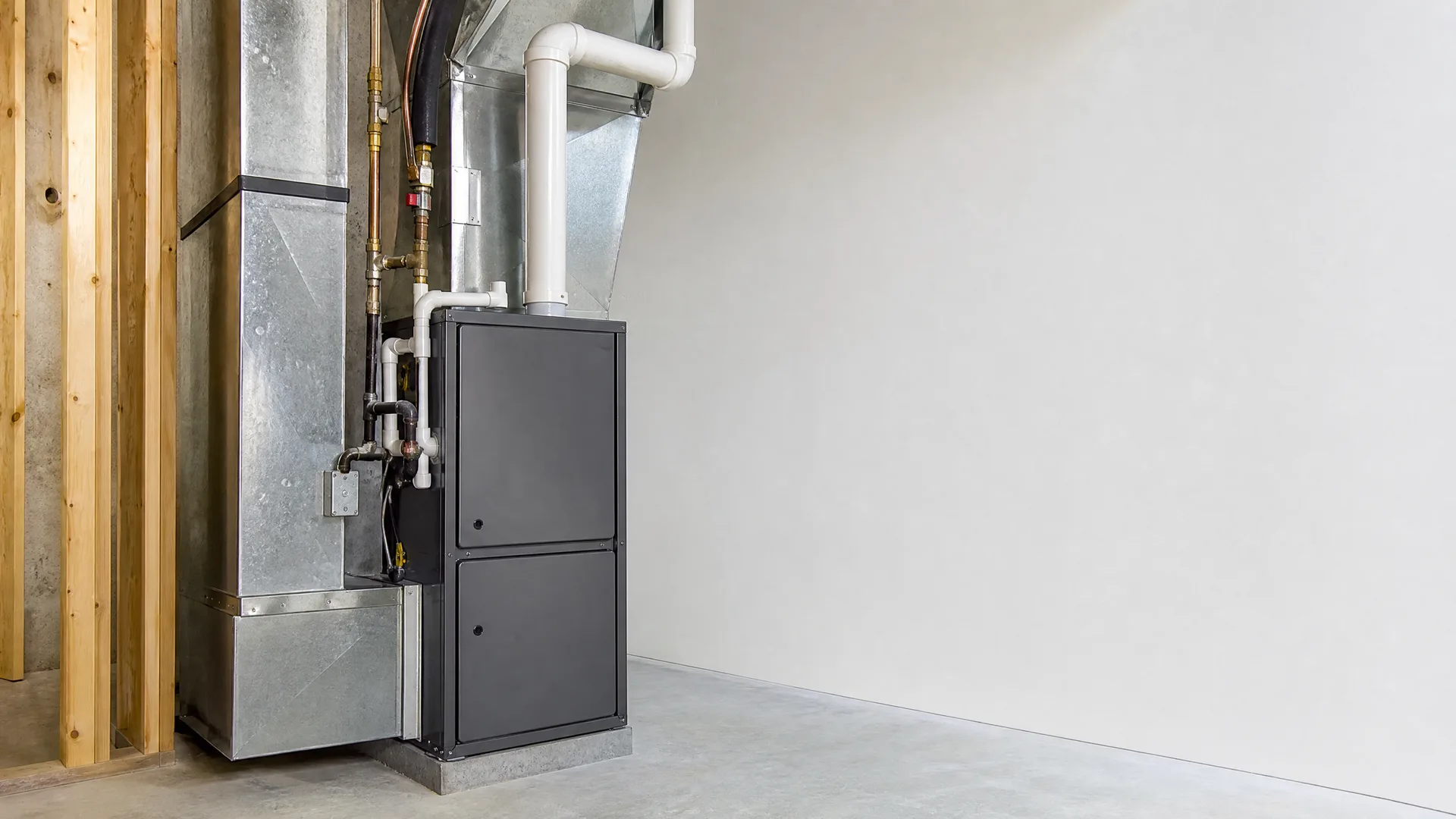
A dark gray furnace connected to galvanized sheet-metal ductwork, white PVC vent pipes and copper piping, standing against a plain light wall in a room with a bare concrete floor and exposed wood framing at left.

The limit switch and overheating

The limit switch sits near the heat exchanger and watches the air temperature inside the furnace. If airflow is blocked, by a dirty filter or a closed vent, the air inside can't move fast enough to carry the heat away, and the switch trips to keep the exchanger from overheating. A tripped limit switch stops the burners and often the blower too, so the furnace sits dead until airflow is restored and the switch resets.

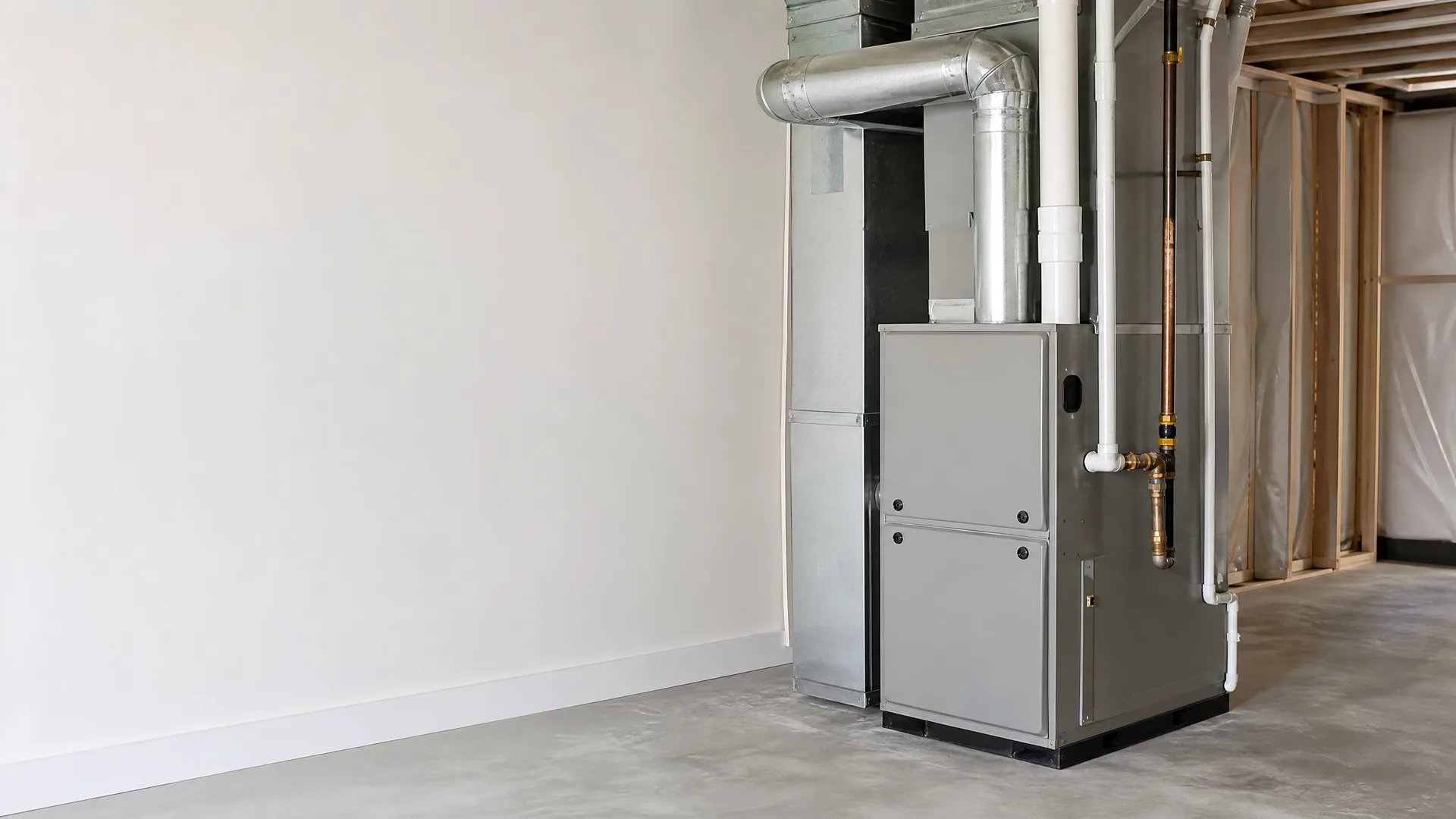
A gray high-efficiency furnace with sheet-metal ductwork, white PVC vent pipes and copper piping stands against a wall in an unfinished basement with a concrete floor and insulated wood stud framing at right.

What the blower door switch does

The blower door switch is a small plunger behind the front access panel. The panel has to be seated and latched for the plunger to press in, and until it does, the furnace won't run at all. This is a safety feature, not a malfunction, so if a panel got left loose after a filter change or a repair visit, that alone can explain why nothing happens when the thermostat calls for heat.

Why does my furnace click but not light?

You hear a click, maybe a few clicks in a row, and you wait for the burners to catch. They don't. No flame, no warm air, just the click and then quiet. It's a different problem than a furnace that does nothing at all, and it usually points to one specific part rather than a dead circuit.

The igniter is trying and failing to light the burners

That click is the igniter trying to do its job. On most furnaces it's supposed to glow hot enough to catch the gas within a few seconds, and if it can't, the system will often try again two or three times before it locks out and shuts itself down for safety. A cracked or worn igniter usually can't hold enough heat to light the burners even though it still clicks and sparks. The flame sensor can also cause this if it's coated in residue and can't confirm a flame once one starts, so the system cuts gas and tries again. Either part is a common failure point and neither is something to keep resetting on your own, since a furnace that keeps trying to light without success is still cycling gas each time it clicks.

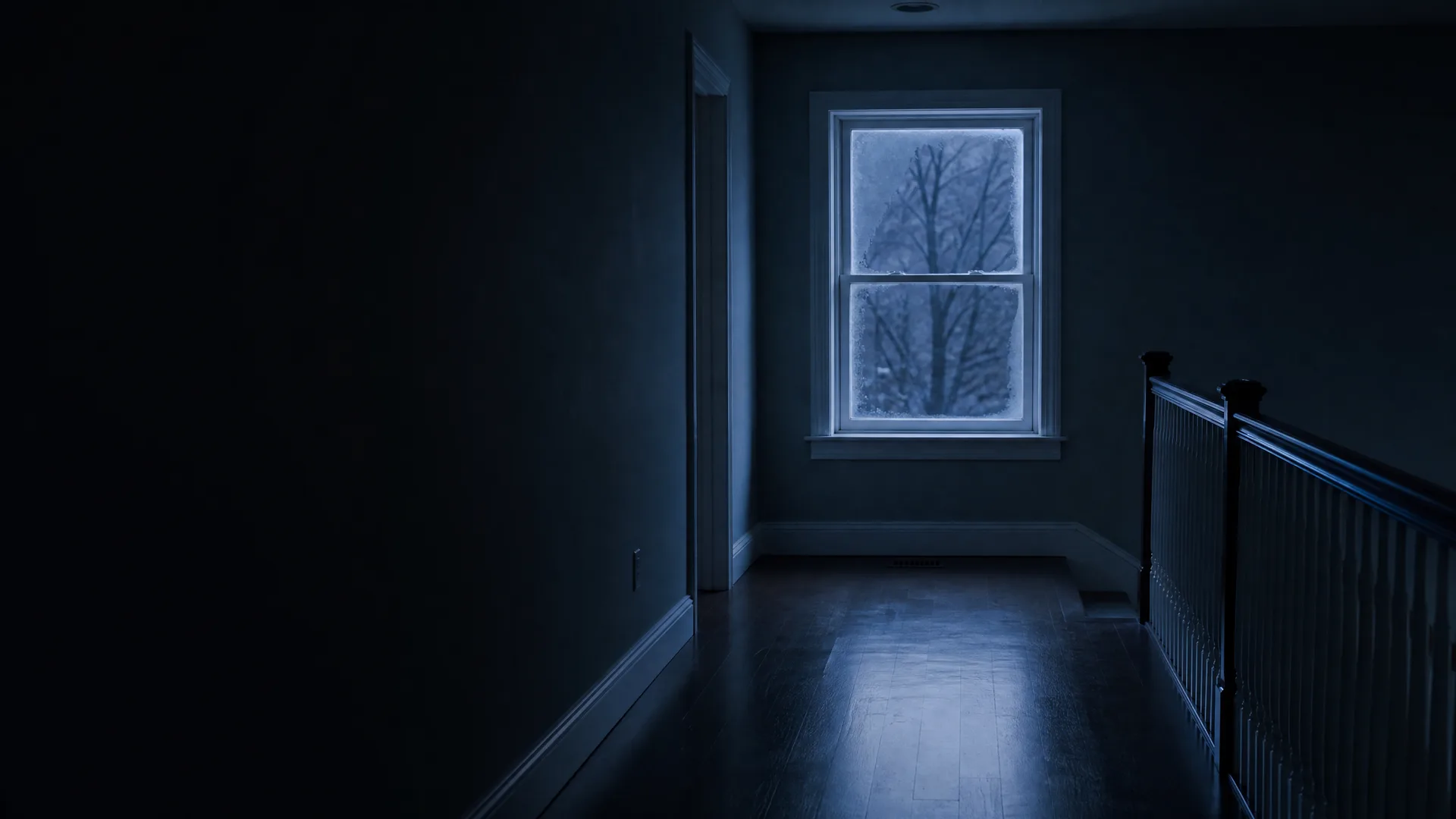
A dark interior hallway with a dark wood floor, a floor vent, a doorway on the left, and a stair railing on the right, lit only by a tall double-hung window showing bare tree branches outside.

It's two in the morning and the house is too quiet. You're standing in the upstairs hallway because your daughter's door was open and the air coming through it felt wrong. The vent by the window isn't doing anything, no hum, no draft, nothing. Frost has crept up the edges of the glass and the hall light has that flat blue cast cold rooms get at night. You hold your hand over the vent anyway, just to check. Outside, a January night in Charleston County isn't brutal, but a house with no heat at 2 a.m. feels colder than the thermometer says. You head downstairs to look at the panel.
A gray high-efficiency furnace with white PVC vent pipes stands against a concrete basement wall beside sheet-metal ductwork, a small condensate pump on the floor, and exposed wood framing at left.
Power reaches the board, the blower door switch is shut, and the burners light when the thermostat calls.
A gray sheet-metal furnace with flue pipe and adjacent ductwork stands against a stone basement wall on a concrete floor, with white PVC and metal pipes running nearby.
Loose gas and electrical connections in an older mechanical room are what stop a furnace from firing at all.

Winter nights average 41°F

At 41°F, your furnace isn't fighting a hard freeze, it's cycling on and off most nights to take the chill out of the air. That on-off pattern puts more wear on the igniter and the switches than a furnace running steady, so a small fault shows up sooner than you'd expect.

NOAA nClimDiv 1991-2020

A bearded man in a plaid flannel shirt sits indoors looking out a window at snow-covered trees, with a steaming mug on the sill and wooden kitchen shelves behind him.
A smiling man in a dark blue T-shirt sits on a light gray sofa in a living room with a wooden shelf and window behind him, with a laptop edge visible in the foreground.

Where this leaves your furnace

  • A furnace that won't start almost always traces back to power: a tripped switch, a blown fuse, or a thermostat not calling for heat.
  • The limit switch and blower door switch exist to stop the furnace, not start it, so checking those first saves a wasted visit.
  • A furnace that clicks but won't light points to the igniter or the gas valve, not the electrical side of the system.
  • Charleston's mild winters mean your furnace cycles on and off most nights instead of running steady, which wears switches and igniters faster than steady use would.
  • A local tech who works on furnaces all winter in this area has likely already seen whatever's stopping yours from firing.
  • You'll be matched with one licensed contractor near you, not a handful of companies competing for the job.

Most of the time, a furnace that won't start in Charleston comes down to power, not gas. A switch tripped, a fuse blew, or the thermostat never sent the call for heat. The limit switch and the blower door switch are built to stop the furnace when something's wrong, so they're the first place to look, before anyone assumes the worst. If you hear clicking but never get flame, that's a different problem. That's the igniter or the gas valve, and no amount of checking breakers will fix it.

Your winters here are mild enough that the furnace never runs flat out. It cycles on and off most nights instead, and that stop-start pattern wears on switches and igniters faster than a furnace that just runs steady through a hard freeze would. So a part that's starting to fail shows up sooner here than it might somewhere colder, even with less total use.

None of this requires guessing once someone's looked at the board and the switches in person. A tech who works on furnaces all winter around Charleston has likely already run into whatever's stopping yours, because the same few failures account for most no-start calls in this area. When you request service, you're matched with one licensed contractor local to you, not several competing for the job, and that contractor reaches out to look at what's actually in front of them.

A dark gray high-efficiency furnace with two white vent pipes and connected sheet-metal ductwork stands in an unfinished basement with concrete walls, a support pole, and a small window.

Find a furnace repair pro in Charleston County

RepairFurnace or heatingCharleston County, SC
Step 1 of 2

What ZIP code is the job in?