Furnace blowing cold air in Myrtle Beach, SC

Send it today

Mild as winters are here, a furnace that blows cold air still leaves you without heat on the nights you need it most. Most homes around Myrtle Beach run on electric heat, and when that system quits doing its one job, you're left checking vents by hand, wondering if it's the thermostat or something worse. Figuring out who actually works on furnaces in Horry County, then calling around and explaining the same problem three or four times, takes hours you don't have in a cold house. Send the form here and that search is done. You stop being the one tracking down a contractor, comparing who called back, sorting through quotes. Someone qualified gets your information and takes it from there. That's the part of this that's off your plate the moment you hit send.

Most of the time this means the furnace is running but not heating, which almost always points to the electric heating elements or the heat pump side of the system, not the blower itself. If your system came with the house, it's worth checking whether it's a heat pump with electric backup or a straight electric furnace, since the fix differs. A heat pump that's stuck blowing cold could be low on refrigerant, iced up, or stuck in defrost without switching back. A straight electric furnace blowing cold usually means one or more heating elements have failed, or the limit switch has tripped and shut them off while the blower keeps running. Either way, the air moving through your vents is coming from a blower that works fine. The part that's supposed to warm that air before it leaves is the part not doing its job. On a mild winter night that's an annoyance. On a cold snap it's the difference between a warm house and one that stays cold no matter how high you set the thermostat.

Why does cold air from the furnace matter if winters here are mild?

  • Winter nights average 37°F

    Nights still drop to 37°F on average in December, January and February. That's cold enough that a furnace blowing cold air leaves a house genuinely hard to live in, not just chilly.

  • Heat runs November through March

    Heat only has to work November through March here. Those five months are exactly when you can't afford the system to sit broken, since there's no backup stretch of mild weather ahead to wait it out.

  • 86.4% of homes heat with electricity

    86.4% of homes in Horry County heat with electricity. If yours is one of them, cold air usually means the heating elements or the heat pump side, which is worth knowing before anyone touches the furnace.

NOAA nClimDiv 1991-2020 · ACS 2020-2024

The heat strips aren't kicking on

On most systems here, the backup heat is a set of electric strips that take over when the heat pump can't keep up or when something in the pump side fails. If those strips lose power to a tripped breaker or a bad relay, the blower still runs on schedule, pushing room-temperature or cold air through the vents the whole time. You won't hear anything wrong. The fan sounds normal, the thermostat shows it's calling for heat, and the house still gets colder. A contractor can test the strips directly and tell you in minutes whether that's where the problem sits.


The heat pump itself has quit

If your system heats with a heat pump rather than strips alone, cold air can mean the outdoor unit has stopped doing its job, whether that's a failed compressor, a refrigerant leak, or a reversing valve stuck in the wrong position. The blower inside keeps moving air because the fan and the heating function run separately. You'll notice the outdoor unit isn't running when it should be, or it's running but the air coming out stays cold no matter how long you wait. This usually takes a contractor on site with gauges and a meter to pin down.

A smiling bearded man in a dark green hooded jacket and blue t-shirt sits on a couch in a living room with shelves, a potted plant, and a bowl of popcorn on a wooden table.
A smiling man in a green long-sleeved shirt sits on a beige sofa in a living room, with a bowl of popcorn in the foreground, a large potted plant and shelving behind him.
A smiling man in a dark blue T-shirt sits on a couch in a dimly lit living room with a bowl of popcorn and a remote on a wooden table, a lit floor lamp and bookshelves behind him, and windows showing greenery.
A smiling bearded man in a dark green long-sleeved shirt sits on a leather couch in a living room, with a bowl of popcorn and a remote control on a wooden table in the foreground.

Most systems around Myrtle Beach are heat pumps, which don't burn anything to make heat. They move it from the outside air into the house, using a reversing valve to switch between heating and cooling. On a cold night that valve has to land in the right position, or the system ends up pulling heat out of the house instead of adding it. Once the outdoor air gets too cold for the heat pump to keep up, electric strips inside the air handler kick in and warm the air directly as it passes through, separate from the outdoor unit entirely. Those strips need power from a working capacitor and a high-limit switch that hasn't tripped. If either fails, the blower keeps running and air keeps moving, but nothing is heating it. Switching the thermostat to emergency heat shuts the heat pump out of the picture and runs the strips alone, which is one of the faster ways a tech can narrow down which side of the system actually failed.

How the heat strips take over

  • A heat pump moves heat from outside air into the house, so it depends on a reversing valve switching position correctly between heating and cooling.
  • When outdoor temperatures drop low enough, the heat pump loses efficiency and the system calls on the electric heat strips to make up the difference.
  • Those heat strips sit in the air handler and warm the air directly as it passes through, separate from the heat pump's outdoor unit.
  • A failed run capacitor or a tripped high-limit switch can stop the heat strips from energizing even though the blower keeps pushing air.
  • If the reversing valve sticks in cooling mode, the system pulls heat from the house instead of adding it, and the vents blow cold no matter what the thermostat is set to.
  • A thermostat set to 'emergency heat' bypasses the heat pump entirely and runs only the electric strips, which helps tell a tech where the fault is.
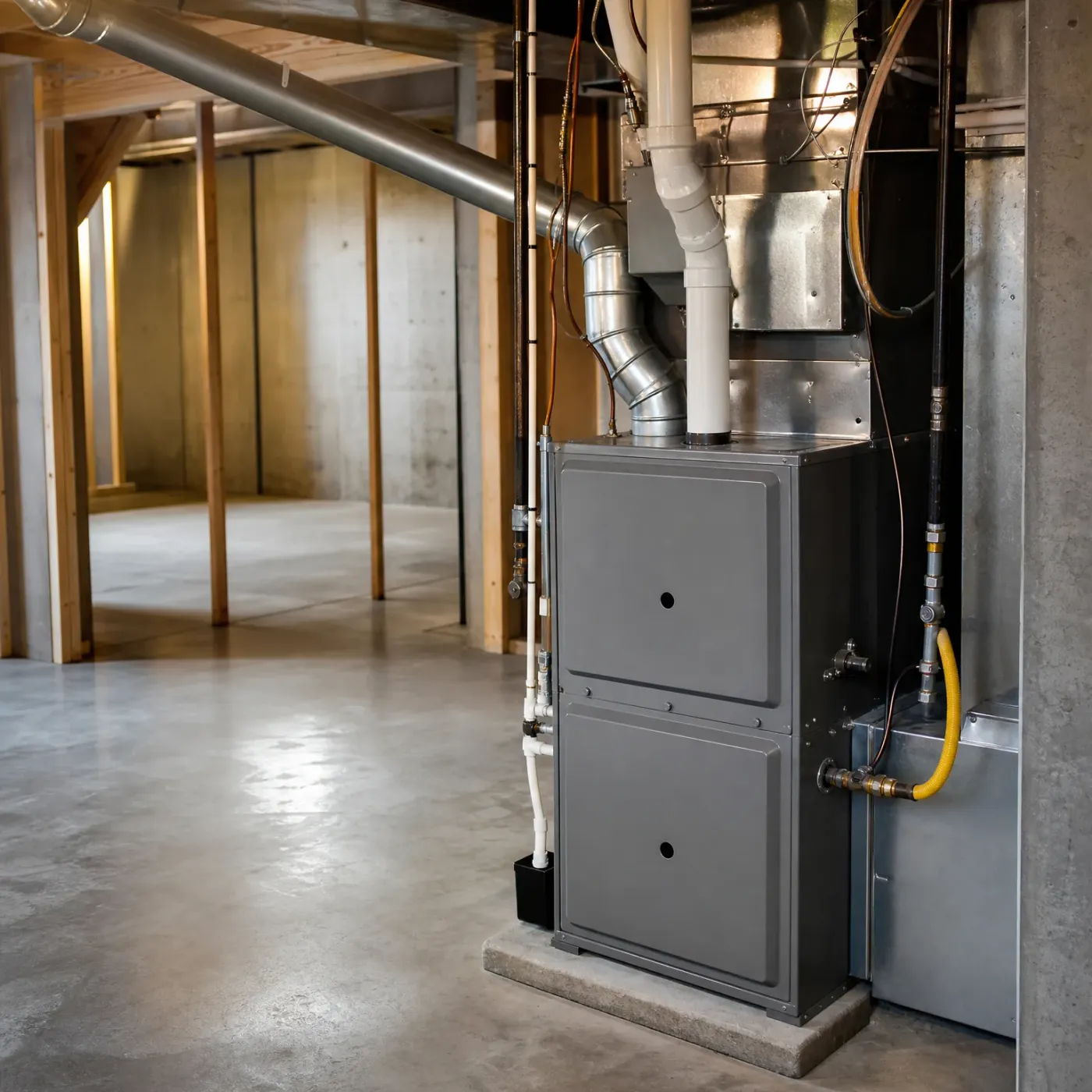
A gray high-efficiency furnace stands on a concrete basement floor beside galvanized sheet-metal ductwork, with white PVC vent pipes, gas and water lines, and unfinished wood framing behind it.
Warm air steady from every vent, no cycling between hot and cold as the heat pump and strips hand off correctly.
A beige furnace with two louvered front panels stands on a concrete basement floor beside galvanized ductwork, metal pipes, and a wooden post.
Air moving but cold at the register, a sign the strips or the reversing valve aren't doing their part.
  1. Thermostat calls for heat and sends power to the control board.

  2. Blower motor starts pulling air through the return ducts.

  3. Heat pump or electric strips are supposed to warm that air.

  4. Reversing valve or a failed relay keeps heat from reaching the air.

What are you noticing in your own house right now

You've probably got your hand up at a vent, feeling for warm air that isn't coming. The blower runs, you can hear it, but what comes out is room temperature or cooler. Maybe the system cycles between a few minutes of real heat and long stretches of just moving air around. At night the thermostat says it's satisfied but the house doesn't feel it, and you end up layering blankets instead of trusting the system. Left alone, this isn't just a comfort problem. A heat pump stuck without its backup strips working can run for hours without actually warming the house, which shows up on your power bill even though you're getting cold air for the effort.

A woman with dark hair in a bun reclines on a gray sofa with her eyes closed and a slight smile, wrapped in a cream knit sweater and blanket, with an open book resting in the foreground and a lit lamp in the dim room behind.
A smiling bearded man in a dark crewneck sweater sits at a dinner table with a lit candle, glasses of wine and water, and plates of food in the foreground, with a lamp, framed art and a potted plant behind him.
A gray gas furnace on a concrete pad in an unfinished basement, connected to sheet-metal ductwork, white PVC venting, and a yellow gas line, with concrete walls and wood framing in the background.

Hand off the search today

Explain the furnace problem once instead of to every shop in Horry County.

After you send the request, you're done searching.

Hand off the search

You only hire the pro if you want to.

Winter nights average 37°F

At 37°F a bedroom cools fast once the air coming from the vent isn't actually warm. There's no cushion built into a house set up for mild winters, so a few hours of cold air from the furnace is enough to feel it everywhere.

NOAA nClimDiv 1991-2020

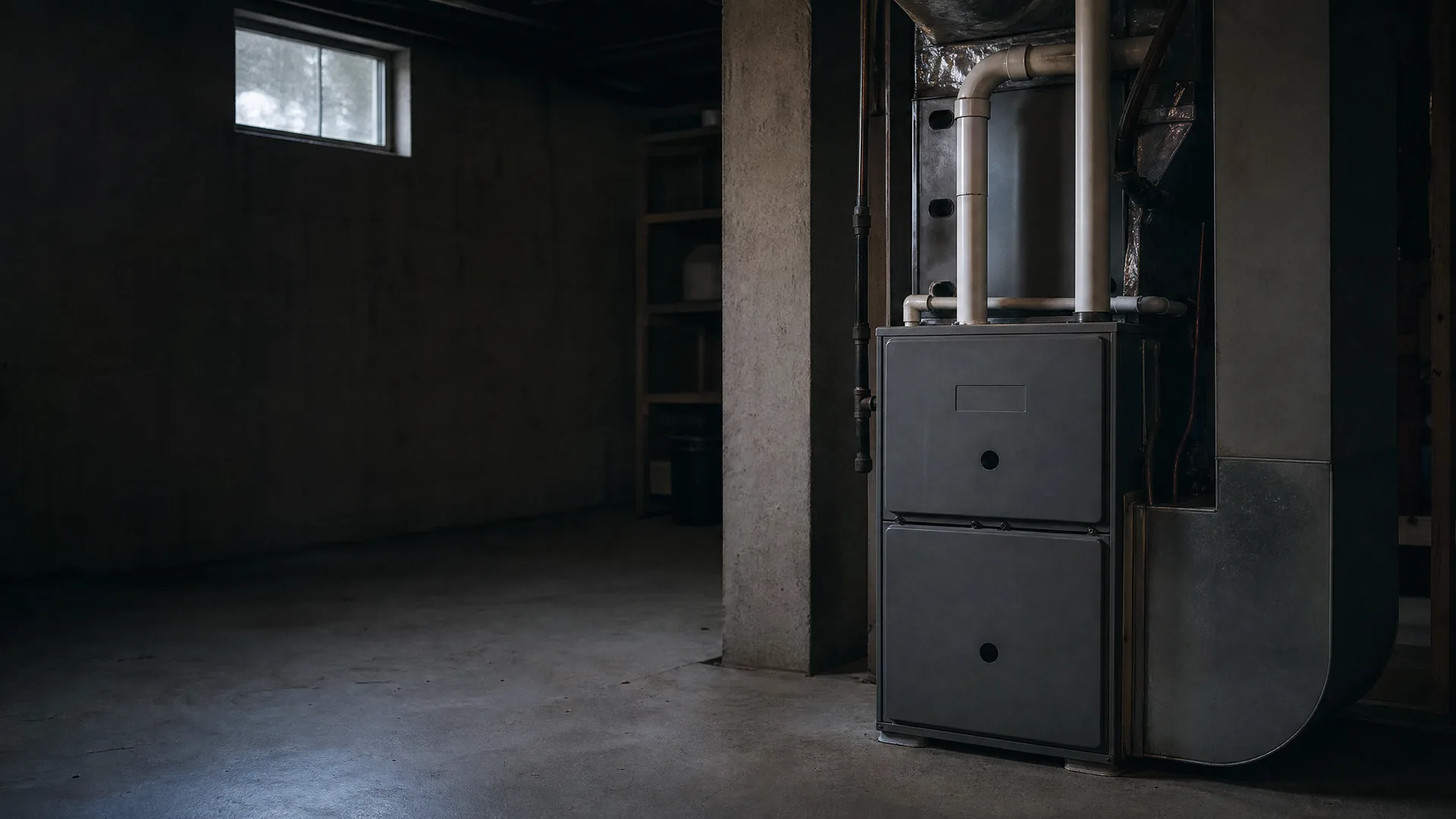
A gray high-efficiency furnace with white PVC vent pipes and attached ductwork stands beside a concrete support column in a dim, empty basement with bare concrete walls and floor and a small window.

It's just past six and dark already. You go down to check the furnace because the thermostat says 68 but the hallway feels wrong. The basement light flickers on and the furnace sits there dark, no hum, no glow from the igniter. A thin haze of dust hangs in the beam of the flashlight, stirred up from somewhere behind the cabinet. You put a hand near the vent in the ceiling and feel nothing moving at all. Upstairs your kid has a sweatshirt on over pajamas. It's November, not even the cold part of winter yet, and the house is already losing the fight.

Quick Fix or Bigger Problem

Fix now

  • A tripped breaker or bad relay to the heat strips is often a simple reset or swap, and warm air can come back the same day.
  • A reversing valve stuck in the wrong position is a contained repair, since the rest of the heat pump is still doing its job.
  • Parts for electric strips and relays are common and don't need to be special ordered in most cases.
  • If the system is cycling between warm and cold rather than running cold the whole time, that points to one failed part, not a system-wide problem.
  • A repair gets heat back for this cold snap without committing you to anything bigger.

Look closer

  • If the heat pump itself is losing refrigerant or the compressor is failing, a repair now may just delay the same call next winter.
  • A system old enough to need this kind of fix once tends to need it again, especially if it came with the house and you don't know its age.
  • Replacing the heat pump and strips together means the new parts are matched to work as one system instead of patched around each other.
  • A home that stays on electric heat all winter is leaning on this system every night it's below 40, so repeated failures cost more than one fix.
  • If a technician finds more than one part has failed, that's usually the point where repair and replacement cost close to the same.
A gray high-efficiency furnace in a basement with white PVC vent pipes, sheet-metal ductwork, copper and black piping, a condensate pump, and insulated walls above a concrete floor.

System running right

Warm air pushes steady out of every vent, the blower humming along with it. Ductwork overhead is tight, the condensate line is draining clear, and the furnace cycles on and off without you ever thinking about it. This is what you want on a 37°F night in January.

A beige residential furnace stands on a concrete basement floor beside galvanized sheet-metal ductwork, a round flue pipe, copper gas piping, and a PVC condensate line, with a wood-paneled wall at right.

System in trouble

The furnace sits quiet except for the blower, no warmth coming off the vents. Panels show their age, a little grime built up around the gas line and flue. Nothing looks like it's on fire or leaking, but the heat just isn't getting made, and that's the part a breaker reset won't always fix.

A gray furnace with two access panels stands on a concrete basement floor beside sheet-metal ductwork, with pipes, flexible conduit and an electrical box on the concrete wall to the left.
Before you get your furnace repair
A gray high-efficiency furnace stands on a concrete basement floor beside galvanized sheet-metal ductwork, white PVC vent pipes, copper and black piping, and unfinished wood stud framing.
After you get your furnace repair

Wait it out

You keep calling around, explaining the same cold vent story to each one, then stack up quotes while the house sits at 68 on the thermostat and colder in the hallway.

Send my request

Get it fixed

Send the form once and the search for a contractor stops being your job. Warm air comes back out of every vent without you tracking down who's free.

Send my request
A closed silver laptop and a glazed ceramic mug on a wooden table, with a blurred kitchen counter, potted plant, cutting board and window in the background.

So the furnace is running, just not heating

That's the whole problem, and now you know where it sits. Air moving but cold at the vent almost always traces back to the heat strips not kicking on or the reversing valve stuck between positions, not the blower, and not the thermostat. A system that came with the house is worth a look either way.

You could spend the evening calling around, telling each one the same story about the vent that won't warm up, then sitting with a stack of quotes while the hallway stays cold. Send the form once instead, and that part of it is over. Someone who knows this system, the strips, the valve, the relay, takes it from here.

A wooden table holding a stone vase with a bare branch, two stacked books and a small dark bowl, beside a window with green foliage outside and a sofa in the dim background.
A gray high-efficiency furnace with two access panels stands on a concrete basement floor, connected to sheet-metal ductwork and white PVC vent pipes, with wood framing and a gas line nearby.

Send one request and you're done looking

RepairFurnace or heatingHorry County, SC
Step 1 of 2

What ZIP code is the job in?