





White two-story houses with wraparound porches and Spanish moss-draped oak trees photographed along a residential street at night.

Furnace Installation in Winnsboro, SC

Tell us about the job

Takes about a minute. No obligation.

New system or replacementFurnace or heatingFairfield County, SC
Step 1 of 2

What ZIP code is the job in?

Winnsboro falls in climate zone 3A, warm with mild winters and a long stretch of cooling months. Any gas furnace going in now has to hit at least 80 percent AFUE, the federal floor for non-weatherized units. That's the number a contractor will default to unless you ask about something higher. Furnaces built from December 2028 on will have to meet a much higher bar, 95 percent AFUE, but a system installed today falls under the current rule. Worth asking your contractor whether it makes sense to spec higher than the minimum given how mild winters are here.

5 months
November through March, your furnace is on duty
34°F
the average winter night it heats against
80% AFUE
the federal minimum any new unit must meet
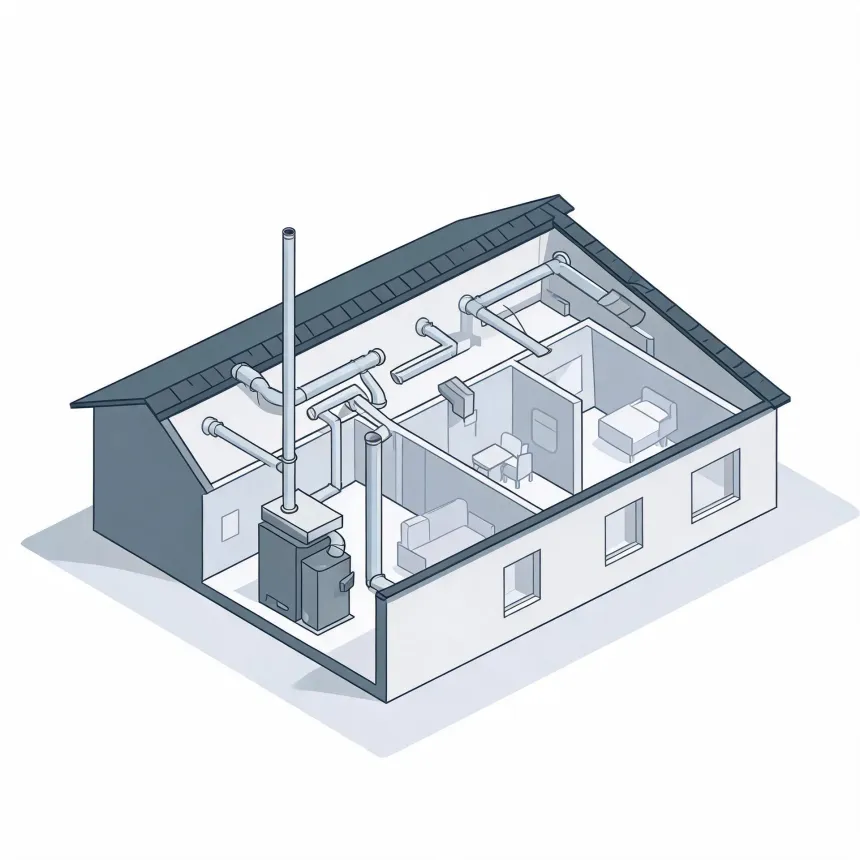
Isometric line illustration of a single-story house cutaway showing interior rooms with furniture, ductwork or piping running along the ceiling, and a boxy furnace unit with a tall vertical flue pipe.
Your furnace works hardest from November through March.

NOAA nClimDiv, 1991–2020 normals

A standard furnace sized to the house heats fine through Winnsboro winters.

Electricity here runs $41.71 per million Btu, so a gas furnace is the cheaper system to run.

A mid-size furnace, sized to the house, is all this county needs

Half the homes here were built by 1984
Climate zone 3A
Heat runs November through March
The fuel most of Winnsboro already runs onMost homes in Fairfield County heat with electricity, at 68.3 percent.

The size of the furnace matters more than any feature on it. One sized too big for the house will short cycle, kicking on and off before it ever warms the ductwork evenly, and that wears the ignition system faster than steady use would. One sized too small runs constantly and still leaves cold rooms. Getting that right takes a load calculation on the actual house, not a guess based on the old unit or the square footage alone. Beyond sizing, what the ductwork can handle plays into cost too. If the existing ducts are undersized or leaky, a contractor may need to modify them to match the new furnace, and that work can matter more to the final price than the furnace itself. The cabinet style and whether the vent configuration changes also factor in, since some furnaces vent differently than what a house already has in place.

Put the new furnace in before November, on your schedule

Heat here runs November through March. October is the month before that starts, and the month to have a new furnace in before the cold does the deciding for you.

Find a contractor
A man in a dark long-sleeved shirt, cap, and worn tan work pants climbs porch steps toward a dark blue front door, carrying a canvas tool bag.
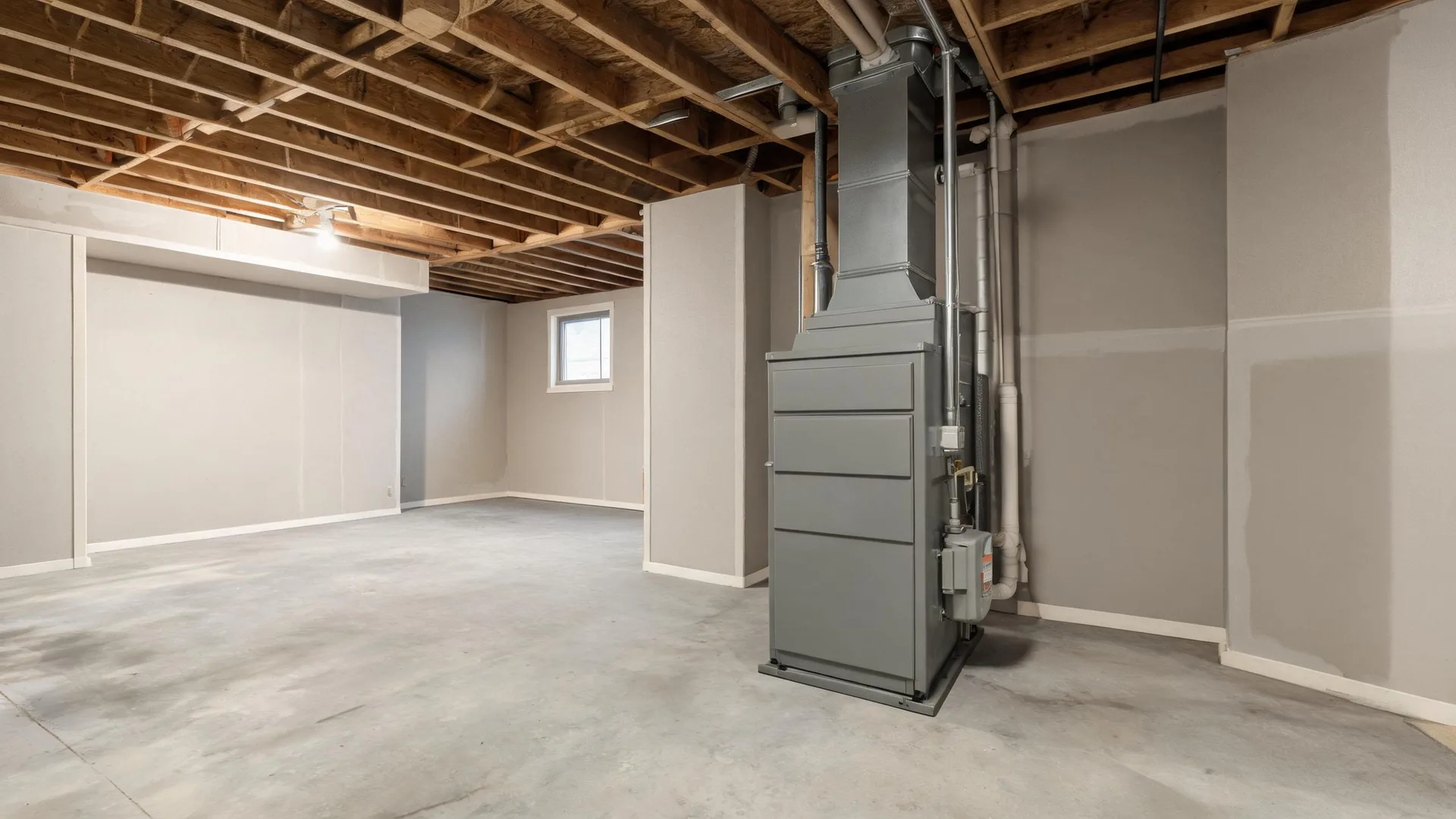
A gray residential gas furnace installed in an unfinished basement, surrounded by ductwork, a metal flue pipe, and a gas supply line.

Five months of work a year

Five months of heat, November through March, and overnight lows averaging 34°F through the coldest stretch. That's not a hard climate to heat against. A furnace here spends most of the year sitting idle, so it never sees the kind of run time that wears one out early. Problems that show up tend to trace back to age or a missed service, not to the system being asked to do too much. A well-built, correctly sized furnace will handle what this county asks of it without needing the highest efficiency rating on the shelf.

The rating measures fuel, not heat

AFUE tells you how much of the gas burned turns into heat in the house versus what goes out the flue. A higher number means less fuel wasted per cycle. It says nothing about how evenly the house heats or how long the furnace lasts, since both of those come down to sizing and installation, not the rating on the label.
The gain only shows up in what you burn

Moving up a few points in AFUE lowers the gas bill some, but the furnace still has to be sized right and the ducts still have to carry the air. A high-efficiency unit choked by bad ductwork won't outperform a mid-efficiency one installed correctly. Ask what the rating costs up front against what it saves on fuel before deciding it's worth paying for.

A few questions matter more than the brochure. Ask what size furnace the load calculation came out to and whether it was actually run on this house, not pulled from the old unit's nameplate. Ask what happens to the existing ductwork, since a furnace moving more or less air than before can leave rooms unbalanced even when the unit itself is right. Ask about the venting, because some furnaces push exhaust out through a different pipe than what's already in place, and that changes the job. Ask what the warranty actually covers, parts versus labor, and for how long each runs. And ask what happens if the installed system doesn't heat evenly once it's running, who comes back and under what terms.

Installation day starts with the old furnace coming out. The contractor shuts off gas and power first, then disconnects the ductwork, the venting and the thermostat wiring. Getting the old cabinet out and the new one into place can take a while if the furnace sits in a tight closet or attic rather than an open basement. Once the new unit is set, it has to be connected correctly. The ductwork gets sealed to the plenum. The gas line gets pressure-tested for leaks. Venting gets run to match what the new furnace needs, which isn't always what the old one used. The last steps matter as much as the install itself. The contractor fires up the furnace, checks gas pressure against the manufacturer spec, and measures airflow across the heat exchanger. Skip that testing and a furnace can look installed, run fine for a while, and still have a problem waiting underneath.