A row of single-story cottages, one brick and the others light gray siding with covered porches, behind a trimmed hedge and lawn, under large oak branches draped with Spanish moss.

Furnace Installation in Lexington, SC

Tell us about the job

Takes about a minute. No obligation.

New system or replacementFurnace or heatingLexington County, SC
Step 1 of 2

What ZIP code is the job in?

The old furnace gets disconnected and hauled off

A contractor shuts off the gas line, disconnects the flue or vent pipe, and pulls the old furnace out of the cabinet or closet it sits in. The ductwork connections get adapted to fit the new unit if the sizing or layout is different. The old equipment leaves with the crew. None of it gets left behind for the homeowner to deal with.

The new furnace may not hook up the same way

If the old furnace vented through a metal flue, a higher efficiency furnace venting through PVC pipe needs a new path to the outside wall or roof. The gas line and electrical connection usually reuse what's already there, but the technician checks that the gas pressure and wiring match what the new unit calls for before anything gets fired up.

5 months
November through March, your furnace is on duty
36°F
the average winter night it heats against
80% AFUE
the federal minimum any new unit must meet
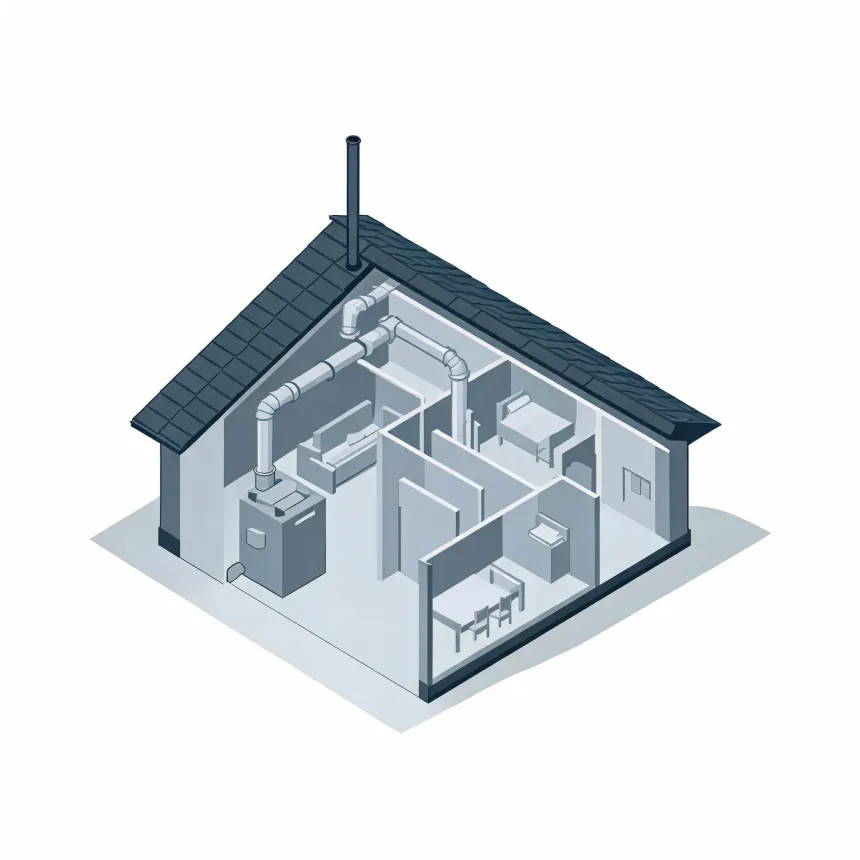
Isometric cutaway illustration of a small single-story house showing interior rooms with furniture, a furnace unit with attached ductwork running to a roof flue, and a dark shingled roof.
Your furnace works hardest from November through March.

NOAA nClimDiv, 1991–2020 normals

Most homes in Lexington County heat with electricity, not gas.

A gas furnace here is usually replacing another gas furnace, in a house already set up for it.

Five months of mild cold is not much to ask of a furnace

Heat runs November through March
Winter nights average 36°F
Climate zone 3A
A standard furnace is right for LexingtonElectricity runs $41.71 per million Btu here, nothing about that calls for oversizing or upgrading past standard.

Furnace season here runs November through March, five months of it. October is the last stretch of weather before that starts. Replace the furnace in October and it gets installed and tested before the first cold night asks anything of it. Wait until November and the job happens on the first cold morning instead, with the house already cold and the old furnace maybe not starting at all. Doing it in October just means you pick the date instead of the weather picking it for you.

Any furnace installed here has to meet the current efficiency minimum

Furnaces sold here have to hit at least 80 percent AFUE, the federal minimum for non-weatherized gas furnaces. That floor holds until the end of 2028, when it moves to 95 percent. A contractor installing now will size and spec the unit around today's rule.

Find a contractor
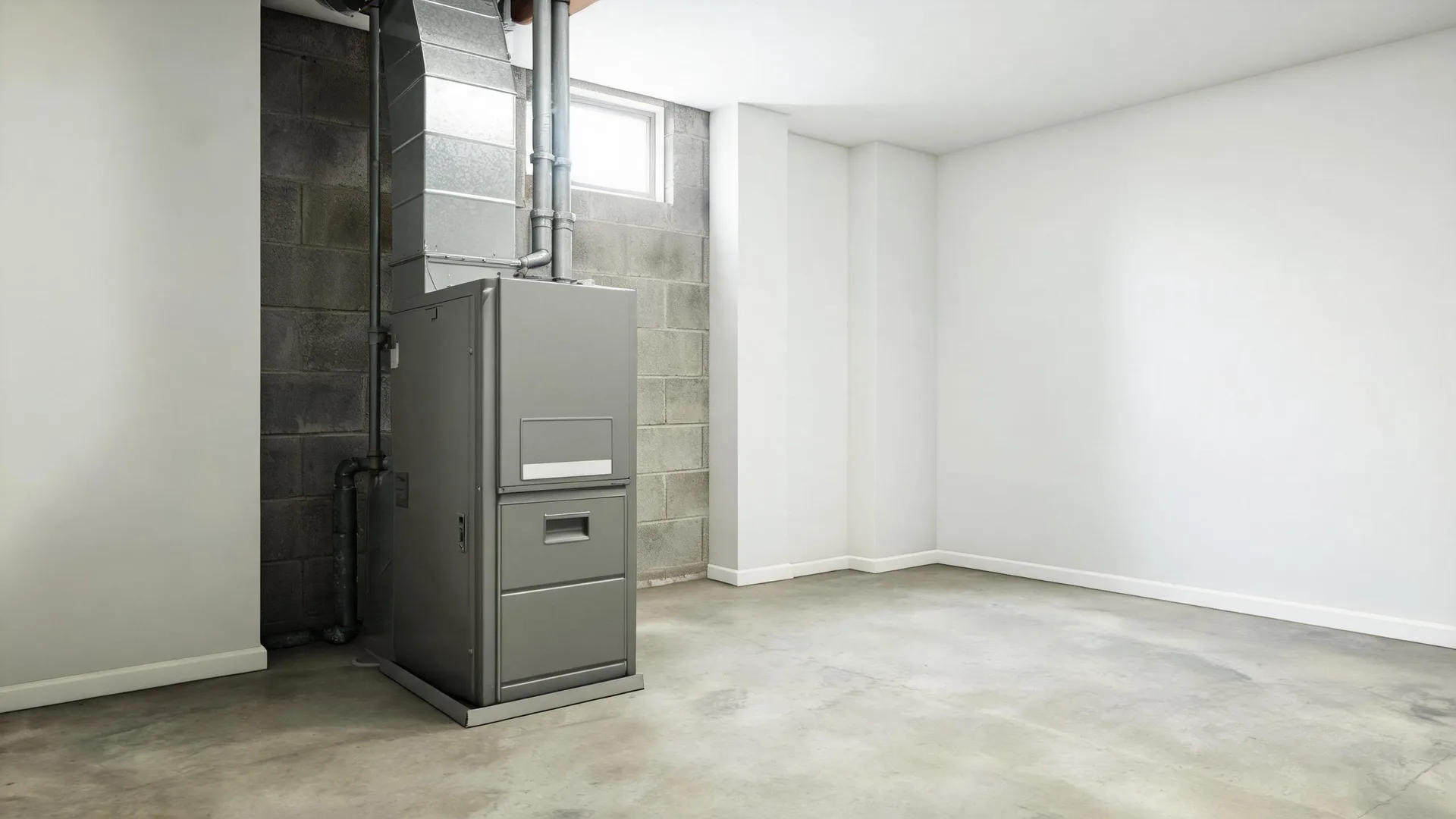
A gray residential gas furnace installed in an unfinished basement, connected to sheet-metal ductwork and PVC pipes.

The rating is about the burn, not the size of the furnace

The AFUE number on the label tells you how much of the fuel burned turns into heat in the house versus what goes out the flue. A furnace at the minimum rating has one heat exchanger, so a portion of every burn leaves as exhaust instead of warming the air. A higher rated furnace adds a second heat exchanger that pulls more heat out of that exhaust before it vents. That's the whole difference. It doesn't change how big a furnace needs to be or how long it takes to heat the house, and it doesn't wear out faster or slower because of where it sits on that scale. What it changes is how much of what you're already paying for in gas actually ends up as heat instead of leaving through the pipe.

The furnace itself is only part of the bill

The cabinet, burners and heat exchanger are one line item. Ductwork changes, a new vent path, electrical work to match the new control board, and a condensate line for higher efficiency models are separate work, and not every job needs all of them. Furnaces with the same efficiency rating can cost very different amounts to install depending on what else the job touches.

Efficiency tier moves the price on its own

A furnace at the minimum rating is simpler inside, with one heat exchanger and a standard blower. Higher efficiency units add a second heat exchanger to pull more heat out of the exhaust. That calls for plastic venting instead of metal, a condensate drain, and often a variable speed blower motor. Each of those is a real part doing real work, not a markup, and each one adds to what the installation involves.

A quote should tell you more than a price. Ask what the AFUE rating is and whether the blower is single speed or variable speed. That changes how evenly the house heats and how loud the furnace is when it runs. Ask what happens to the venting. A higher efficiency furnace vents through PVC pipe, not the metal flue a standard one uses, and that pipe needs its own path to the outside wall or roof. Ask whether the size was worked out from a load calculation or just matched to the furnace coming out. Contractors quoting the same AFUE number can mean different installs underneath it, so ask what's actually included before you compare totals.

The old furnace usually runs right up until the new one takes its place, so the house stays warm through most of the day. Gas gets shut off first. Then the old unit comes out of the closet or cabinet, in pieces if it has to. Once the space is clear, the new furnace goes in and gets leveled before anything gets connected. Ductwork, gas line, and venting all tie back in before the wiring does. The technician fires it up, checks the gas pressure, watches the flame, and measures the temperature rise across the heat exchanger to confirm it's in range. It gets cycled a few times and watched for a steady run before anyone leaves.