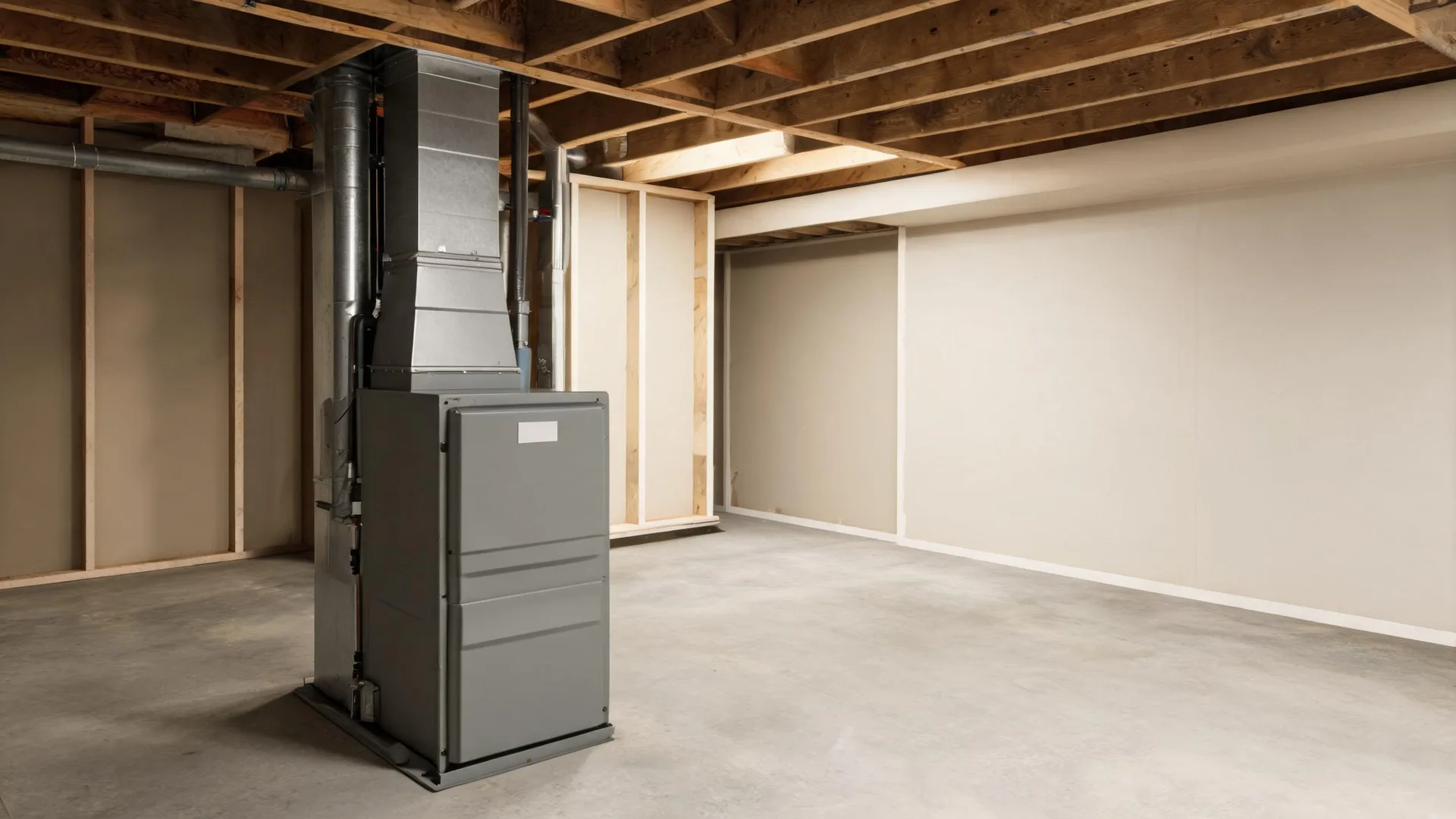
An unfinished concrete basement containing a metal HVAC air handler, exposed wooden ceiling joists with sheet-metal ducts, a hanging bare bulb, copper pipes, and stacked cardboard boxes.

Furnace Installation in Greenville, SC

Tell us about the job

Takes about a minute. No obligation.

New system or replacementFurnace or heatingGreenville County, SC
Step 1 of 2

What ZIP code is the job in?

Bigger isn't better

A furnace that's too big for the house heats the air fast, shuts off, then starts again shortly after. That short cycling wears out the igniter and the blower motor sooner, and it still leaves rooms farther from the furnace never quite warm. The right size runs longer and steadier, and heats the house evenly.

The size comes from a room-by-room count

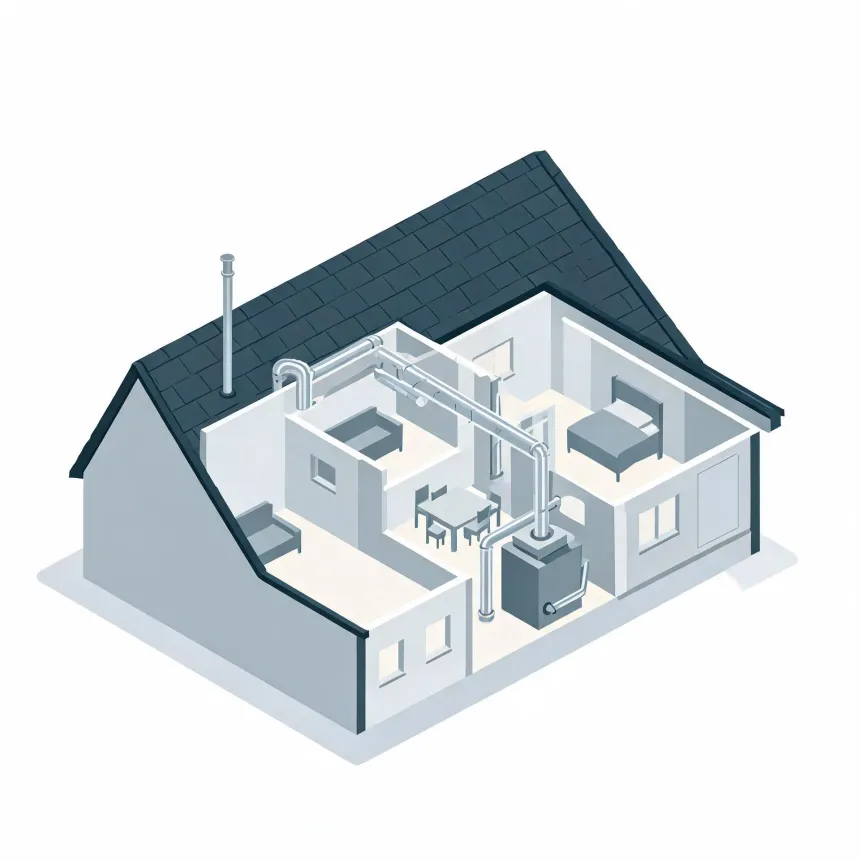
A contractor works out furnace size with a heat load calculation, not a chart based on square footage alone. It accounts for the windows, the insulation, the ceiling height, and how the rooms are laid out. Houses that look alike from the outside can need different furnaces once someone actually counts what each one is working against.

7 months
October through April, your furnace is on duty
34°F
the average winter night it heats against
80% AFUE
the federal minimum any new unit must meet
Isometric cutaway illustration of a single-story house with a dark shingled roof, showing interior rooms with furniture and a ducted furnace unit connected to metal ductwork and a roof flue.
Your furnace works hardest from November through March.

NOAA nClimDiv, 1991–2020 normals

Furnaces in Greenville County start running in October.

Get a new one in before September ends, and it's working on your terms, not the first cold morning's.

Greenville winters don't call for anything special in a furnace

Heat runs October through April
Winter nights average 34°F
Climate zone 3A
Not a hard job for a furnaceHeat runs here from October through April, with overnight lows near 34°F.

Any furnace installed in Greenville County has to clear 80.0 percent AFUE. That's the federal minimum for non-weatherized gas furnaces, and it holds everywhere, not just here. Greenville's zone 3A climate, warm with a short mild winter, doesn't push the requirement any higher the way a cold-winter state might. That floor is set to rise to 95.0 percent, but only for furnaces built after a cutoff date still a few years out. Until then, what's available to choose from isn't limited by the higher number.

Most homes here run on electricity

Electricity heats 56.9 percent of homes in Greenville County, gas heats most of the rest. If your house already runs on one of those, replacing with the same fuel means no new gas line and no new electrical circuit to add. That keeps this job down to swapping out the furnace itself.

Find a contractor
A gray residential gas furnace installed in an unfinished basement, connected to sheet-metal ductwork and PVC pipes.

It won't be working against much

Seven months of heat, and overnight lows only down near 34°F. A furnace here is never pushed to keep a house warm against real cold for long stretches. That's the case for picking a reliable mid-efficiency unit over a high-end one with features built for harder climates. Put the money into getting the size right instead.

AFUE is a fuel bill number, not a comfort number

The percentage on the label tells you how much of the gas burned turns into heat in the house versus what goes out the flue. It says nothing about how evenly the house heats, how quiet the furnace runs, or how long it lasts. A correctly sized furnace at a lower rating will often serve a house better than an oversized one with a higher rating on the label.

The higher the rating, the more it changes about the install

A furnace built to the higher ratings condenses its exhaust, which means a plastic vent pipe instead of metal and a drain line to carry off the condensate. That's more for a contractor to route through the house, not just a swap of one furnace for another. A furnace built to the minimum rating usually keeps the venting and clearances the old one already had.

Ask what happens to the old venting before anything else gets decided. A furnace at the higher efficiency range sends its exhaust out through a plastic pipe and needs somewhere for condensate to drain. One at the lower range usually keeps venting through the same metal flue already in place. That difference changes what a contractor has to route through the house, not just which unit gets set down where the old one sat. Ask for the heat load calculation too, not a quote based on the size of the old furnace. One tells you what the house actually needs. The other just repeats whatever was decided last time, right or wrong.

The old furnace comes out first. That's when a contractor finds out whether the ductwork, the gas line and the venting already in place will serve the new unit or need work before anything gets installed. Setting the new furnace down usually takes less time than what comes after. Most of the day goes to connecting it properly, sealing the duct joints, setting the venting, wiring the thermostat, checking the gas pressure at the valve. Then the furnace runs through a full cycle while the contractor checks the flame, the temperature rise across the heat exchanger, and the airflow at the vents. A furnace sitting in place isn't finished until someone's confirmed it runs the way it's supposed to.