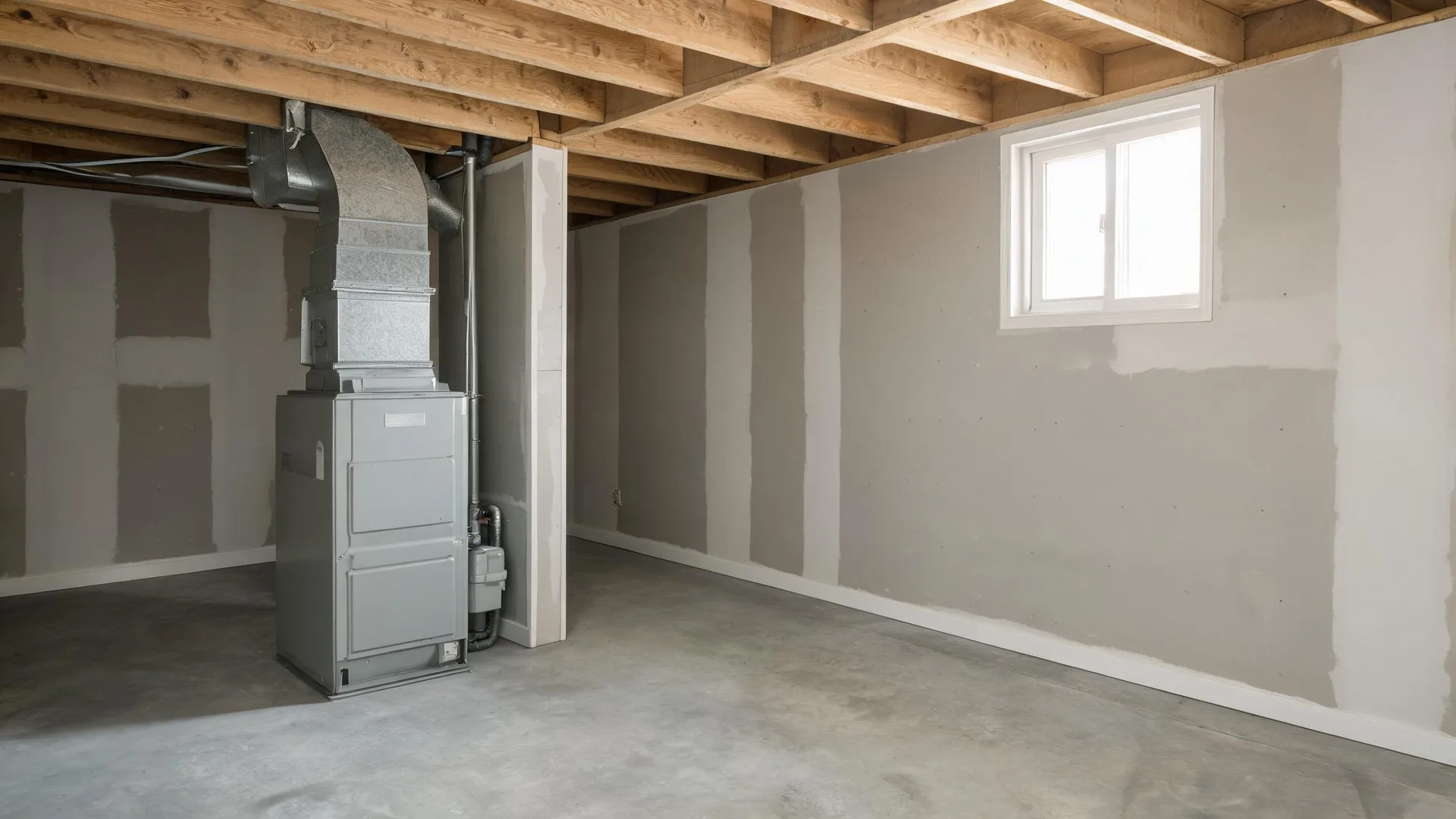
An unfinished basement containing a gray HVAC furnace with ductwork, exposed wooden joists, a concrete floor, and miscellaneous clutter in one corner.

Furnace Installation in Easley, SC

Tell us about the job

Takes about a minute. No obligation.

New system or replacementFurnace or heatingPickens County, SC
Step 1 of 2

What ZIP code is the job in?

The size has to match the house

A furnace that's too big for the ductwork will short cycle, turning on and off instead of running a steady stretch, and that wears out the heat exchanger faster. One that's too small runs constantly and still can't keep up. Getting this right means someone actually measures the house and the duct system instead of swapping in whatever size was there before.


The ducts matter as much as the furnace

A new furnace pushed through old, leaky, or undersized ductwork won't perform the way it's rated to. If the return air isn't sized right, the blower struggles and the whole system works harder than it should. Sometimes the bigger cost isn't the furnace itself but the duct work needed to let it run the way it's built to.

7 months
October through April, your furnace is on duty
33°F
the average winter night it heats against
80% AFUE
the federal minimum any new unit must meet
Isometric line illustration of a cutaway single-story house with a shingled roof, showing an interior furnace connected to ductwork and a tall vertical flue pipe, plus simple furniture in the adjacent room.
Your furnace works hardest from November through March.

NOAA nClimDiv, 1991–2020 normals

Electricity in South Carolina runs $41.71 per million Btu.

A furnace sized and installed right earns that back on every bill it runs here.

September is the month to get this done, before heat season starts in October

Heat runs October through April
Winter nights average 33°F
Climate zone 3A
A furnace that doesn't work too hardHeat runs about seven months here, October through April, with overnight lows averaging 33°F in winter.

Ask whoever installs it what AFUE rating they're quoting and why. A furnace that burns gas more efficiently turns more of what you pay for into heat instead of sending it out the flue. That matters more here than in a place with cheaper power. It also comes back to sizing. A furnace that's too big short cycles and wastes fuel on every startup. One that's matched to the house runs a longer, steadier cycle and gets more heat out of the same gas.

Most homes here already run on electricity

Electricity heats 60.5% of homes in Pickens County, gas another 31.9%. If your house is already wired for an electric furnace, or already piped for gas, matching what's there is the straightforward path, and the install crew won't be working around a fuel switch on top of everything else.

Find a contractor
A gas furnace with attached ductwork, gas piping, and condensate lines installed in a concrete-block basement.

A light enough load that reliable beats top-of-the-line

Seven months of heat a year and lows around 33°F don't put much strain on a furnace. That's the case for picking a reliable mid-efficiency unit over the top-tier model. You're not fighting single-digit nights for weeks on end, so the extra AFUE points on a premium furnace take longer to earn back here than they would somewhere colder. Spend the money on correct sizing and good ductwork instead. That's what actually determines how the thing runs.

The old furnace gets disconnected and hauled off

Whoever installs the new unit disconnects the gas line or electrical circuit, detaches the flue or vent pipe, and removes the old furnace from the house. The equipment itself usually gets scrapped for the metal. None of it goes back into the system.

The new furnace doesn't just drop into the old spot

The old ductwork, gas line, and vent connections get checked against what the new furnace needs, not just reused because they were there before. A furnace that burns gas differently or moves air differently than the one it's replacing may need the vent pipe resized or the duct transition rebuilt so the new unit can breathe the way it's supposed to.

Get quotes from more than one contractor and ask each one to walk through their math, not just hand over a number. A load calculation looks at square footage, window area, insulation and duct layout together, and people measuring the same house honestly can land on different sizes depending on what they counted. Ask what the warranty covers on the heat exchanger versus the rest of the unit, since those terms often run different lengths. Ask who pulls the permit and who shows up for the inspection, because that's part of the job, not an extra. And ask what happens if the ductwork needs work beyond what they quoted. A contractor who already has an answer for that has done this enough times to know where the surprises usually hide.

The old furnace gets shut down and disconnected before anyone starts cutting anything loose. It comes out, the new one goes into roughly the same spot, and then most of the day goes to the parts people don't picture. New vent pipe gets run. Duct transitions get sealed. The thermostat gets wired. If it's a gas furnace, someone checks the gas line pressure before the burners ever fire. The furnace itself might be hooked up within an hour. Getting the airflow and venting right is what takes the rest of the day. Before anyone leaves, a gas furnace gets checked for carbon monoxide at the heat exchanger and the flue, and the whole system runs through a full cycle to make sure it fires, heats, and shuts off the way it should.