






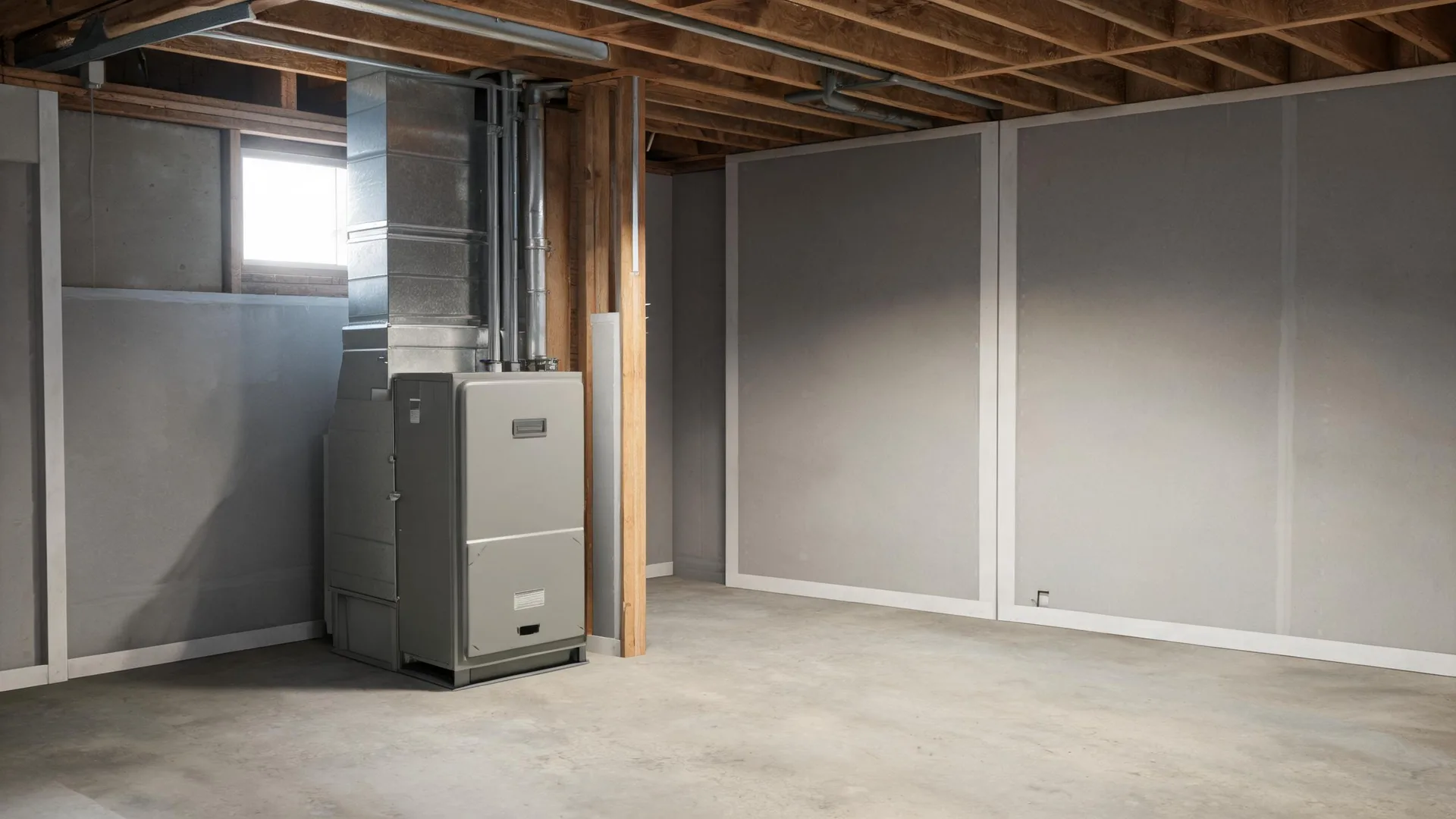
An unfinished basement featuring concrete block walls, exposed floor joists, and a metal forced-air furnace with ductwork near a central pillar.

Furnace Installation in Anderson, SC

Tell us about the job

Takes about a minute. No obligation.

New system or replacementFurnace or heatingAnderson County, SC
Step 1 of 2

What ZIP code is the job in?

The furnace itself is only part of what you're paying for. Size matters more than most people expect. A unit too big for the house cycles on and off instead of running steady, which wears out parts faster and leaves rooms uneven. Getting that right means the contractor has to measure the house, not just match the old unit. Ductwork plays into it too. If the existing ducts are undersized or leaky, they either need repair or the new furnace has to work harder to push air through them. Venting is another factor, since a different efficiency rating can mean a different kind of exhaust pipe, and that changes how much work the installation takes.

5 months
November through March, your furnace is on duty
34°F
the average winter night it heats against
80% AFUE
the federal minimum any new unit must meet
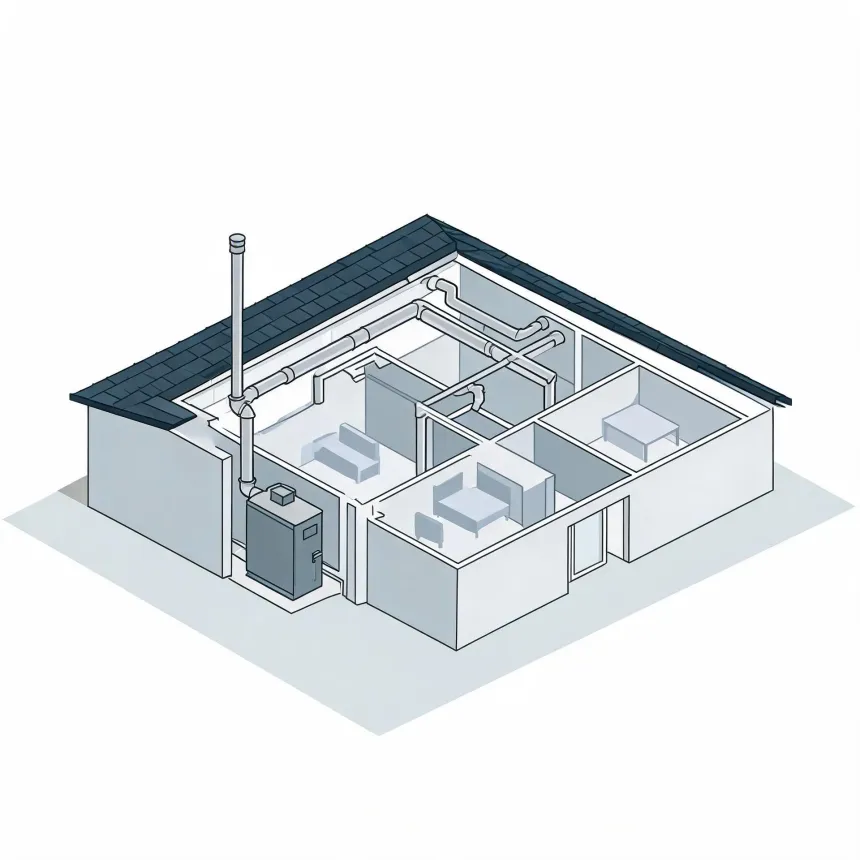
Isometric line illustration of a cutaway single-story house showing interior rooms with furniture, ceiling ductwork, and an exterior furnace unit with a tall flue pipe.
Your furnace works hardest from November through March.

NOAA nClimDiv, 1991–2020 normals

Anderson runs on electricity priced like the rest of South Carolina, nothing higher.

A standard-efficiency furnace sized right for the house is all this job calls for.

November starts five months of heat. Install before it does.

Heat runs November through March
Winter nights average 34°F
Climate zone 3A
Built for how Anderson heats64.4% of homes in Anderson County heat with electricity.

Five months of heat a year is not much to ask of a furnace. November through March, then it sits most of the day the rest of the year. Overnight lows average 34 in December, January and February, not the teens or single digits furnaces in colder states deal with all winter. That's a mild load on the heat exchanger and the blower motor both. A furnace here is far more likely to fail from age or a part wearing out than from being run hard, so a standard unit sized correctly for the house will do this job for years without strain.

Install now, and today's efficiency rule is the one that applies

Furnaces sold here have to hit 80 percent AFUE at minimum, and that floor holds until December 2028, when it jumps to 95 percent. A correctly sized standard-efficiency furnace installed now meets the rule that applies today.

Find a contractor
A man in a dark long-sleeved shirt and olive work pants carries a canvas tool bag up steps toward a blue-gray front door of a shingled house, with a potted shrub beside the entry.
A gray high-efficiency gas furnace installed in an unfinished basement, surrounded by gas lines, a condensate drain, and sheet-metal ductwork.

Five months of work a year, every year

Picking a furnace for this job comes down to matching it to the house, not upgrading past what the job needs. A contractor can size a standard unit correctly and it will run fine for years here. Put the budget into getting the size and the ductwork right instead of chasing a higher efficiency rating this load will never test.

AFUE is a measure of waste, not heat

The rating on the label tells you how much of the fuel burned turns into heat for the house, and how much goes out the flue. A furnace rated near the top of the scale wastes very little. One rated at the minimum wastes more, but it still heats the house just the same. The rating never describes how warm a room gets, only how much fuel is burned to get there.
The rating only pays you back through the gas meter

A higher AFUE only means something where a furnace burns a lot of fuel to begin with. Where a furnace runs on electricity, or where the heating load is light to start, the gap between a standard unit and a high-efficiency one shows up as a smaller number on the bill and barely anything you'd notice running the system. Match the rating to how much the furnace will actually run, not the other way around.

When you're comparing quotes, ask what AFUE rating each one is based on, since that number changes the price and the vent pipe both. Ask whether the contractor is sizing the furnace off the old unit or off a load calculation for the house, because those can land on different answers. Ask what happens to the existing ductwork, whether it gets inspected, sealed or just reused as is. Ask what the warranty covers on the furnace itself versus the labor to install it, since those often run on different clocks. And ask what the exhaust venting requires, because a change in efficiency rating can mean new pipe, not just a new furnace bolted where the old one sat.

Installation starts with the old furnace coming out, along with whatever vent pipe and ductwork connections it used, since those rarely transfer over without changes. The new unit gets set in place and leveled, then the ductwork gets tied in, the gas line connected, and the venting run to wherever the efficiency rating requires it to go. Electrical and a condensate line follow if the furnace needs them. Once it's hooked up, the contractor fires it and checks the gas pressure, the temperature rise across the heat exchanger, and the airflow at the blower, because those numbers say whether it's running the way it should, not just whether it turns on. The last step is combustion testing, making sure the flue is pulling exhaust the way it needs to and nothing is spilling back into the house. None of this is quick work, and a furnace that seems to run fine on day one can still be set up wrong if that last check gets skipped.