


Fan running normally
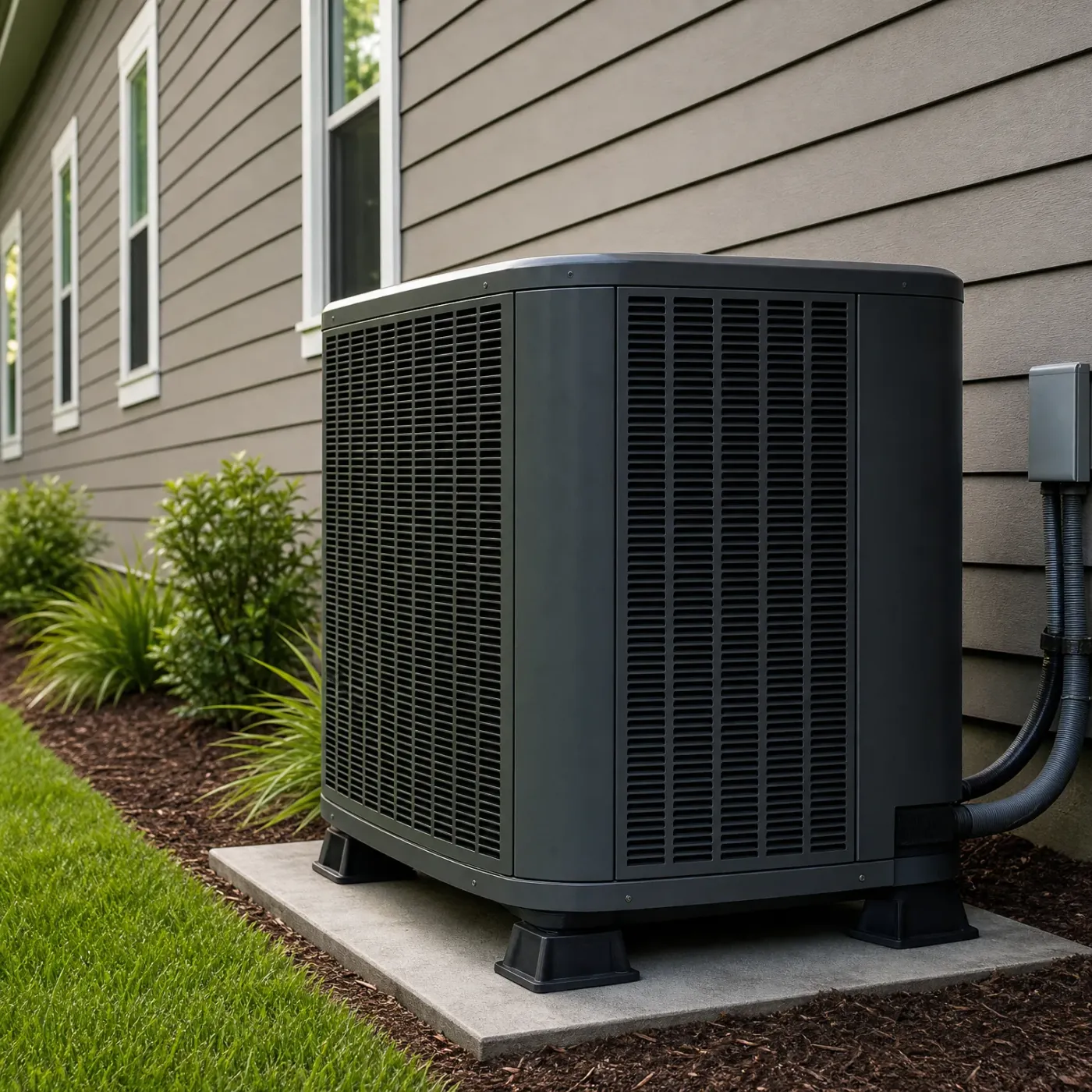
Air moves off the top of the unit. You can feel it a few feet away, warm in winter, hot in summer. The blade spins steady as long as the compressor runs, and the motor housing stays cool enough to rest a hand on.
After this form, you can stop searching for a heat pump pro.
Send my requestA heat pump fan that won't spin usually comes down to one of a few things: a bad capacitor, a seized or burnt-out fan motor, a tripped breaker, or a control board that isn't sending power where it should. In South Carolina, this often turns up on the outdoor unit right when summer heat pushes the system hardest, since a weak capacitor tends to fail under load rather than sitting idle. If the fan isn't turning but you hear a hum or the unit clicks and stops, that points to the capacitor or motor rather than a wiring problem. If there's no sound at all, check the breaker first. Either way, a heat pump that can't move air outside can't move heat properly, so you may notice it running longer, blowing warm air, or shutting off on its own to protect itself. None of these are something to wait out. A technician can test the capacitor and motor directly and tell you within minutes which part failed.





It's past eleven and you're still on top of the sheets. The window unit fan in the next room hums but your bedroom vent is barely moving air, just warm and wet against your skin. You get up and check the thermostat again, same as ten minutes ago. Still climbing. Out back, through the fogged window glass, the condenser hums low and steady, the compressor working, but the fan blade on top sits dead still against the dark. You know that sound by now, the one that means it's running hard and going nowhere. You lie back down on the damp side of the bed, sheets already turned over once, and wait for the air to catch up with a house in a South Carolina August that isn't cooling down.
The outdoor unit is running but the top of it is quiet, no blade turning, no breeze coming off it when you walk past. Indoors the air coming out of the vents feels wrong, warm or barely moving, and the thermostat shows a few degrees of drift from where you set it. You might hear a hum or a click from outside every so often as the compressor tries to start without the fan helping it along. Left alone, a heat pump working this way runs hotter than it should and the compressor takes the strain meant for two parts, not one. In a South Carolina summer that strain doesn't let up overnight.

The capacitor stores the charge that kicks the fan motor into motion. It sits right next to the motor, inside the same outdoor cabinet, and takes the heat all summer long. That heat wears down its ability to hold a charge. Once it's too weak, the motor hums but doesn't turn, or doesn't start at all. A contractor can test it with a meter in a few minutes and knows the size and type your unit takes.

If the motor bearings have worn out or the windings have burnt, the fan won't turn even with a fresh capacitor. You might hear a hum, a buzz, or nothing at all from the outdoor unit. Dirt and moisture working into the motor over years of South Carolina summers is part of what wears it down. A seized motor has to be replaced, not repaired, and a contractor who works on these year-round can tell the difference from a bad capacitor on the first visit.
At 15.12 cents a kilowatt-hour, a heat pump that's stuck running the compressor without the fan is working against itself, pulling power while barely moving heat. Since most homes here heat and cool on electricity alone, a stalled fan doesn't just leave you uncomfortable, it shows up on the next bill.
EIA-861 2025 statewide residential average
Air moves off the top of the unit. You can feel it a few feet away, warm in winter, hot in summer. The blade spins steady as long as the compressor runs, and the motor housing stays cool enough to rest a hand on.

The fins are caked with a season or two of dirt and the blade sits still. The compressor hums away underneath, but nothing moves air across those fins to shed the heat it's pulling in. A motor working against buildup like this strains harder to start, and a weak capacitor won't get it moving at all.


Only one pro gets your request, so you hear from one company.
One request and the search for a pro is handled.
Asking costs nothing, and the choice to hire stays yours.


Thermostat calls for heat or cool, sending power to the contactor.
The contactor closes and energizes the compressor and fan motor together.
The capacitor delivers the jolt that starts the fan motor turning.
The fan motor spins the blade, pulling air across the outdoor coil.
Humming means the motor is getting power, so the breaker and contactor are fine. Something closer to the fan itself is stopping the blade from actually turning, and that's a different repair than a dead unit entirely. You just want to know what's holding it back before you decide whether this is something to wait on.
The hum means voltage is reaching the motor, but nothing is giving it the push to start moving. That push is supposed to come from the capacitor, and when it's too weak to deliver it, the motor just sits there drawing power and heating up. The other common cause is a motor bearing that's seized from years of outdoor heat and moisture, so even a good capacitor can't force the shaft to turn. Either way, a stalled motor pulling current without spinning builds heat fast, and that heat shortens whatever life the motor has left. The longer it hums without turning, the more likely the motor itself ends up needing replacement instead of just the capacitor.

Summers here run a dew point of 69°F on average through June, July and August, a figure from NOAA climate data. That's heavy, sticky air, the kind that sits on your skin instead of lifting off it. Your heat pump's outdoor fan is what pulls that moisture-logged air across the condenser coil and pushes the heat out of the system. When the fan stalls, the compressor keeps running but has nowhere to dump that heat, and in air this thick, it has more heat to move in the first place. The unit heats up fast, and you'll notice it in the vents within minutes, air that's cool at best, often just damp and flat.
NASA POWER T2MDEW county cells weighted by homes


A fan that won't spin is one of four problems. The capacitor lost its charge, the motor seized, a breaker tripped, or the control board stopped sending power where it needs to go. None of those four is a reason to replace the unit. They're each a part a contractor can test, find, and swap out.
What matters now is getting someone out who knows which of the four to check first, based on whether the fan hums or sits silent, whether the compressor is running, whether the unit is pulling power at all. That's not a guess a homeowner should have to make standing in the yard. It's routine diagnosis for someone who works on heat pumps through every South Carolina summer and knows which part fails most often in this kind of heat.
Submitting the request here sends your information to one licensed, local contractor, not a handful of companies bidding for the job. You won't field five calls trying to figure out which one to trust. You'll hear from the one already matched to the work, and from there it's their job to find the problem and fix it.
Until then, the compressor may keep running without the fan, which only burns power without cooling or heating anything. That's reason enough not to let this sit. The fix itself is straightforward once someone is standing in front of the unit with a meter in hand.

Your request stays with one local pro.