Why your heat pump smells like burning in South Carolina

RepairHeat PumpSouth Carolina
Step 1 of 2

What ZIP code is the job in?

A burning smell from your heat pump usually means dust burning off the electric heat strips the first time they kick on, and that clears up in a few minutes. If it doesn't clear up, or the smell is sharper, like hot plastic or something electrical, that points to a motor bearing wearing out, a loose wire connection overheating, or debris stuck against the outdoor unit's coil. Most homes in South Carolina heat with electricity, so the heat strips in your system get real use once temperatures drop, and that first-run dust smell is common here. A smell that lingers, or comes back every time the system cycles, means something is overheating that shouldn't be. That's worth having looked at before it damages the blower motor or trips the system's electrical protection.

An outdoor condenser unit beside a horizontally sided house, encased in thick ice with hanging icicles, on a snow-dusted ground at sunset with bare trees in the background.

You're out before work, coffee in hand, and you see it from the kitchen window. The outdoor unit is caked in ice, thick over the coils, a January dawn with the yard still dark and frosted. You walk out in your slippers to look closer and that's when you smell it, burning, coming off the unit itself. The fan isn't turning. Ice has sealed over the cabinet seams. Inside, the heat strips are carrying the whole load since the outdoor unit can't do its job buried like that, and something in there is working harder than it should. You stand in the cold a minute, just watching it, not touching anything.

Dust Burning Off or Something Electrical

Dust burning off

  • The smell comes from the electric heat strips, and it shows up the first time they fire after sitting unused for a while.
  • It smells like dust on a hot surface, not like plastic or wiring, and it fades within a few minutes of the unit running.
  • It happens on the first cold snap of the year, or after the heat pump has been running on compressor heat alone for weeks.
  • Nothing else is wrong with the unit, and once the dust burns off the strips it won't come back until next season.
  • You don't need a repair for this, just a few minutes for the smell to clear on its own.

Something electrical

  • The smell is sharp, like hot plastic or scorched wire, and it doesn't fade after the unit has been running a while.
  • A burning smell paired with ice building up on the outdoor coil points to a defrost cycle or control board problem, not dust.
  • A motor or a wiring connection running hotter than it should will keep smelling the longer the unit stays on.
  • This kind of smell can show up at any point in the winter, not just the first time the heat strips kick on.
  • A local contractor who works on heat pumps through a South Carolina winter can trace the smell to the part that's actually failing.
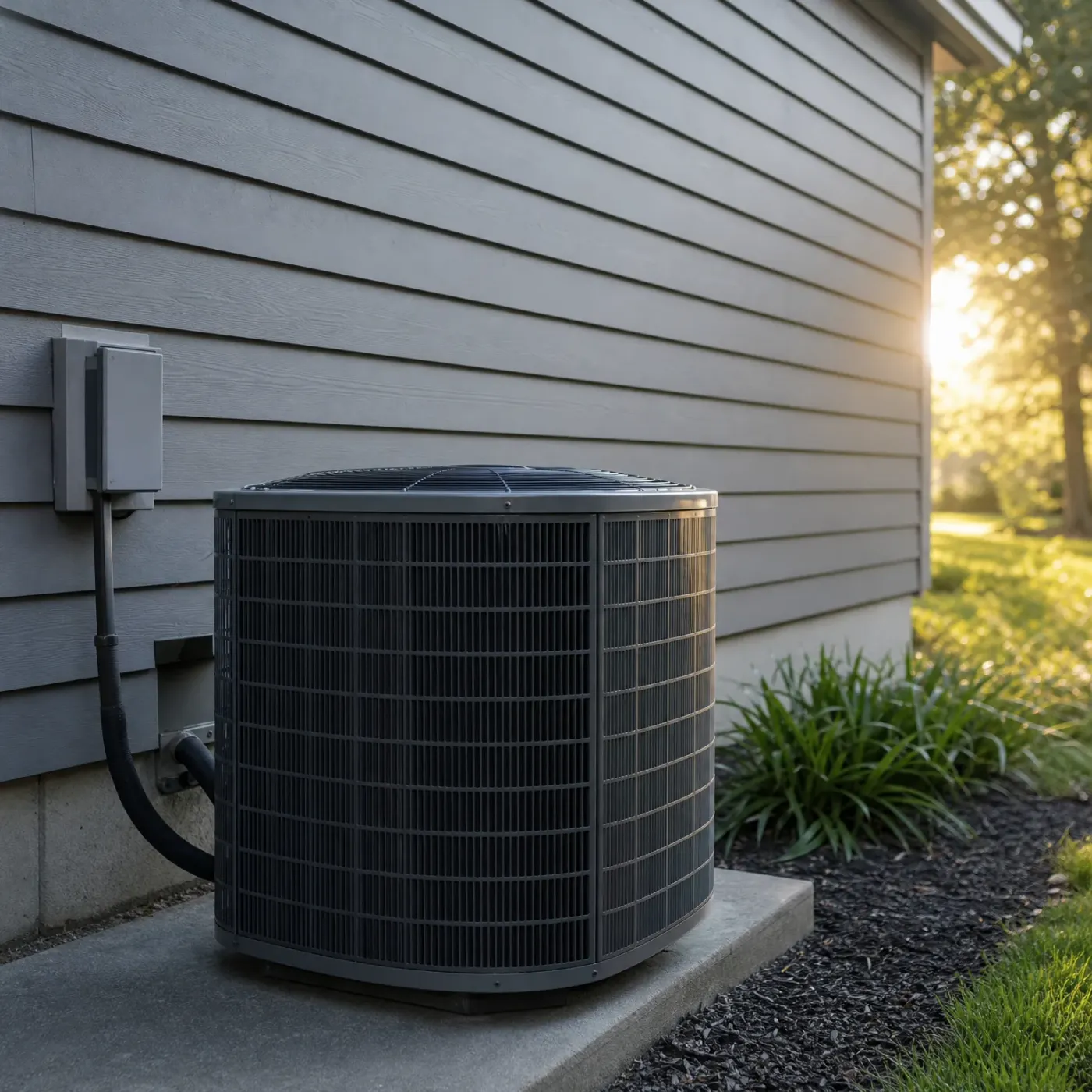
A gray outdoor condenser unit sits on a concrete pad against a house wall with horizontal siding above a stone veneer base, with an electrical disconnect box and conduit on the wall and a leafy shrub in mulch to the left.

Running clean

A heat pump that's clear of debris pulls air through the coil without strain. Nothing on the fins, nothing blocking the fan, no smell at all once it's past that first dusty start-up in fall. This is what yours should look like outside your house most days.

An outdoor air conditioner condenser unit on a concrete pad beside a house with beige vinyl siding, with a gray electrical disconnect box and insulated refrigerant lines on the wall and river rock to the right.

Coil clogged with debris

When the fins are packed with dirt like this, the unit can't shed heat the way it needs to. That makes it run hotter and work harder, and a burning smell that doesn't fade is often tied to strain like this rather than ordinary dust.

Is this smell something you should worry about?

Walk past the outdoor unit and you might catch it before you see anything wrong: a sharp, hot smell instead of the dusty one that fades on its own. Inside, the air coming out of the vents might carry it too, faint but there every time the system runs. Sometimes it's paired with a sound, a rattle or a hum that wasn't there before. South Carolina summers put a heat pump through long stretches of hard running, and a unit that's straining to push air through a dirty coil or a failing motor works harder for it. Left alone, a burning smell tied to a part under strain can turn into a bigger repair, or leave the house without heat or cooling until it's fixed.

A woman with dark hair in a bun wearing a cream knit sweater sits on a gray sofa in a bright living room, looking off to the side.
A woman wrapped in a knit blanket sits on a gray sofa in a living room, looking toward a bright window with houseplants and an armchair in the background.
A woman in a gray cowl-neck sweater sits on a light sofa with cushions, smiling and looking to the side, with a kitchen and window visible behind her.
A woman with dark hair in a bun, wearing a light linen shirt, sits on a sofa and looks to the side, with a window, houseplants and a kitchen with pendant lights blurred behind her.

Get the right pro for your heat pump

Your request goes to one pro, not a list of companies.

Asking costs nothing, and the choice to hire stays yours.

Why electric heat strips smell first

Your heat pump leans on electric heat strips when the outdoor air gets too cold to pull heat from, or when the system is defrosting ice off the outdoor coil. Those strips sit unused most of the year. When they finally heat up, the dust that settled on them burns off, and that's the smell you're catching. It's the same thing you'd notice on a space heater you hadn't run in months. Once the dust is gone, the strips run clean, and the smell doesn't come back unless the system sits idle again for a long stretch.

What a burnt plastic smell means

A smell like hot plastic or something electrical doesn't come from dust. It points to a wire with worn insulation, a connection that's loose and arcing, or a motor winding under strain. None of those clear up on their own the way a dust smell does. If the air coming through your vents carries that sharper smell, or it doesn't fade after a few minutes of runtime, that's the system telling you something inside the cabinet needs a closer look before it runs again.

A smiling older woman with gray hair in a cream knit sweater stands in a dimly lit kitchen beside a window showing snow outside, with a round loaf of bread on the counter in the foreground.
A woman with her hair in a bun holds a sleeping young child against her chest, both wrapped in a textured beige knit blanket on a sofa in a dimly lit room with a lamp, framed picture, and bookshelf behind them.

A smell that clears in a few minutes and doesn't come back is the heat strips doing what they always do the first cold snap. Nothing to fix there.

A smell that keeps coming back, or shows up on an ordinary mild day with no reason for the strips to even be running, points to something in the unit that needs a look.

An outdoor air conditioner condenser unit on a concrete pad beside a light gray vinyl-sided house, with an electrical disconnect box and conduit on the wall and bare soil in the foreground.
Before you get your heat pump repair
A gray outdoor condenser unit sits on a concrete pad beside a house with horizontal lap siding, with a wall-mounted disconnect box and refrigerant lines, mulched beds and a shrub nearby, and a concrete walkway in the foreground.
After you get your heat pump repair

Smell fades in a few minutes

Nothing to do here. The strips are burning off dust and once they've run a short while the smell is gone and stays gone.

Request a pro

Smell keeps coming back

That's not dust anymore. A contractor who works on heat pumps all winter can find out what's actually burning before it costs you more.

Request a pro

Power costs 15.12 cents per kilowatt-hour statewide

At 15.12 cents a kilowatt-hour, those heat strips aren't cheap to run, since they work by pure electric resistance instead of the heat pump's usual trick of moving heat rather than making it. A burning smell that keeps coming back and forces the strips to run longer than they should will show up on your bill before you see the repair bill.

EIA-861 2025 statewide residential average

Where the smell leaves you

  • A smell that fades in a few minutes is the heat strips burning off dust and it won't come back until next winter.
  • A smell that lingers, returns, or smells like hot plastic or wiring means something past dust is wrong.
  • The heat strips, the defrost cycle, and the blower all pull more power than the compressor alone, so a wiring fault there runs hotter.
  • A contractor who services heat pumps through South Carolina winters has likely seen this exact smell on this exact system before.
  • One licensed local contractor takes the call, so you're not fielding competing quotes from companies you don't know.
  • Catching a sharp or electrical smell early keeps a strip or wiring problem from turning into a bigger repair.

A few minutes of dust burning off the heat strips isn't a problem. It happens once, early in winter, and it's done for the year. A smell that hangs around, comes back on a mild day, or turns sharp like hot plastic is a different thing. That's wiring or a strip itself, not dust, and it won't fix itself by running longer.

The heat strips draw more power than the compressor does on its own, and so does the blower when the defrost cycle kicks it up. A loose connection or a failing strip in that part of the system runs hot under that load, and that's what you're smelling. It's worth having someone look at before the strips are the only thing standing between your house and a cold snap.

South Carolina winters mean these strips sit idle most of the year and then get asked to run hard on the coldest mornings. A contractor who services heat pumps through winters here has likely run into this same smell on this same kind of system, in houses not unlike yours. You'd be handed to one licensed local contractor, not a handful of companies competing for the job, so there's one call to take and one person who already has a sense of what's probably wrong before they get there.

Catching a sharp or electrical smell now, rather than waiting to see if it comes back a third time, is what keeps a loose wire or a worn-out strip from becoming a bigger repair, or a cold house when you need the heat most.

An outdoor air conditioner condenser unit on a concrete pad beside a gray horizontal-lap-sided house, with an electrical disconnect box and refrigerant line on the wall, grass, shrubs and a tree with low sun behind.

Get your heat pump to the right pro

Reach a local pro

Only one pro gets your request, so you hear from one company.

Sending the form costs nothing.