




Two illuminated white colonial-style houses with wrap-around porches, flanked by oak trees draped in Spanish moss, photographed at night.

Heat Pump Repair in Spartanburg, SC

Tell us about the job

Takes about a minute. No obligation.

RepairHeat PumpSpartanburg County, SC
Step 1 of 2

What ZIP code is the job in?

Spartanburg County saw 194 severe weather events between 2015 and 2024, and damaging wind caused most of them. Hail showed up too, enough to matter for a heat pump, since the outdoor unit sits outside year round taking whatever comes. Wind can bend the fins on the coil or throw debris into the fan. Hail can dent the cabinet or crack a fin without stopping the unit right away. A heat pump that took a hit can keep running for weeks before the real problem shows up. If a storm came through recently, it's worth having the outdoor unit looked at even if you haven't noticed a change yet.

7 months
October through April, your system heats
5 months
May through September, it cools
33°F
the average winter night it heats against
88°F
the average summer afternoon it cools against
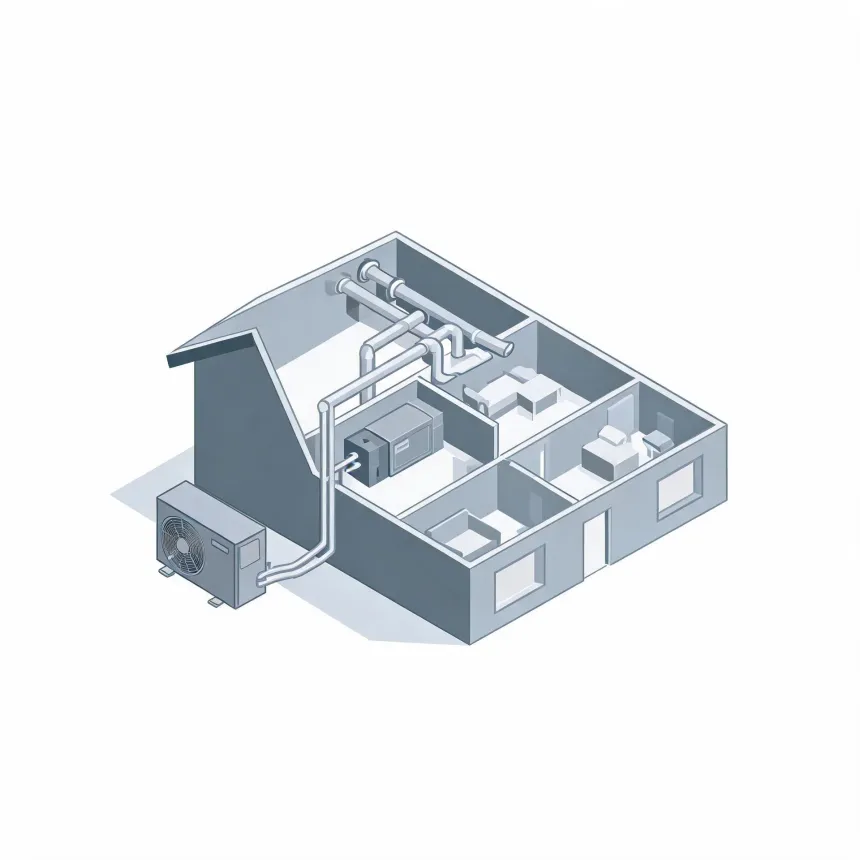
Isometric grayscale illustration of a cutaway house showing interior rooms, ducted air handler and duct runs, connected by pipes to an outdoor condenser unit beside the building.
Your system heats October through April and cools May through September.

NOAA nClimDiv, 1991–2020 normals

Heat runs October through April here, seven months straight, and cooling picks up May through September.

September and April are when a weak part finally gives out, right before the load changes.

Most heat pumps here fail from ordinary wear, not the weather

125 damaging wind events from 2015 to 2024
53 hail events from 2015 to 2024
Power costs 14.23 cents a kWh statewide

Half the homes in Spartanburg County were built in 1990 or later. If yours is one of them, your heat pump is likely newer too, especially if it's the original system. A unit put in within the last decade or two hasn't used up its working life, and a breakdown now is usually one part failing, not the whole system wearing out. That's worth knowing before you decide whether to fix it or replace it.

Had a storm come through? Get the outdoor unit checked before it fails.

If a storm has come through and the outdoor unit hasn't been looked at since, that's the thing to get ahead of. It can keep running for weeks with a bent fin or a dented cabinet before it stops heating or cooling right.

Find a contractor
A gray air-source heat pump mounted on a concrete pad next to a house with gray vinyl siding, surrounded by gravel and flanked by green shrubs and white hydrangea flowers.

Get it looked at before you replace it

A newer system is worth repairing. If it's been running fine until now, call for a diagnosis before anyone tells you it needs to be replaced. Most of the time a failed capacitor, a bad contactor or a refrigerant leak explains a stopped heat pump, and any of those gets fixed without touching the rest of the unit.

Look at the outdoor unit first

Walk around it and check that nothing is pressed against the coil or blocking the fan on top. Leaves, pine straw, a fallen branch, even a trash can too close can choke airflow. Clear anything within a couple feet. If the fins look crushed or caked with dirt, that's a job for a tech, but clearing debris yourself is safe and sometimes it's all that's wrong.

Check the thermostat and the breaker before anything else

Make sure the thermostat is set to heat or cool as needed and the temperature is actually set past room temperature, not sitting right at it. Then check the breaker panel for the outdoor unit and the indoor air handler. A tripped breaker will look like a dead system when it's really just a switch to flip. If it trips again right after you reset it, stop and call someone, that's a sign of a short, not a fluke.

A heat pump in trouble usually tells you in how it runs, not just whether it runs. Short cycling is one of the clearest signs, where it kicks on, shuts off, and starts again within minutes instead of running a full cycle. Air coming out lukewarm instead of hot or cold often points to the reversing valve, the part that switches the unit between heating and cooling. Ice building up on the outdoor coil during a run cycle is normal for a few minutes while it defrosts, but a coil that stays frozen means something is wrong with the defrost cycle or the refrigerant charge. A hissing or bubbling sound near the outdoor unit can mean a refrigerant leak, and that's not something to wait on since it can damage the compressor if it runs low too long. Any grinding or screeching from the outdoor unit usually means a motor bearing is going.

A heat pump doesn't fail all at once as a rule. Most of the time one part gives out while everything else in the unit is still good, and that's the part worth understanding before you decide anything. The compressor is the one piece that's expensive enough to change the math, since it's the heart of the system and the most labor to replace. Everything else, the capacitor, the contactor, the fan motor, the reversing valve, a refrigerant leak in a line, gets fixed on its own without touching the compressor at all. A tech can tell you which kind of problem you have just by running the unit and checking a few readings. If the compressor itself has failed, or the coil is leaking in more than one spot, that's when replacing the unit starts to make more sense than chasing repairs on an old system. Short of that, a repair that fixes the one failed part is the right call, and there's no reason to replace a unit that's otherwise sound.