White plantation-style houses with wraparound porches lit at night, surrounded by Spanish moss-draped live oak trees.

Heat Pump Repair in Seneca, SC

Tell us about the job

Takes about a minute. No obligation.

RepairHeat PumpOconee County, SC
Step 1 of 2

What ZIP code is the job in?

The tech checks before touching anything

A diagnostic starts with questions. What the system is doing, when it started, whether it happens in heating mode, cooling mode, or both. Then comes a look at the outdoor unit, the indoor coil, and the thermostat settings before any panel comes off. Refrigerant pressures, electrical readings, and airflow all get checked against what the system should be showing. Swapping a part on a guess, without finding the actual fault first, often leaves the real problem untouched.


The cause decides what happens next

A failed capacitor or a stuck reversing valve is a straightforward repair, often done the same visit. A compressor on its way out or a coil that's corroded through is a different conversation, especially on an older system. The diagnosis shows whether fixing this one part solves the problem or whether another failure is close behind.

7 months
October through April, your system heats
5 months
May through September, it cools
33°F
the average winter night it heats against
87°F
the average summer afternoon it cools against
Isometric grayscale illustration of a cutaway single-story house showing interior rooms, ductwork and an air handler, an exterior condenser unit connected by lines, and dark solar panels on the roof.
Your system heats October through April and cools May through September.

NOAA nClimDiv, 1991–2020 normals

Half the houses in Oconee County were built in 1990 or later.

A heat pump that came with a newer house still has working life ahead of it, which usually makes repair the right call.

A heat pump here isn't fighting the weather most of the year

92 damaging wind events from 2015 to 2024
37 hail events from 2015 to 2024
Winter nights average 33°F
Seven months of work, with two weeks to prove itHeat here runs October through April, so September is the last easy month before a weak part gets found the hard way.

A heat pump that's struggling still moves heat, just badly, and that's what causes trouble. A low refrigerant charge makes the compressor work harder to hit the same temperature, and that extra strain has to go somewhere. Ice on the outdoor coil blocks airflow, so the system pulls in less air and the compressor runs longer to make up for it. A failing capacitor makes the motor draw more current every time it struggles to start. None of this fixes itself by waiting. The part under strain keeps wearing until it quits outright, and it often takes the compressor down with it. Weak heat, odd noise, or short cycling mean something is already working harder than it should. Left alone, that same strain tends to end in a bigger failure instead of a smaller one.

A system that hasn't been pushed hard is usually worth fixing

This heat pump hasn't been fighting extreme heat or deep cold year after year. Overnight lows here only average 33°F in December, January and February, so it's not straining to keep up on the coldest nights. If it's acting up now, a worn part or its age is the more likely reason, not years of hard use. That usually makes repair the right call.

Find a contractor
A man in a cap, dark shirt and tan work pants walks up porch steps toward a dark blue paneled front door, carrying a canvas tool bag, with a potted shrub beside the entry.
A dark gray heat pump unit mounted on a concrete pad next to a house with gray siding and a stone veneer wall.

A newer system here still has years left to give

Half the homes in Oconee County were built in 1990 or later. If yours is one of them, a repair call makes sense before anyone talks about replacing the system. The age of the house won't tell a tech what's wrong, but it does mean the odds favor a part fix over a full teardown.

What you can look at first

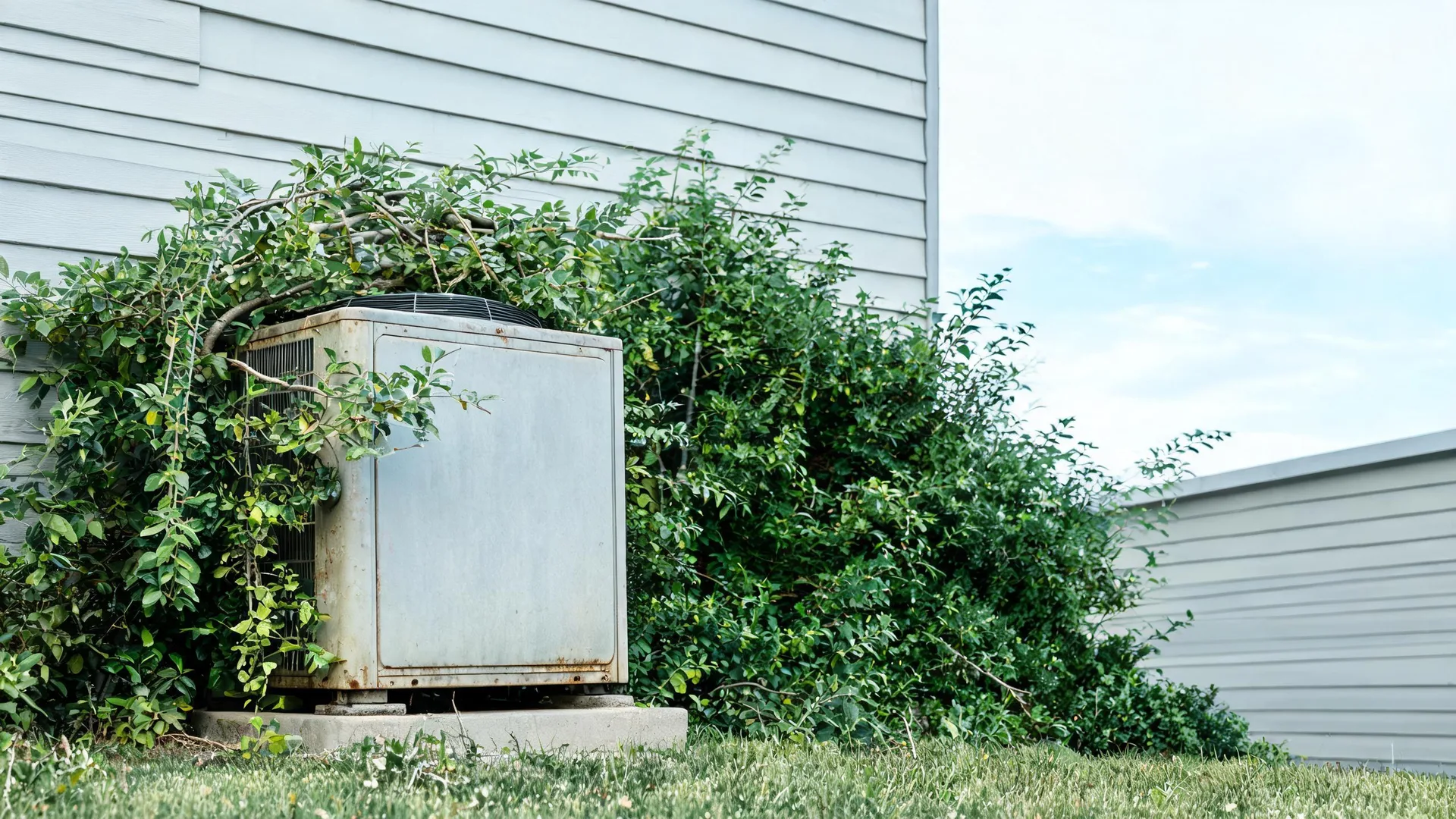
Check the thermostat is set to heat or cool as you expect, with the temperature set past the room temperature. Look at the outdoor unit for ice built up on the coil or leaves and debris packed against the fins. Check the air filter and pull it if it's visibly dirty. Walk the vents inside and make sure none are closed or blocked by furniture.

What to leave alone

Don't chip ice off the outdoor coil or hose it down, and don't pull panels off the unit looking for the problem. Don't keep flipping the system between heat and cool trying to get it to respond. If the breaker has tripped, it's fine to reset it once, but if it trips again, leave it off and call instead of resetting it repeatedly.

Most heat pump failures trace back to a handful of parts that wear out doing the same job over and over. The reversing valve switches the system between heat and cool, and the coil inside it can get stuck from mineral buildup or a weak solenoid, leaving the system blowing the wrong temperature air. The run capacitor gives the compressor and fan motors the jolt they need to start, and it weakens gradually until the motor struggles to turn over or stops starting at all. Contactors pit and burn from making and breaking the circuit thousands of times, until one day the connection doesn't hold. Outdoors, the coil itself can corrode over the years from sitting out in the weather, and once it's pitted through, refrigerant leaks out and the system loses its charge slowly. The compressor is the part everyone worries about, but it rarely fails on its own. Most of the time it's the last thing to go, worn down by a problem upstream that never got fixed.

A repair fixes what broke. It doesn't undo what the system has already been through. If the compressor is still good and the coil isn't eaten through, swapping the failed part brings the system back to where it was before the part gave out. That's most calls. The harder question is what else is close behind. A reversing valve or capacitor fails on its own timeline, mostly unrelated to the rest of the system, so fixing it tells you nothing about the compressor's condition. But a coil that's corroded in one spot is usually corroded elsewhere too, just not far enough along to leak yet. A tech who's found the fault can usually tell you which kind of repair this is, one that closes the issue or one that buys time before the next part goes.