This county gets hit a lot
York County logged 122 severe weather events between 2015 and 2024. Most of that was damaging wind, with hail close behind. That's an outdoor unit sitting through a decade of wind and hail, not just one bad afternoon.
Takes about a minute. No obligation.
York County logged 122 severe weather events between 2015 and 2024. Most of that was damaging wind, with hail close behind. That's an outdoor unit sitting through a decade of wind and hail, not just one bad afternoon.
Hail dents a cabinet and bends fins without stopping the heat pump that day. If yours took a hit, have it looked at even though it's still running.

NOAA nClimDiv, 1991–2020 normals
October is the first cold month here, and the heat pump has sat idle since April.
Whatever was already weak in it finds out in that first cold snap, not before.



Half the homes in York County were built in 2000 or later. If yours is one of them, your heat pump is probably newer too, not something installed decades ago by a previous owner. A newer unit that's acting up is usually dealing with one bad part, not a system wearing out. A failed capacitor, a low charge, a bad sensor, the kind of thing a contractor replaces in a single visit. Worth finding out what's actually wrong before anyone talks about replacing the whole unit.
If the outdoor unit took hail or wind this year or any year before it, get it checked now rather than waiting for a bigger repair. A heat pump can keep running for months after that kind of hit and still have a problem underneath.
Find a contractor
A heat pump installed within the last couple decades has the parts to back that up. Capacitors, sensors, control boards, all of it still in production, still stocked. A contractor can get the exact part for your model instead of hunting down something discontinued. That's the case for calling about a repair before anyone brings up replacement.
Start at the thermostat. Make sure it's set to heat and the temperature you've asked for is above the room temperature, not below it. Check the breaker panel next, the outdoor unit and the air handler usually run on separate breakers, and a tripped one will stop the system cold. Walk outside and look at the unit itself. Ice caked over the coil, or leaves and yard debris packed against it, will keep it from moving air right.
An outdoor unit that won't run at all, or one that's running but blowing cold air when the thermostat is calling for heat, points to something failing inside the system, not something a homeowner can clear away. A burning smell from the air handler, a breaker that trips again as soon as you reset it, or water pooling around the indoor unit all mean the same thing. Stop checking and get a contractor out.
A heat pump that keeps running with a problem underneath doesn't fix itself, it works harder. A low refrigerant charge makes the compressor run longer to reach the same temperature, and a compressor that runs longer under strain wears faster than one that cycles normally. Ice on the outdoor coil blocks airflow, and a unit that keeps running against blocked airflow pushes the compressor to do the fan's job too. A failing capacitor makes the compressor draw hard on every start, and every start it survives weakens it for the next one. None of this announces itself. The house still gets warm, so there's no reason to think anything's wrong, right up until the part that was struggling gives out completely. Catching it while it's one bad part means a contractor replaces that part. Wait, and the compressor it was dragging down can go with it.
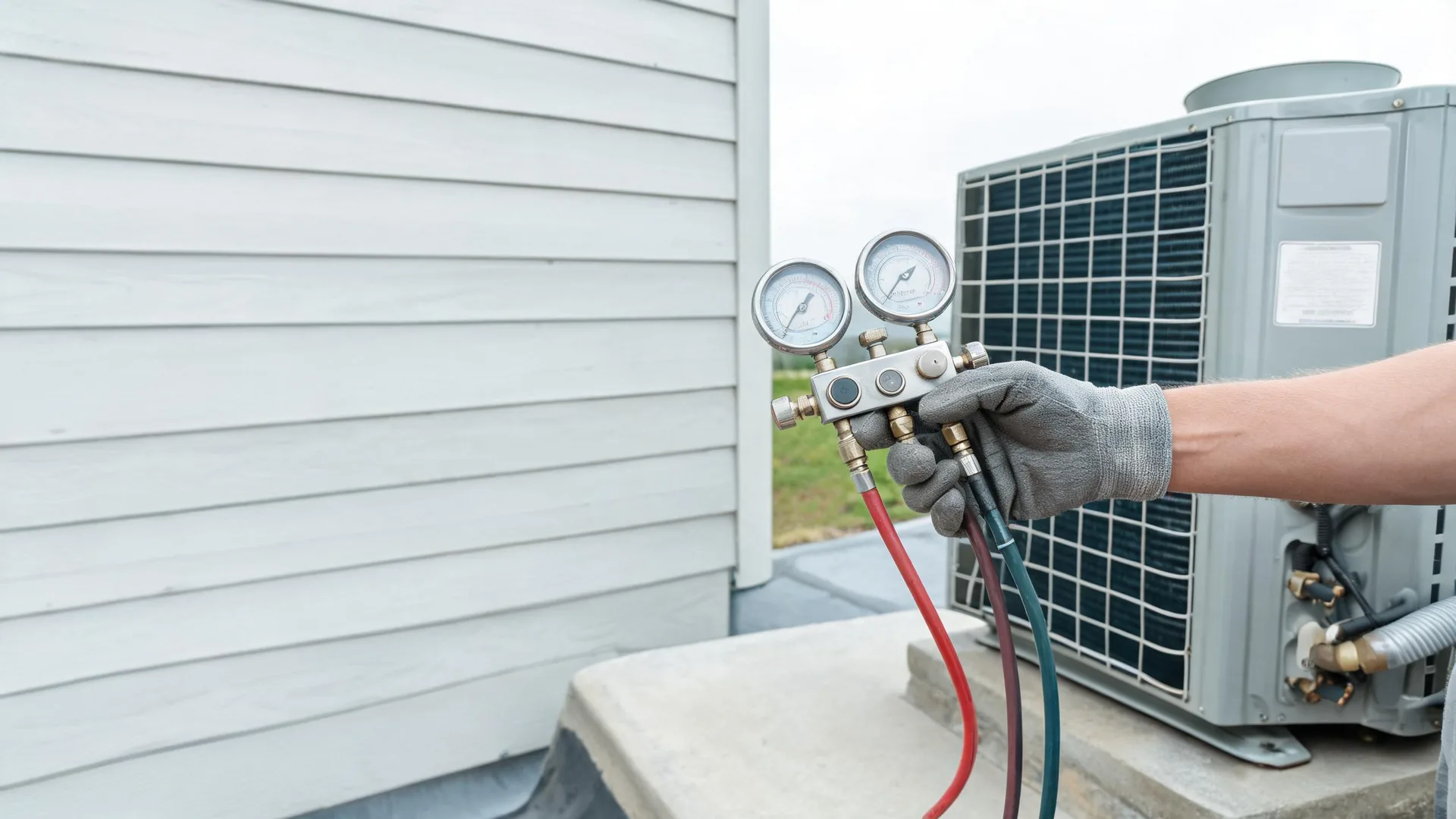
A diagnostic visit starts with the thermostat and the breaker panel, the same things worth checking before anyone's called, then moves to what only a gauge set and a multimeter can tell you. A contractor connects gauges to the service ports and reads the refrigerant pressure against what the system is supposed to be running. Low pressure points to a leak somewhere in the line set or coil. Normal pressure with a unit that still won't heat points somewhere electrical, the capacitor, the contactor, the reversing valve that switches the system between heating and cooling. That valve is the part specific to a heat pump, and a contractor checks it by watching whether the system actually reverses when it's told to. Each reading rules something out until one thing doesn't check out normal. That's the part that gets replaced, not the whole system.