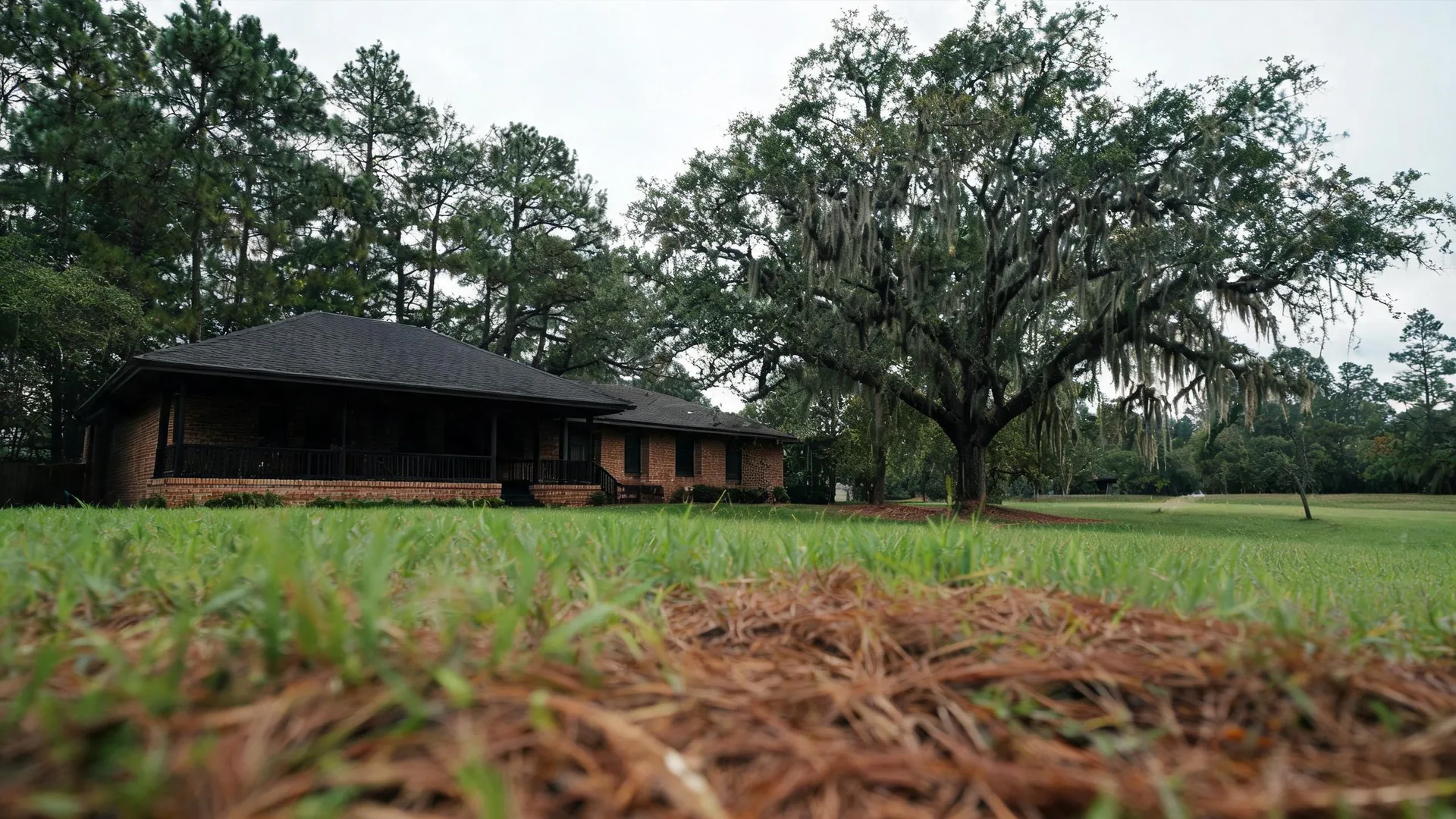

Low-angle view across a lawn with pine straw in the foreground toward a single-story brick house with a dark shingled roof and covered porch, beside a large moss-draped oak and pine trees under an overcast sky.

Heat Pump Repair in Newberry, SC

Tell us about the job

Takes about a minute. No obligation.

RepairHeat PumpNewberry County, SC
Step 1 of 2

What ZIP code is the job in?

Most heat pump failures trace back to a handful of parts. The reversing valve is a common one. It's what switches the system between heating and cooling, and when it sticks, you get heat when you want cool or no change at all. The capacitor is another. It gives the compressor and fan motors the jolt they need to start, and a weak one causes hard starting, humming, or a unit that won't kick on. Outside, the defrost board and sensor control how the coil clears itself of ice during cold weather. If that fails, frost builds up and chokes airflow across the coil. Low refrigerant from a slow leak shows up as weak heating or cooling and ice where there shouldn't be any. A failing compressor is the one nobody wants to hear, since it runs the whole system and isn't simple to replace on its own.

5 months
November through March, your system heats
5 months
May through September, it cools
34°F
the average winter night it heats against
91°F
the average summer afternoon it cools against
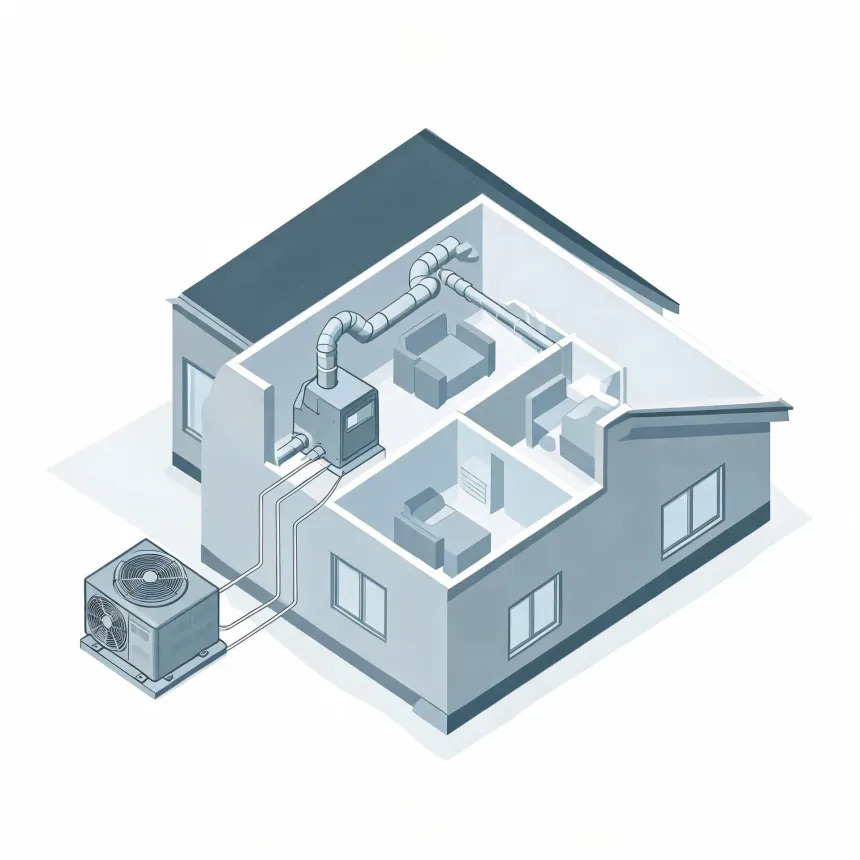
Isometric cutaway illustration of a two-room house showing an indoor air handler with ductwork connected by lines to an outdoor condenser unit on a pad.
Your system heats November through March and cools May through September.

NOAA nClimDiv, 1991–2020 normals

Heat pumps in Newberry County switch over to heat in November after months of cooling.

A weak capacitor or low charge that made it through summer often fails once the compressor has to run heat again.

None of this makes a heat pump here more likely to fail than one anywhere else. Half the homes in Newberry County were built in 1981 or earlier, half in 1981 or later, and age alone doesn't wear out a reversing valve or a capacitor any faster. About one in five homes here is a mobile home. A heat pump serving one works the same as any other, same parts, same failure points. What breaks is still whatever would break in any of these units, a stuck reversing valve, a weak capacitor, a dirty or iced coil. The fix is the usual fix.

After a storm, have the outdoor unit checked even if it's still running

Newberry County has logged 231 severe weather events between 2015 and 2024, including plenty of damaging wind and hail. That outdoor unit sits through all of it. Add in how often the power here goes out for a full day or more, and a heat pump that took a hit and keeps running quietly is still worth a look. If yours was out there for the last storm, have it checked.

Find a contractor
A dark gray heat pump unit mounted on a concrete pad next to a house with gray siding and a stone veneer wall.

What a tech is actually checking

A tech starts outside at the unit itself, not with a laptop. Power at the disconnect. The fan turning. Ice on the coil, anything bent or jammed in the cabinet. From there it's refrigerant pressures and temperatures, checked against what the system should be doing in heat mode and in cool mode. A heat pump can run fine one way and still be hiding a stuck reversing valve the other way. The capacitor gets tested under load, not just checked sitting there, because a weak one can read fine on a meter and still fail the moment the compressor asks it to start. The defrost board and sensor get a look too, especially if the frost pattern on the coil seems off. Every reading either matches what the system should be doing at that point or it doesn't, and that's what points to the part that actually failed.

A stuck reversing valve wears the compressor

When the reversing valve sticks partway, the system can't fully commit to heating or cooling. The compressor ends up pushing refrigerant through a path that isn't fully open. Left running like that, it builds heat and strain the compressor wasn't built to handle, and a valve problem turns into a compressor problem.
Ice on the coil spreads if the defrost cycle doesn't fire

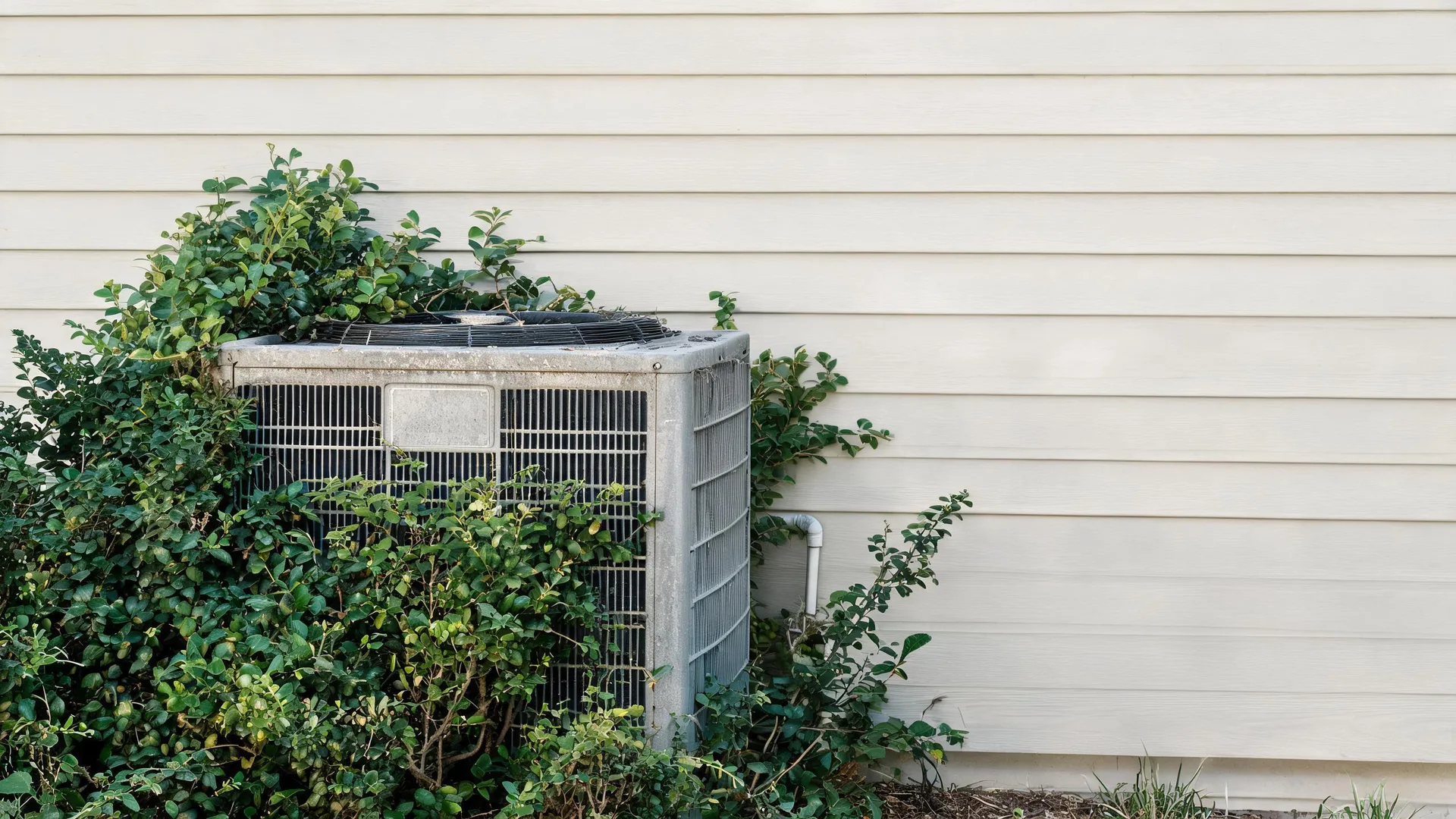
A little frost on the outdoor coil is normal in cold weather. The defrost board is supposed to clear it on a schedule. If that board or its sensor fails, the frost doesn't stop. It keeps building until the coil is solid ice, airflow across it stops, and the compressor is left trying to move refrigerant through a coil that can't do its job. That's a harder repair than catching a bad sensor early.

Before anyone comes out, a few things are worth checking. Start with the thermostat. Make sure it's set to heat and the temperature is actually set above room temperature, since a setting bumped by accident looks exactly like a dead system. Go outside and look at the unit itself. Solid ice packed on the outdoor coil, or leaves and debris jammed against it, is worth mentioning when you call. Check the breaker panel too. A tripped breaker stops the whole system cold, and resetting it is simple if that's all it is. If you can get to the air filter easily, take a look. A filter so clogged you can't see light through it chokes airflow and can make a working system act like a broken one. None of this fixes a stuck reversing valve or a bad capacitor, but it rules out the simple stuff first.

A repair makes sense when one part failed and the rest of the system is sound, a capacitor, a sensor, a board. Swap the part and the unit runs like it did before. Replacement starts to make sense when the compressor itself is the problem, since it's the most expensive part to replace and the labor to get at it isn't cheap either, so putting a new compressor in an old system often costs close to what a new system would run. It also matters how the unit has been acting before this breakdown. One failure is a repair. A string of different failures over a couple years, each one a different part, is a system telling you it's worn out generally, not just unlucky in one spot. Age matters too, though not by itself. A heat pump near the end of its expected life that needs a major part is a different call than a younger one with the same failure. Ask what's actually broken, what it costs to fix against what a new system costs, and whether this is the first problem or the latest one.