





A illuminated white antebellum-style house with a wraparound porch, white columns, and Spanish-moss-draped oak trees, photographed at dusk.

Heat Pump Repair in Goose Creek, SC

Tell us about the job

Takes about a minute. No obligation.

RepairHeat PumpBerkeley County, SC
Step 1 of 2

What ZIP code is the job in?

Berkeley County saw 240 severe weather events between 2015 and 2024. A good share of that was damaging wind and hail, and a heat pump's outdoor unit sits right outside, exposed to both. Hail bends the coil fins. Wind throws branches and debris into the cabinet. A unit can keep running for a while after that kind of hit before it struggles to heat or cool the way it should. If a storm has come through since it last ran right, the outdoor unit is worth a look.

5 months
November through March, your system heats
6 months
May through October, it cools
38°F
the average winter night it heats against
91°F
the average summer afternoon it cools against
Isometric grayscale illustration of a cutaway house showing interior rooms, ceiling ductwork and an air handler, connected by lines to an outdoor condenser unit on a pad outside.
Your system heats November through March and cools May through October.

NOAA nClimDiv, 1991–2020 normals

Heat pumps in Goose Creek switch over to heat in November.

October is the month to get a storm-stressed unit looked at, before it has to carry the first cold snap.

Half the homes here were built by 2002, so most heat pumps are worth repairing, not replacing

Half the homes here were built by 2002
146 damaging wind events from 2015 to 2024
61 hail events from 2015 to 2024

That's worth knowing when something stops working right. A heat pump that came with a newer house still has years in it, so a breakdown is more likely something a contractor can fix than a sign the whole system is done. Worth getting the outdoor unit looked at before you assume the worst. A bent coil fin, a bad capacitor, a cracked contactor, those are repairs. A seized compressor is a harder call, but that's for whoever inspects it to tell you, not something to guess at from the driveway.

Had a storm since it last ran right? Get the outdoor unit checked

If hail or wind has come through since the outdoor unit last ran right, get it looked at now. A bent fin or a cracked contactor is a repair. Leave it alone and you're guessing until the next cold snap finds the problem for you.

Find a contractor
A gray outdoor HVAC unit mounted on a concrete pad beside a house with gray lap siding and a stone foundation.

A small problem now is a bigger one if it keeps running

A heat pump that's struggling doesn't rest when you leave it alone. It keeps working harder to hit the setpoint. A compressor running against a low charge or a weak capacitor draws more current than it should. That extra heat has nowhere to go but into the compressor windings. Keep that up long enough and a repair turns into a compressor replacement. A coil that's lost airflow to a clogged filter or bent fins causes a different version of the same problem. The system keeps pulling in refrigerant that never picks up enough heat, and liquid can end up where only gas should be, inside the compressor itself. A unit limping along now is still a repair. Give it time and it stops being one.

What you can check from the ground

Look at the outdoor unit without taking anything apart. The coil fins should sit flat and straight, not crushed in on one side. Check that nothing is blocking airflow around the cabinet, no leaves packed against the sides, no branch resting on top. Make sure the unit is sitting level and hasn't shifted on its pad. Go inside and swap the air filter if it's dirty. None of this tells you what's wrong inside the system, but it rules out the easy stuff before anyone comes out.
What tells you it's past a homeowner fix

A unit that won't turn on at all, that trips the breaker when it starts, or that's making a grinding or screeching sound needs a contractor, not a screwdriver. Ice built up on the coil or refrigerant lines means something's wrong with airflow or charge, and running it longer won't clear that on its own. If the outdoor fan isn't spinning but the indoor side is blowing air, that's an electrical or motor problem inside the cabinet. Shut it off and get it looked at rather than letting it keep cycling that way.

Most of the time the first sign isn't that the heat pump stops. It's that it stops keeping up. Air coming from the vents feels cooler than it used to in heating mode. The system runs longer stretches without shutting off. Some homeowners notice the outdoor unit icing over even when it isn't that cold out. Others hear it before they feel it. A clicking at startup that didn't used to be there. A buzz from the outdoor cabinet. A hum with no fan turning. Short cycling, where it kicks on and off every few minutes instead of running a normal stretch, points to something wrong with the start components or the airflow. None of these mean the same thing every time, but any of them is reason enough to have it checked before it quits outright.

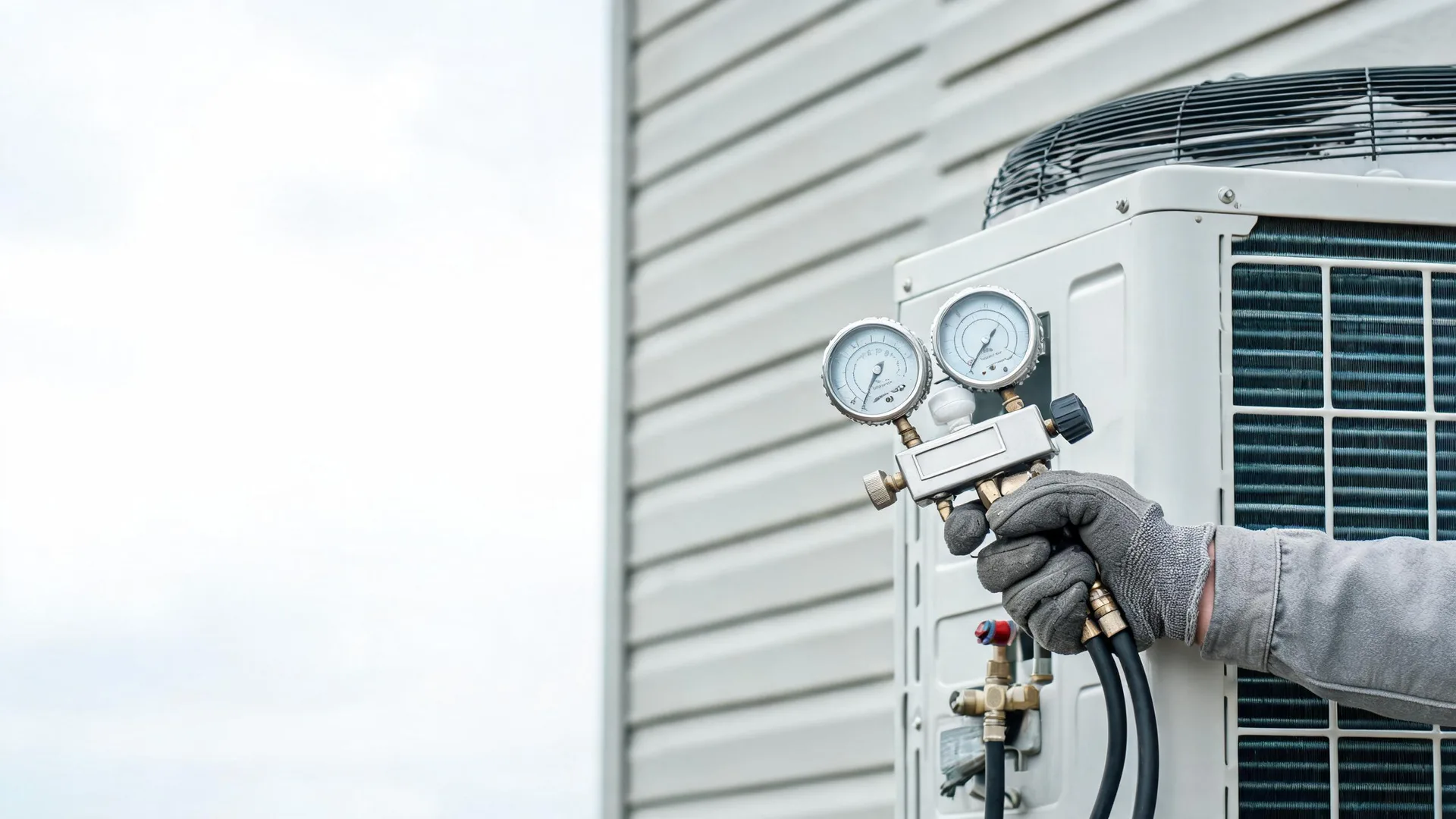
A diagnostic starts outside, not with a screwdriver. The contractor checks refrigerant pressures with gauges on the service ports. That reading tells them whether the system has a leak, a restriction, or a failing compressor before they touch a single wire. They'll check the capacitor and contactor too, since those are the parts that most often cause a no-start or a hard start. Airflow gets checked, both the coil outside and the filter and ducts inside. A heat pump that can't move air throws symptoms that look electrical but aren't. Expect them to run the system through a full cycle instead of just glancing at it, since some faults only show up once the compressor has been running a few minutes. Whatever they find, you should get a plain answer. What failed, why, and whether it's worth repairing.