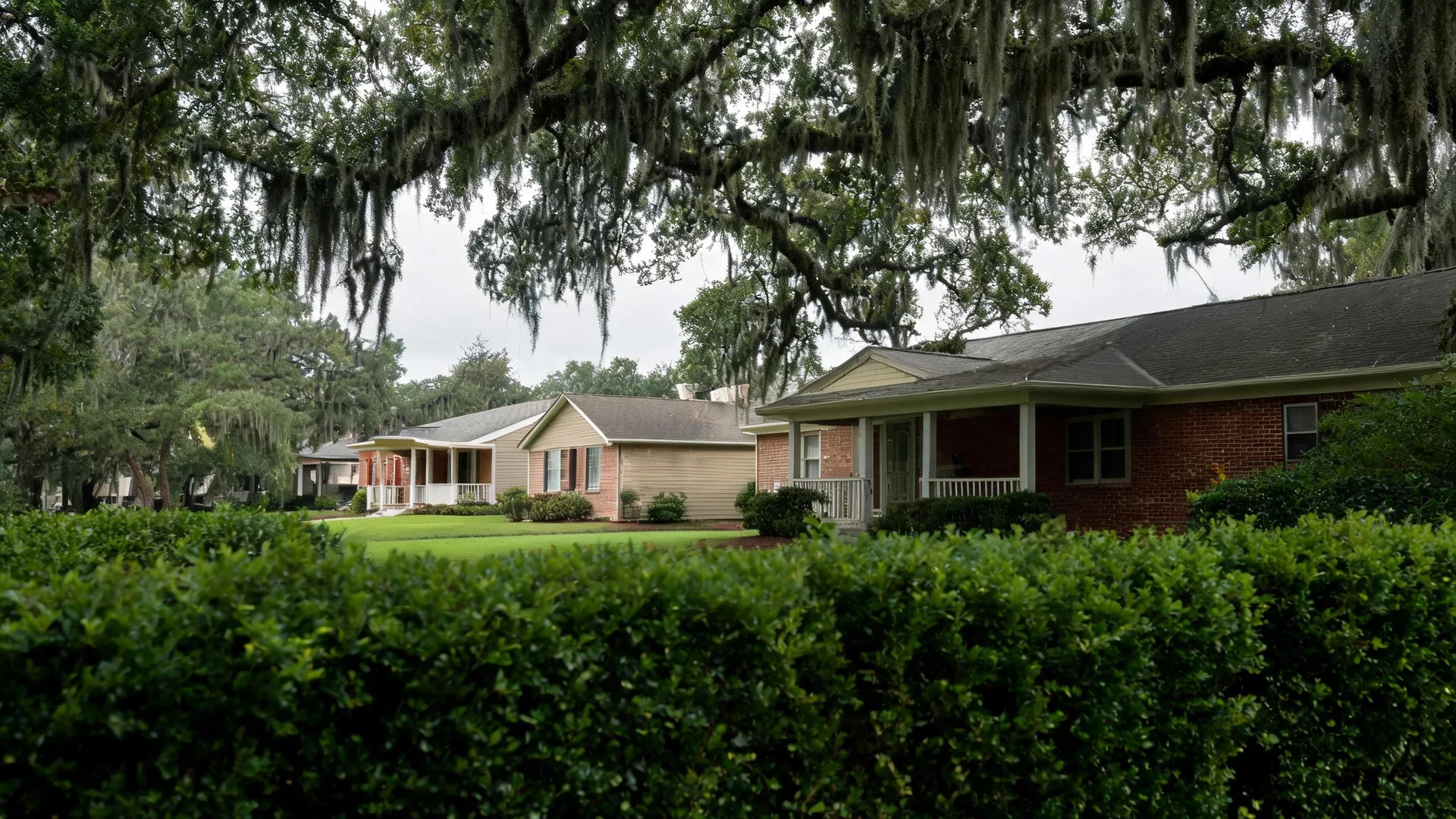






Single-story brick and siding houses with covered porches behind a trimmed hedge and lawn, framed by large oak branches draped with hanging moss under an overcast sky.

Heat Pump Repair in Georgetown, SC

Tell us about the job

Takes about a minute. No obligation.

RepairHeat PumpGeorgetown County, SC
Step 1 of 2

What ZIP code is the job in?

A heat pump that's struggling will keep trying to hit the temperature on the thermostat, and that's where the damage starts. A refrigerant leak gets worse because the compressor keeps pulling on a system that doesn't have enough charge to protect it, and that kind of run time can burn it out. Ice on the outdoor coil builds on itself too. Once frost forms, the coil can't absorb heat the way it should, so the system runs longer to compensate, and the longer it runs the thicker the ice gets. A failing capacitor is the same story. It gives the compressor and fan motors a weak start every cycle, and every weak start stresses the windings a little more until one cycle the motor doesn't start at all. None of these get better by waiting. If your heat pump is running constantly, icing up, or short cycling, the fix is smaller now than it will be after another week of forcing it to work.

5 months
November through March, your system heats
6 months
May through October, it cools
38°F
the average winter night it heats against
89°F
the average summer afternoon it cools against
Isometric cutaway illustration of a single-story house showing interior rooms, ceiling ductwork, an indoor air handler, and an outdoor condenser unit connected by lines on the ground.
Your system heats November through March and cools May through October.

NOAA nClimDiv, 1991–2020 normals

Half the homes in Georgetown County were built in 1993 or later.

A heat pump that came with a newer house has likely got years left in it, which makes repair worth doing.

November is when a weak heat pump finally gives out

Cooling runs May through October
Heat runs November through March
Power costs 14.23 cents a kWh statewide

Storms come through Georgetown County often, 78 severe weather events in the last ten years, and 45 of those were damaging wind. An outdoor unit sits outside through all of it, with nothing between the coil and the fan blades and whatever the wind carries. A bent fin or a cracked blade does not always stop the system from running. It just makes it run worse, drawing more power and wearing harder on parts that were fine before the storm. If your outdoor unit has been through a bad storm, even one it seemed to survive, that is worth having a contractor look at.

A newer system is worth repairing

If your heat pump came with the house and the house is newer, get the repair done rather than planning around a replacement. Call a contractor out, let them tell you what's wrong, and fix that part.

Find a contractor
A man in a cap, dark shirt and brown work pants walks up stone steps toward a gray front door, carrying a canvas tool bag in his right hand, with a potted plant beside the porch.
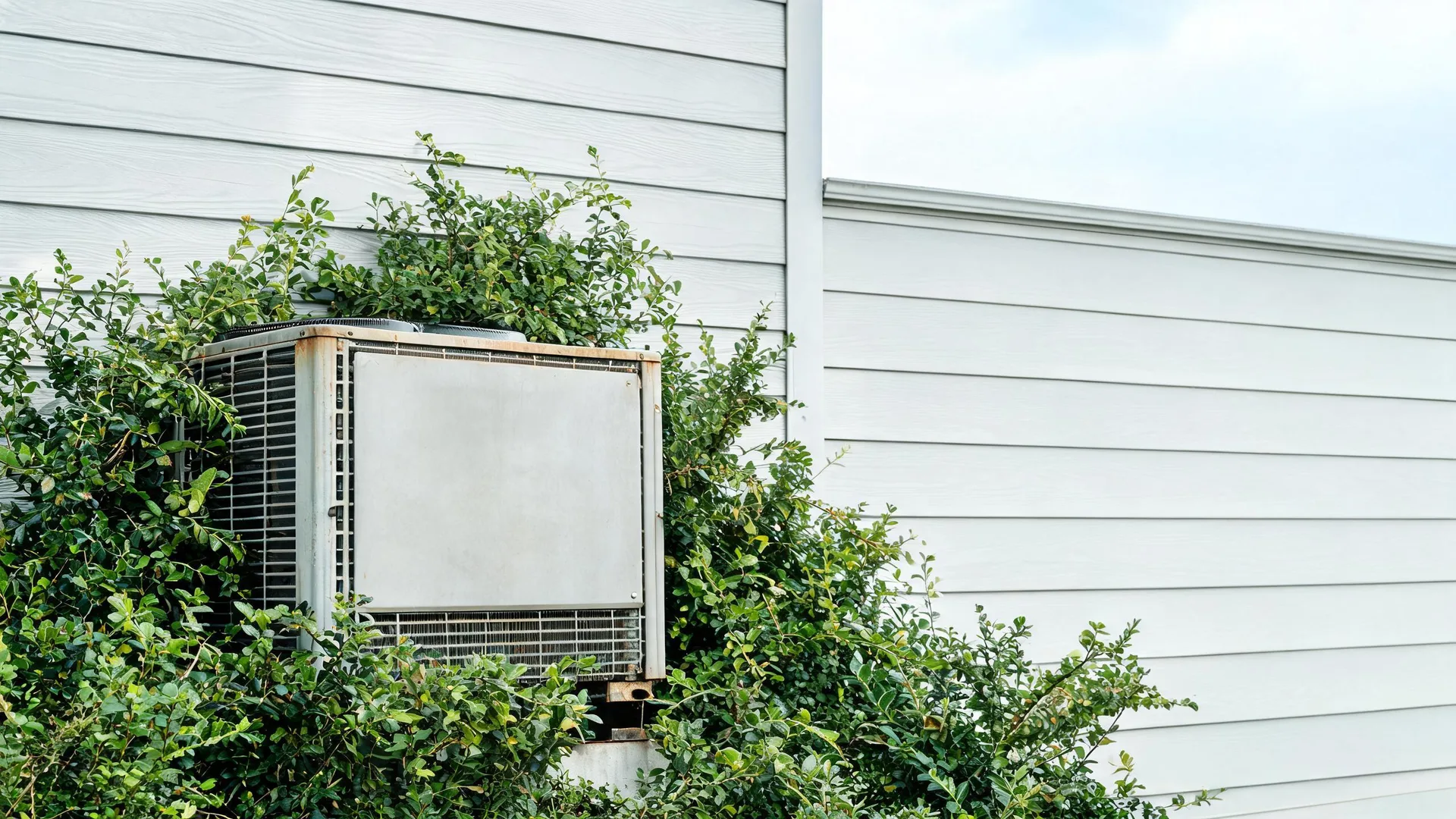
A residential heat pump outdoor unit mounted on a concrete pad next to a house with gray vinyl siding.

What you can check before anyone comes out

Cut power at the thermostat first, set it to off, so nothing tries to cycle while you're looking at it. Check the outdoor unit for anything blocking it, leaves packed against the coil, a branch resting on the fan guard, ice covering the coil face. Pull the air filter and hold it up to a light. If you can't see light through it, that's your airflow problem right there, and it will make the system labor no matter what else is fine. Walk the vents inside and make sure none are closed or blocked by furniture. Look at the outdoor unit's base and make sure it's sitting level and nothing is leaning against the cabinet. If the outdoor fan isn't turning but you can hear the unit humming, don't reach in. That's a capacitor or a seized motor, and it's a call, not a fix. Same with ice that doesn't clear after the system's been off for a while. Write down what you saw, when it started, and what the thermostat is set to versus what it's actually reaching. That's the information a tech needs before they even get out of the truck.

It's blowing air that isn't warm or cool enough

A heat pump in heating mode puts out air that feels cool to the touch even when it's working right, so that's not always a problem by itself. What matters is whether the house actually reaches the temperature on the thermostat. If the air barely feels different from room temperature, or it takes hours to move the house a couple degrees, the system has lost capacity somewhere, whether that's charge, the reversing valve, or a coil that can't transfer heat.
It's making a noise it didn't make before

A click at the start of a cycle is normal. A hard bang, a grinding sound, or a loud buzz that wasn't there before is the system telling you a part is wearing out. A grinding sound usually points to a motor bearing. A buzz that comes and goes with the compressor cycling on points to electrical trouble. None of these fix themselves, and running the system while it makes that noise usually turns a part replacement into something bigger.

Every repair call ends with a judgment, not just a fix. A compressor is the one part that usually settles it. It's the most expensive thing in the system to replace on its own, and if it's failing, a lot of techs will tell you straight that putting money into an old system around a bad compressor doesn't make sense. A capacitor, a contactor, a fan motor, a reversing valve, those get replaced on their own all the time and the system goes on running like it did before. The other thing worth asking is how the system has been running up to this point, not just today. One bad part after years of working fine is a repair. A string of different problems over time is usually a system telling you it's done being reliable, one part at a time.

A diagnostic visit starts outside, at the unit itself, before any tool comes out. A tech checks the readings on the thermostat against what the system is actually doing, then moves to the outdoor coil to look for ice, dirt, or anything blocking airflow. Gauges go on next to check refrigerant pressure. That one reading points toward a leak, a bad valve, or a compressor that's losing its ability to do the job. Electrical testing comes after that. The capacitor gets checked under load, not just by looks, because a capacitor can test weak and still spin the fan when the power's off. The reversing valve gets checked by watching whether the system actually switches between heating and cooling when it's told to. None of this is guesswork. Each check rules something out until what's left is the actual problem, not just a symptom of it.