




A low-angle view along a red brick wall with shrubs at its base, facing a mown grass lawn with a single-story light-colored house and pine trees under an overcast sky.

Heat Pump Repair in Gaffney, SC

Tell us about the job

Takes about a minute. No obligation.

RepairHeat PumpCherokee County, SC
Step 1 of 2

What ZIP code is the job in?

Before you call anyone, there are a few things worth checking yourself. Look at the outdoor unit first. If the coil is covered in ice or the fan isn't spinning, that's worth noting when you describe the problem. Check your thermostat is set to heat and the temperature is actually above room temperature, since a setting bumped by accident happens more often than people think. Go to your breaker panel and see if the breaker for the outdoor unit has tripped. Inside, pull the air filter and hold it up to a light. If you can't see through it, swap it out, since a clogged filter can starve the system of airflow and cause problems that look worse than they are. None of this fixes a failed compressor or a refrigerant leak, but it rules out the simple stuff before a technician has to.

7 months
October through April, your system heats
5 months
May through September, it cools
32°F
the average winter night it heats against
88°F
the average summer afternoon it cools against
Isometric cutaway illustration of a small house showing interior rooms with furniture, an indoor air handler with flexible ducting, and refrigerant lines running to an outdoor condenser unit beside the building.
Your system heats October through April and cools May through September.

NOAA nClimDiv, 1991–2020 normals

Half the homes in Cherokee County were built in 1984 or earlier, half in 1984 or later.

A heat pump's age comes from when it was installed, not when the house was built, so check the nameplate on the unit itself.

September is when a weak heat pump fails, right as it switches over to heat

Cooling runs May through September
Heat runs October through April
49 damaging wind events from 2015 to 2024
An easier job than most placesShort mild winters and zone 3A mean a heat pump here isn't working as hard as one further north.

Most heat pump failures trace back to a handful of parts, and the compressor usually isn't one of them. A contactor pits and sticks from years of making and breaking the same connection, so the outdoor unit won't fire even though the thermostat is calling for heat. A capacitor weakens over time and can't give the compressor or fan motor the kick it needs to start, so the unit hums instead of running. A reversing valve's coil burns out or the valve body sticks, and the system gets stuck blowing one temperature no matter what the thermostat says. Low refrigerant almost always means a slow leak at a fitting or coil rather than the gas simply running low on its own. Sensors and defrost boards drift out of calibration and start a defrost cycle too often or not often enough, which is how ice builds on the outdoor coil in the first place. Each of these fails on its own, and each gets fixed on its own, without touching the compressor at all.

It hasn't been worked hard. That's a reason to fix it, not replace it.

A heat pump that hasn't been run hard for years usually still has good parts underneath whatever's wrong with it now. If yours is icing up, short cycling, or not switching over to heat, that's worth a look before anyone writes it off as old and done.

Find a contractor

Ice feeds on itself

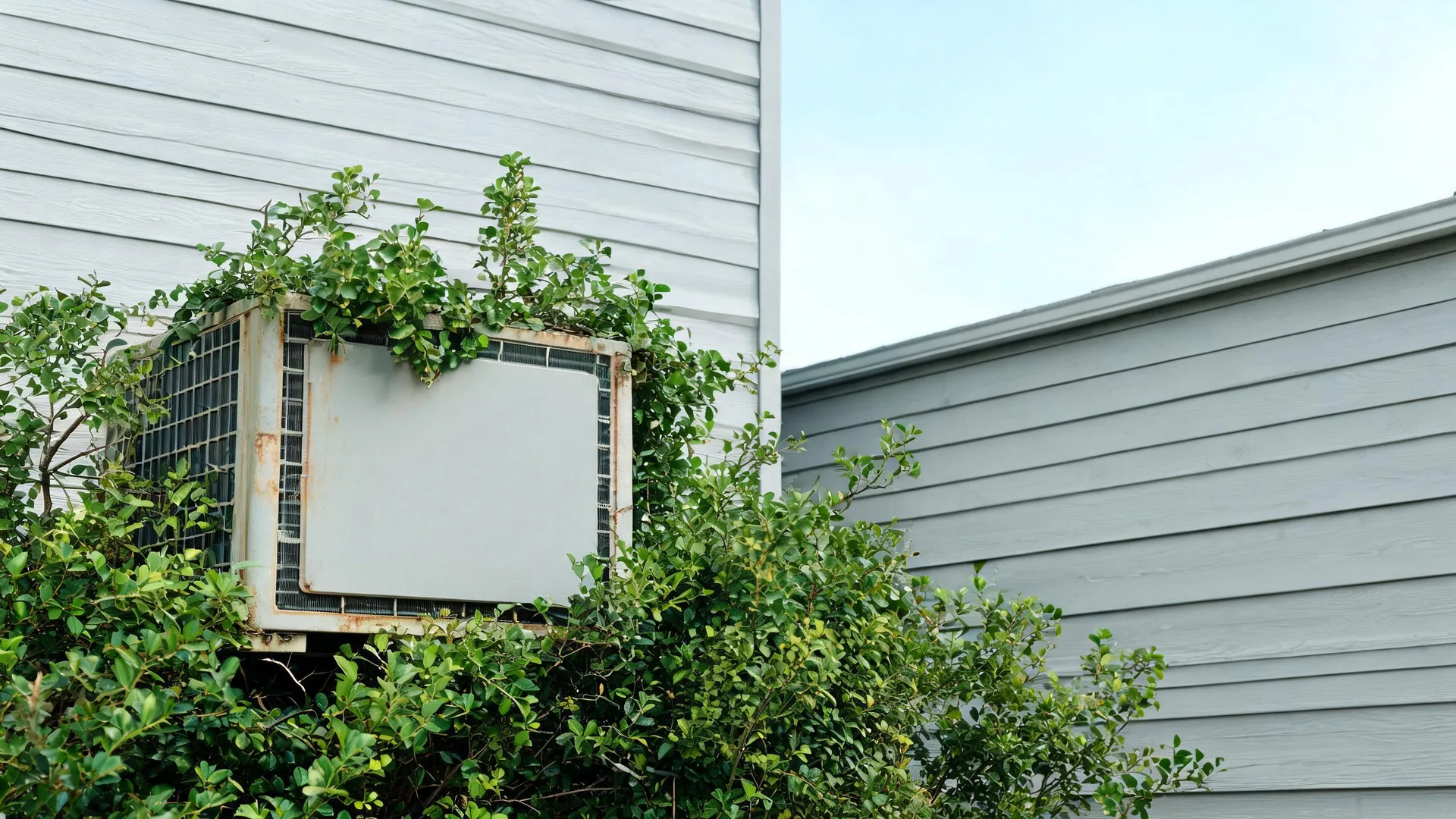
A heat pump low on refrigerant or stuck in defrost will start to ice over the outdoor coil. That ice blocks airflow, so the system pulls in less heat, so it runs longer to make up for it, so more frost forms. Left alone it ends up as a solid block that stops the fan and strains the compressor trying to push through it.
A stuck reversing valve won't fix itself

When a reversing valve won't shift cleanly between heat and cool, the system can end up fighting itself, blowing cold air while it's trying to heat, or never fully switching over. Running it that way doesn't clear the valve. It just keeps loading a compressor that's already struggling to do its job.

A heat pump in trouble rarely hides it. The first thing most people catch is air coming out of the vents that isn't warm, sometimes outright cold, when the thermostat is set to heat. That usually means the reversing valve isn't switching over the way it should. Short cycling is another one, the unit kicking on and off every few minutes instead of running a steady stretch. Listen for it too. A hard clank when it starts, a hum that doesn't turn into a running motor, or a fan that rattles all point to a part giving out rather than the system just being old. And if the outdoor unit is icing over anywhere outside of a normal defrost cycle, that's not something to wait on.

A diagnostic visit starts outside, at the unit itself. A technician checks refrigerant pressure with gauges, since too little charge or too much both point to different problems. They'll check that the reversing valve actually shifts when commanded, rather than just assuming it does because the thermostat says heat. Electrical readings come next, the contactor, the capacitor, the readings on the compressor itself, since a part can look fine and still be failing under load. Airflow gets checked at the vents and across the indoor coil, because weak airflow strains everything downstream of it. None of this is guesswork. Each reading either points to a part that's failing or rules one out, and that's what tells the technician what actually needs fixing before anything gets replaced.