





White plantation-style houses with wraparound porches lit at night, surrounded by Spanish moss-draped live oak trees.

Heat Pump Repair in Dillon, SC

Tell us about the job

Takes about a minute. No obligation.

RepairHeat PumpDillon County, SC
Step 1 of 2

What ZIP code is the job in?

A tech starts outside at the heat pump, checking refrigerant pressure and the condition of the coil and fan. Then it's inside at the air handler, looking at the coil there, the blower, and airflow through the ducts. If the system blows cold air in heating mode, the diagnosis often centers on the reversing valve, since that's the part that switches the unit between heating and cooling. Low refrigerant shows up as ice on the outdoor coil even when it's not cold enough outside for that to happen naturally. A tech will also check the defrost board and sensors, since a heat pump that won't come out of defrost mode will run the whole system backward until that's fixed. By the end, you should know which part is causing the trouble and what it takes to put it right.

5 months
November through March, your system heats
5 months
May through September, it cools
35°F
the average winter night it heats against
90°F
the average summer afternoon it cools against
Isometric line illustration of a cutaway house showing interior rooms with furniture, ceiling ductwork under a dark shingled roof, and an outdoor condenser unit connected by lines on the right.
Your system heats November through March and cools May through September.

NOAA nClimDiv, 1991–2020 normals

Heat pumps in Dillon County switch over to heat in November.

October is the month to get a weak one looked at, before the first cold morning asks more of it than it can give.

Half these homes were built by 1984, and that's not what breaks a heat pump

Half the homes here were built by 1984
Power costs 14.23 cents a kWh statewide
Climate zone 3A

A heat pump that's struggling gives you warning before it quits. The outdoor unit running constantly, never cycling off, usually means it's lost capacity and is working harder to get the same result. Warm air that isn't quite warm enough, air coming out lukewarm instead of hot, points toward a refrigerant problem or a compressor on its way out. Listen for the unit clicking on and off every few minutes instead of running a full cycle. That short cycling wears on the compressor and usually traces back to a bad capacitor or a control board sending the wrong signal. Ice on the outdoor coil that doesn't melt off during the defrost cycle means that cycle isn't working right. A burning smell or a breaker that keeps tripping means stop running it and get it looked at, since that points to an electrical fault rather than something you can wait out.

Get it looked at early

Problems tend to show up in the first weeks of the season, when the load hits a part that was already weak.

Find a contractor
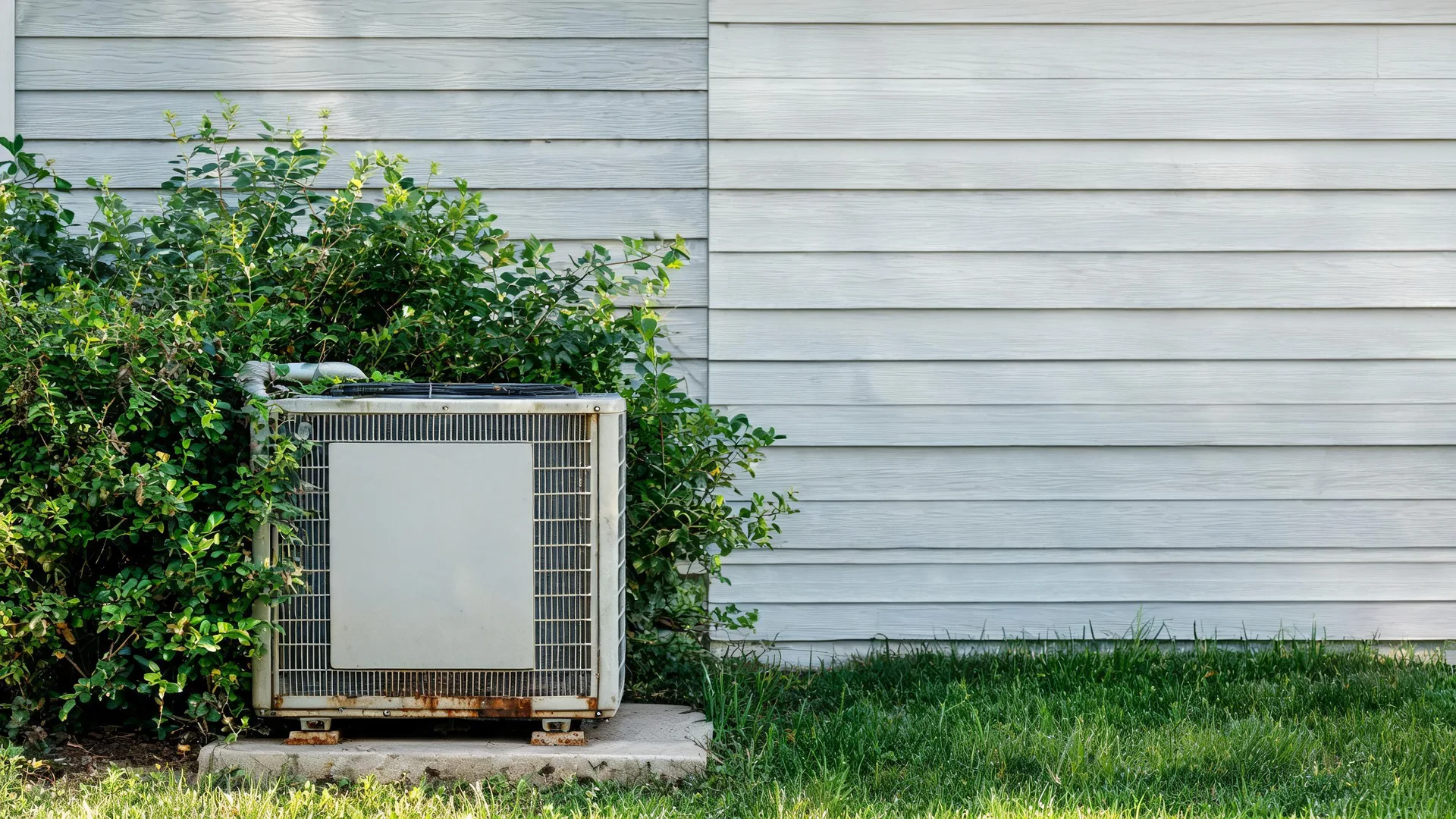
A gray outdoor HVAC unit mounted on a concrete pad beside a house with gray lap siding and a stone foundation.

Left running, a small problem asks a weak part to keep failing

A heat pump that's low on charge or losing a compressor doesn't fail all at once. It keeps running because the thermostat is still calling for heat, and the unit tries to answer. That's what wears a compressor out early, asking it to keep working when it's already losing the refrigerant or the coil contact it needs to do the job right. The same goes for a reversing valve stuck halfway. The system keeps cycling, keeps drawing current, and the valve keeps taking the wear. Ice on the outdoor coil behaves the same way. Left alone, it builds with every cycle instead of clearing in defrost, and eventually it blocks airflow across the coil entirely. None of these get better with time. The part that's struggling is doing the same job over and over under the same bad conditions, and something in the system gives out faster for it.

The reversing valve wears from the inside

A reversing valve fails because its internal seals degrade from constant switching between heating and cooling, or because a seal burns out and lets refrigerant slip past both sides at once. Once that happens, the valve can stick in one position or settle somewhere in between, and no adjustment fixes that. It gets replaced.
The compressor rarely fails on its own

A compressor usually dies because something else let it down first. Low refrigerant from a slow leak makes it run hot. A failing capacitor makes it strain on every start. A dirty outdoor coil makes it work against pressure it shouldn't have to. By the time the compressor itself quits, it's often the last part to go, not the first.

Before you call, cut power to the unit at the disconnect or breaker and look at the outdoor coil. If it's caked in ice, leave it off and let it thaw rather than running it harder. Check the air filter too. A clogged filter starves the system of airflow and can mimic a refrigerant problem, and it only takes a minute to pull it out and look. Walk around the outdoor unit and clear away leaves, mulch or anything blocking the sides, since it needs open airflow all the way around to work right. If the thermostat screen is dim or blank, check its batteries before assuming something bigger is wrong. Look at the breaker panel for anything tripped, and reset it once, but if it trips again, stop and don't keep resetting it. None of this fixes a bad compressor or a stuck reversing valve, but it rules out the simple stuff first.

Repair or replace usually comes down to the compressor. If that's still good and the problem is a capacitor, a control board, or a reversing valve, fixing it makes sense, since those parts can be swapped without touching the rest of the system. If the compressor itself is failing, that's a different conversation. It sits at the center of the refrigerant circuit, and replacing it alone often costs close to what a new outdoor unit costs. How the system has behaved matters too. A unit that's been reliable and just hit one bad part is worth putting right. One that keeps finding new parts to fail on is telling you something the next repair won't fix.