Single-story houses, one brick and one with light siding, both with covered porches, behind a mowed lawn and trimmed hedge, under large moss-draped oak branches.

Heat Pump Repair in Camden, SC

Tell us about the job

Takes about a minute. No obligation.

RepairHeat PumpKershaw County, SC
Step 1 of 2

What ZIP code is the job in?

The tech checks the whole system, not just the symptom

A heat pump that won't heat might have a problem in the outdoor unit, the indoor coil, the refrigerant charge, or the reversing valve that switches it between heating and cooling. The tech checks refrigerant pressure, tests the capacitor and contactor, looks at the defrost cycle, and reads the error codes on the board if there is one. A thermostat that seems like the problem can turn out to be wiring at the air handler.

What the visit tells you before any repair starts

Once the tech finds the cause, you find out if it's a part worth replacing or a sign the system is near the end of its life. A failed capacitor or a low charge from a slow leak is usually a straightforward fix. A compressor on its way out, or a coil that's corroded through, changes the conversation. Either way, you know what you're dealing with before anyone opens the unit back up.

5 months
November through March, your system heats
5 months
May through September, it cools
34°F
the average winter night it heats against
90°F
the average summer afternoon it cools against
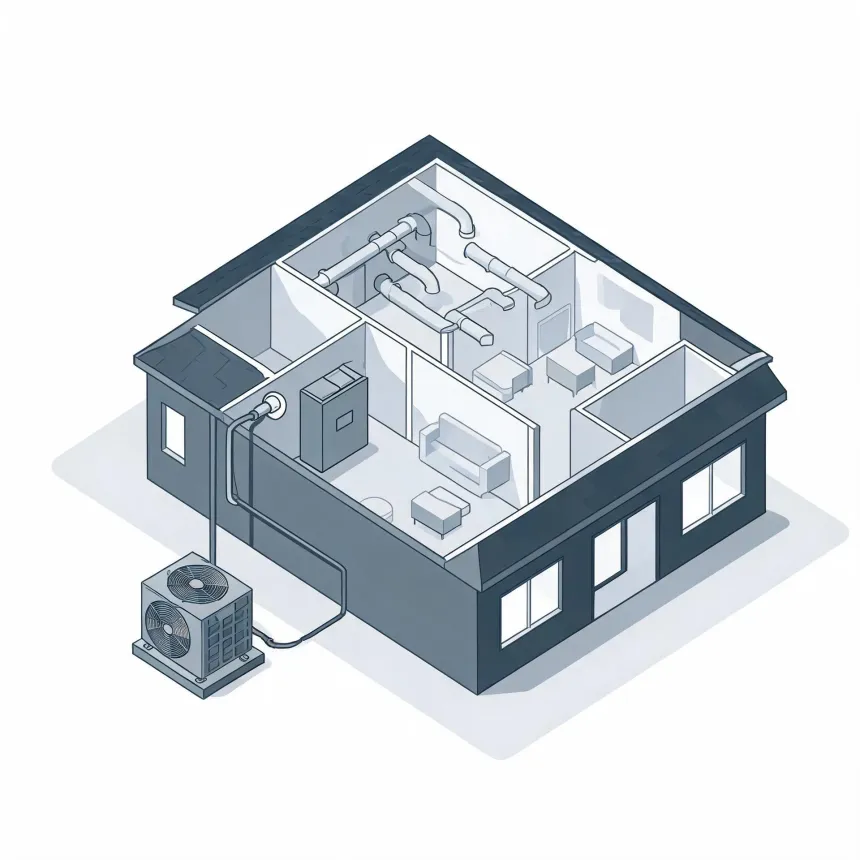
Isometric line illustration of a cutaway single-story house showing interior rooms, ceiling ductwork and an indoor air handler, connected by a line to an outdoor condenser unit on a pad beside the building.
Your system heats November through March and cools May through September.

NOAA nClimDiv, 1991–2020 normals

Half the homes in Kershaw County were built in 1993 or later.

A heat pump that age usually still has years left in it, which is why repair is worth a look before anything else.

November is when a weak heat pump quits

Cooling runs May through September
Heat runs November through March
116 damaging wind events from 2015 to 2024
A storm knocks out power, your heat pump restarts on its ownDamaging wind hit Kershaw County 116 times between 2015 and 2024

The reversing valve is a common failure point because it moves every time the system switches between heating and cooling, and that constant switching wears the coil inside it. A stuck valve usually shows up as a system that blows cold air when it should be heating, or that gets stuck in one mode no matter what the thermostat asks for. Outdoor fan motors fail too, from years of running in open weather, and a motor that's seized or slow will let the unit overheat and shut itself off. Low refrigerant almost always means a leak somewhere in the lines or the coil, not normal use, since a sealed system doesn't lose charge on its own. Capacitors weaken with age and heat cycling, and a weak one makes the compressor or fan struggle to start even when everything else is fine. Dirty coils make all of this worse, because a coil caked with debris forces the whole system to work harder to move the same amount of heat.

Your heat pump is likely newer than you think. Get it repaired, not replaced.

If your heat pump came with the house, it's probably not old enough to be failing outright. A repair gets it back to normal faster than a replacement, and makes more sense while the system still has years ahead of it.

Find a contractor
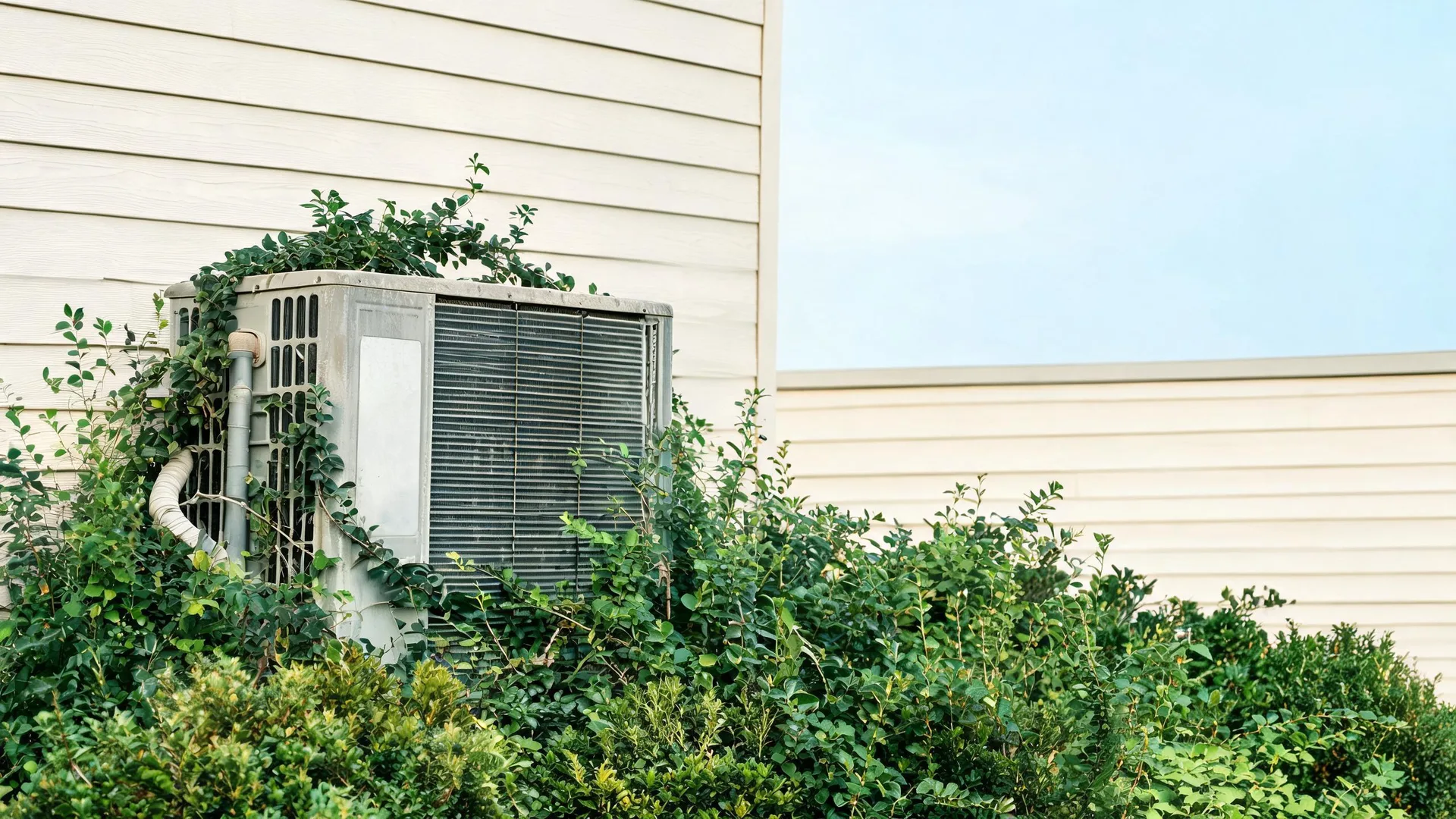
A gray heat pump outdoor unit mounted on a concrete pad next to a residential house with lap siding and stone accents.

A small problem left running becomes a bigger one

A heat pump that's struggling doesn't fail cleanly. It fails a little more every hour it keeps running. A weak capacitor makes the compressor strain on every start, and every strained start wears the windings inside it a little more until one day it doesn't start at all. A low charge makes the compressor run hotter than it should, and heat is what kills a compressor over time. A dirty coil makes the whole system move less heat for the same effort, so it runs longer to do the same job, which only adds more hours to parts already struggling. None of this fixes itself by waiting. The system that's a little off this week is usually worse by the time someone finally shuts it down.

Check the thermostat first

Make sure it's set to heat and the set temperature is actually above room temperature. Check the batteries if it has a screen that's dim or blank. A thermostat that's lost power or lost its schedule will leave a perfectly good heat pump sitting idle.

Look at the outdoor unit

Walk outside and see if the outdoor unit is running at all. If it's caked in ice beyond what a normal defrost cycle would cause, or if it's dead quiet when it should be running, that's worth noting. Clear away leaves, mulch or anything blocking the sides, since blocked airflow makes a struggling system work harder.

Most people notice a heat pump problem through the air, not the unit itself. The air coming out of the vents feels cool or barely warm when it should feel hot, which points to low refrigerant or a reversing valve stuck in the wrong position. A system that runs constantly without the house warming up is struggling to keep up, often because a dirty coil or blocked airflow is making it move less heat than it should. Short cycling, where the unit starts, stops, and starts again within minutes, usually means a failing capacitor or a control problem that's not letting the system complete a normal run. Ice building up on the outdoor unit beyond what clears off during a normal defrost cycle means the defrost control or a sensor isn't doing its job. Any grinding, buzzing, or clicking that wasn't there before is worth mentioning to the tech, since it's usually one part wearing out rather than the whole system failing.

Repair versus replacement comes down to what broke and what it would take to fix it. A capacitor, a contactor, a fan motor, a stuck reversing valve, these are normal wear parts, and swapping one out brings the system back to full working order. The bigger question is the compressor. It's the most expensive part in the unit. If it's failing, a tech will walk you through whether replacing it makes sense or whether the money's better spent on a new system. A coil that's corroded through is a similar fork in the road. A coil doesn't patch, it gets replaced. Age matters here too, but not on its own. A system with a failing compressor and a corroded coil at the same time is telling you something different than a system that just needs a capacitor.