A white Southern-style house with a wraparound porch photographed at night, surrounded by Spanish moss-draped oak trees lit by landscape lights.

Heat Pump Repair in Barnwell, SC

Tell us about the job

Takes about a minute. No obligation.

RepairHeat PumpBarnwell County, SC
Step 1 of 2

What ZIP code is the job in?

What breaks early and what breaks for good

A heat pump that keeps needing attention in its first several years is usually facing a one-off problem. A bad capacitor, a stuck reversing valve, a control board that failed, these can be replaced and the unit runs fine again. A compressor wearing out is a different matter. There's no repair that gets around a failing compressor, so that's the point where replacement starts to make more sense than another repair.


A refrigerant leak is worth a closer look before you patch it

Low refrigerant always means a leak somewhere in the line set or coil. It does not burn off on its own. Patching the leak point can work, but if the coil itself is corroded, more leaks tend to show up in other spots later. A tech can tell you whether this is a one-time fix or a sign the coil is failing all over.

5 months
November through March, your system heats
5 months
May through September, it cools
37°F
the average winter night it heats against
91°F
the average summer afternoon it cools against
Isometric grey-toned illustration of a cutaway house showing interior rooms, ceiling ductwork and an air handler, connected by lines to an outdoor condenser unit beside the building.
Your system heats November through March and cools May through September.

NOAA nClimDiv, 1991–2020 normals

Half the homes in Barnwell County were built in 1983 or earlier.

A heat pump's age comes from when it was installed, not from when the house was built.

Barnwell gets five months of heat and five of cooling, and the first cold snap or heat wave finds whatever was already weak

Cooling runs May through September
Heat runs November through March
Power costs 14.23 cents a kWh statewide

Before you call, check the thermostat first. Make sure it's set to heat or cool, not just on, and that the set point is actually past room temperature. Go outside and look at the outdoor unit. If ice is covering the coil or the fan isn't spinning, that's worth noting but don't chip at the ice or reach into the unit. Inside, pull the filter and hold it up to a light. If you can't see through it, that alone can starve the system enough to look like a bigger problem. Check vents around the house to make sure none are closed or blocked by furniture. If the outdoor unit is running but the air inside feels wrong, cold air in winter or warm air in summer, that's useful to tell the tech when they ask.

Get the usual fix

Nothing about this area is especially hard on it. It's most likely the usual problem with the usual fix.

Find a contractor
A gray air-source heat pump mounted on a concrete pad next to a house with gray vinyl siding, surrounded by gravel and flanked by green shrubs and white hydrangea flowers.

It runs every month of the year, so trouble shows up as a change, not a stop

A heat pump runs in both directions, all year, so there's no season where it just idles. That means the wear shows up as a change you notice rather than a sudden stop. Short cycling is one of the first signs, the unit kicks on, runs a few minutes, shuts off, and starts again before a room has any chance to change temperature. Ice building up on the outdoor coil during the heating months is normal in small amounts, but a coil that stays frosted after the defrost cycle runs points to a problem with the reversing valve or a sensor that controls when defrost kicks in. Airflow that feels weak at the vents even with a clean filter often traces back to the blower motor losing strength. Listen for the unit at startup too. A hard clunk or a hum that doesn't resolve into a running sound can mean the capacitor is weak or the compressor is struggling to get going.

The reversing valve is what makes it a heat pump

The reversing valve is the part that switches the system between heating and cooling. It earns its wear doing that job through mild weather when the system changes direction often. A valve that sticks partway can leave warm air coming out in summer or cold air coming out in winter even though the rest of the unit is running fine. It's also one of the harder parts to diagnose, so a tech will usually test it carefully before condemning it.

Outdoor coils take the brunt of it

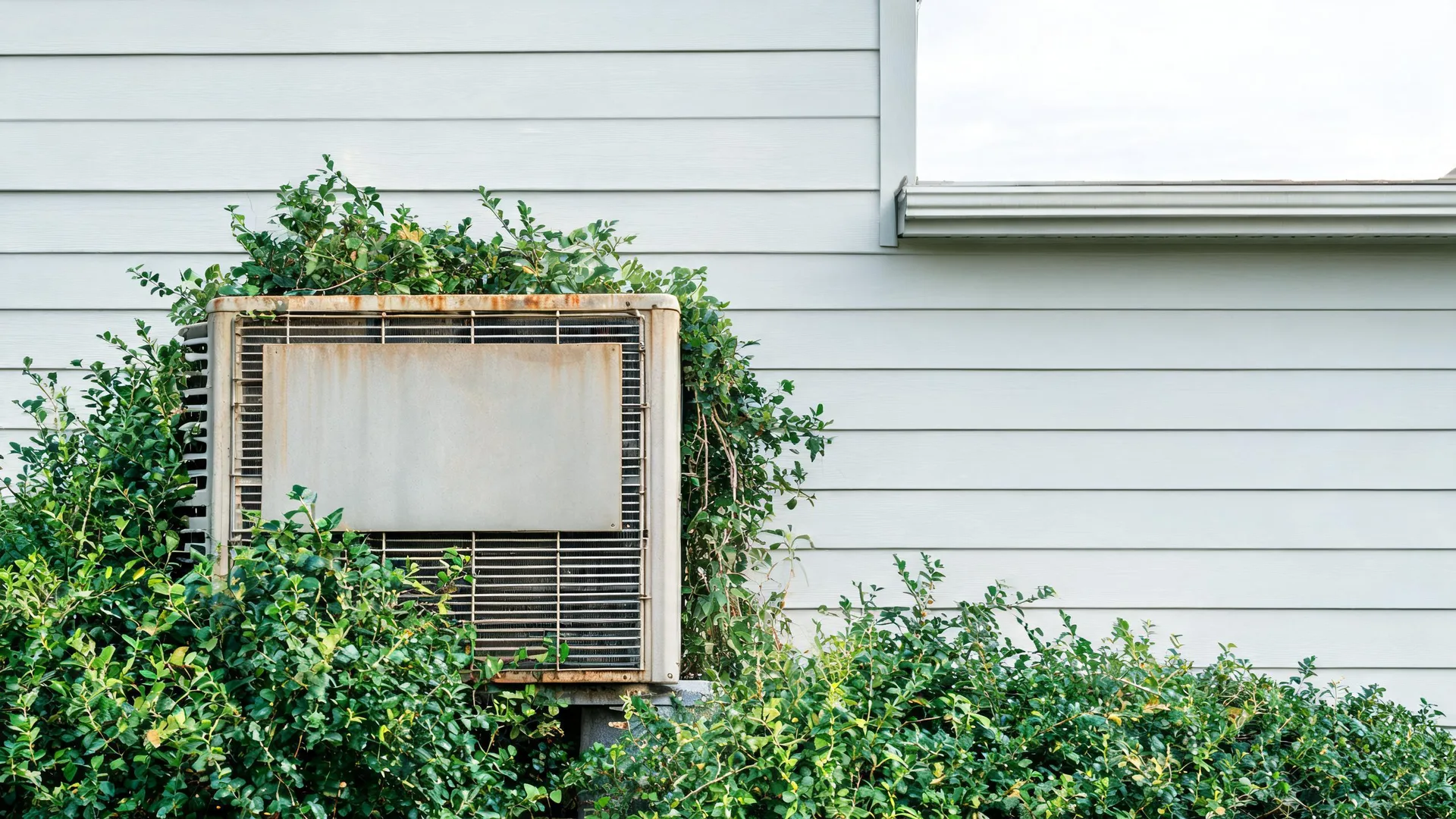
The outdoor coil sits exposed to whatever lands on it, leaves, pollen, grass clippings, and over time that buildup blocks airflow across the fins. A dirty coil makes the whole system work harder to move heat in either direction, and that extra strain is what wears down the compressor ahead of schedule. Rinsing the coil off now and then keeps airflow where it needs to be.

A heat pump that's struggling doesn't fix itself by staying on. Running it through the problem usually makes the repair bigger. Short cycling wears down the very parts causing it. The compressor takes a hard hit every time it starts, so a unit cycling on and off every few minutes stresses it far more than one running a normal length cycle. A frosted coil that isn't clearing makes the system pull harder to move heat at all, and that extra load passes straight to the compressor too. Low refrigerant is its own trap. The compressor keeps working without enough refrigerant to cool itself properly, and that's how a slow leak turns into a burned-out compressor. None of these get better with more run hours. Shutting the system off and getting a tech out before the next cycle starts is what keeps a one-part fix from turning into a full replacement.

A diagnostic visit starts outside, at the unit itself. A tech will check pressures on both the suction and liquid lines, because that tells them whether refrigerant charge is correct before anything else gets touched. Electrical readings come next, checking the capacitor's actual output against what it's rated for and watching the compressor's amp draw while it runs. Inside, they'll pull the cover off the air handler and look at the coil, the blower wheel, and the wiring at the board itself, since a scorched connector or a loose wire can cause symptoms that look like a bigger failure. If the complaint is warm air in winter or cold air in summer, expect them to cycle the reversing valve directly and watch whether it actually shifts, rather than guessing from symptoms alone. A lot of this is elimination. The goal is finding the one part actually causing the problem, not replacing everything that could.