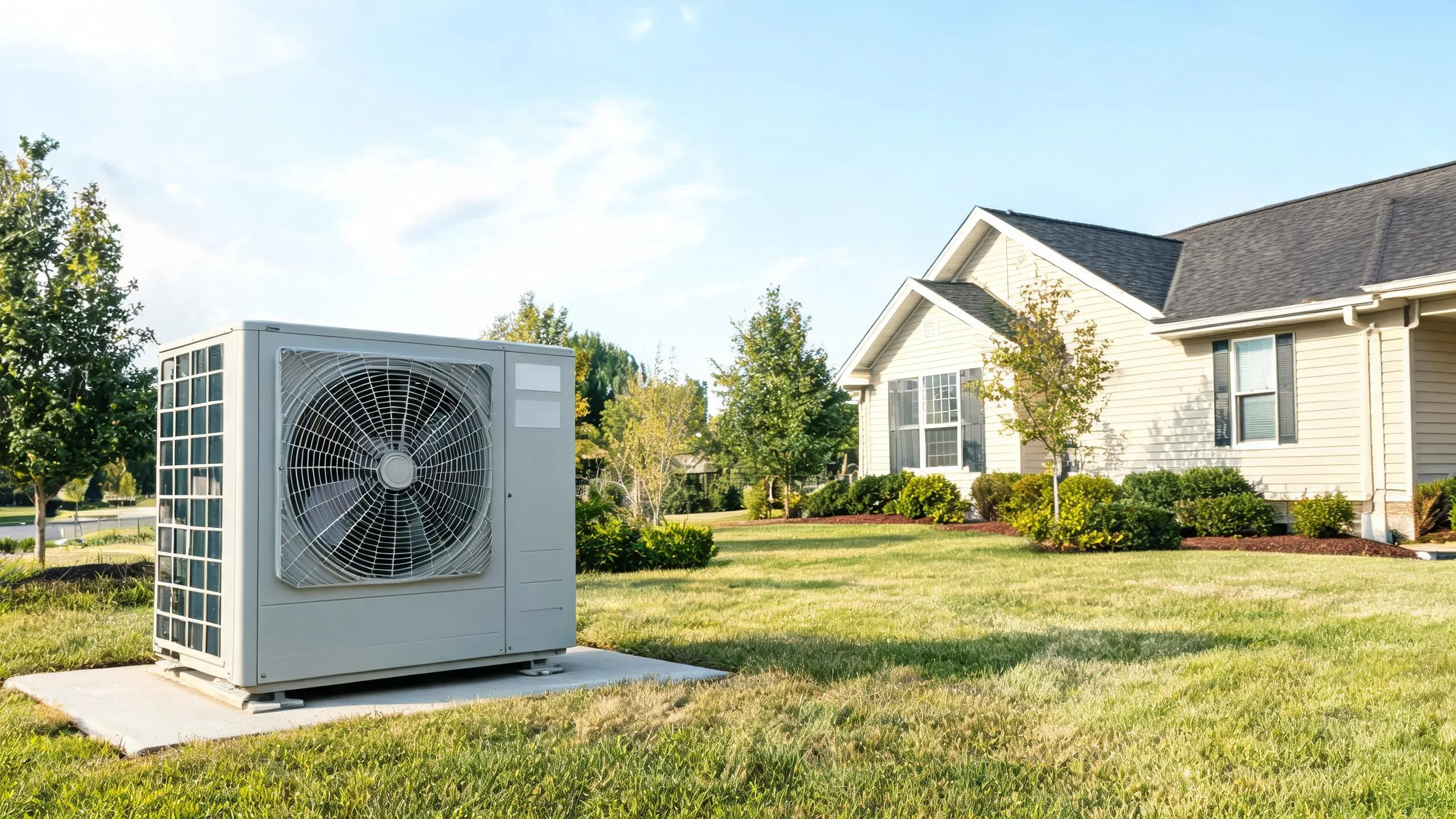


A grey heat pump outdoor unit mounted on a concrete pad in a suburban backyard, with a single-storey house visible behind it.

Heat Pump Repair in Aiken, SC

Tell us about the job

Takes about a minute. No obligation.

RepairHeat PumpAiken County, SC
Step 1 of 2

What ZIP code is the job in?

A few things are worth checking before you call. Look at the outdoor unit first. If it's caked in leaves, grass clippings or ice, airflow is blocked and the system will struggle no matter what else is right. Check your thermostat is set to heat, not just on, and that the batteries aren't dead if it uses them. Go find the filter and hold it up to a light. If you can't see through it, swap it, because a clogged filter chokes airflow on both the indoor and outdoor side. Check the breaker box for anything tripped. If the outdoor unit is running but the air inside feels cold instead of warm, that's worth telling the tech when they arrive, since it points to a different problem than a unit that won't start at all.

5 months
November through March, your system heats
5 months
May through September, it cools
36°F
the average winter night it heats against
91°F
the average summer afternoon it cools against
Isometric cutaway illustration of a single-story house showing interior rooms with furniture, an attic duct system connected to an indoor air handler, and an outdoor condenser unit linked by lines along the exterior wall.
Your system heats November through March and cools May through September.

NOAA nClimDiv, 1991–2020 normals

Heat pumps in Aiken County work hardest in November, the first cold month after months of running cooling or sitting idle.

A weak part that made it through summer often fails in that first cold snap, so a strange noise or short cycle in November is worth a call now.

Get it looked at early

Problems tend to show up in the first weeks of the season, when the load hits a part that was already weak.

Find a contractor
A gray heat pump condenser unit mounted on a concrete pad against the gray lap-siding exterior wall of a house.

A newer system still has years in it

Half the homes in Aiken County were built in 1989 or later. If yours is one of them, the heat pump may well be the one it came with, or a replacement that's still young. Either way it has likely logged fewer hours than a unit in an older home nearby. A repair call makes sense here. There's usually more working life left to protect.

The reversing valve sticks

The reversing valve switches a heat pump between heating and cooling, and it fails more than almost anything else in the system. When it sticks partway, the unit can blow cold air when it should blow warm, or run nonstop without catching up. A stuck valve is a repair, not a part you can clean or reset.
The defrost cycle breaks down

The outdoor coil frosts over in cold weather, and the system is supposed to sense that and run a defrost cycle to clear it. When the defrost sensor or control board fails, ice builds up on the coil and chokes airflow until the unit can barely move heat at all. A unit caked in ice even after you've cleared the obvious debris points here, not at the weather.

Most heat pump problems announce themselves before the system quits outright. Warm air that isn't actually warm, just less cold than the room, means the unit is running but not heating well, and that's worth a call even if it hasn't failed yet. Short cycling, where the system kicks on and off in quick bursts instead of running a full cycle, wears on the compressor every time it happens. Listen for a hard clunk when the system switches between heating and cooling, or a hiss that wasn't there before. Ice on the indoor coil, not just the outdoor unit, usually means airflow is restricted somewhere and the coil is freezing instead of doing its job. None of these mean the system is done. They mean something specific is wrong, and it gets harder to pin down the longer it runs that way.

A repair decision usually comes down to the compressor. It's the most expensive part in the system, and the one that's hardest to justify replacing on its own. If the compressor itself has failed, a contractor will often tell you straight that putting it into an older unit doesn't make sense, since everything else is aging right behind it. If the problem is the reversing valve, a sensor, a capacitor or a motor, that's a normal repair, and age matters less. Ask what's actually broken before you decide anything. A system that keeps needing attention every season is telling you something too, even if each visit fixes the immediate problem.