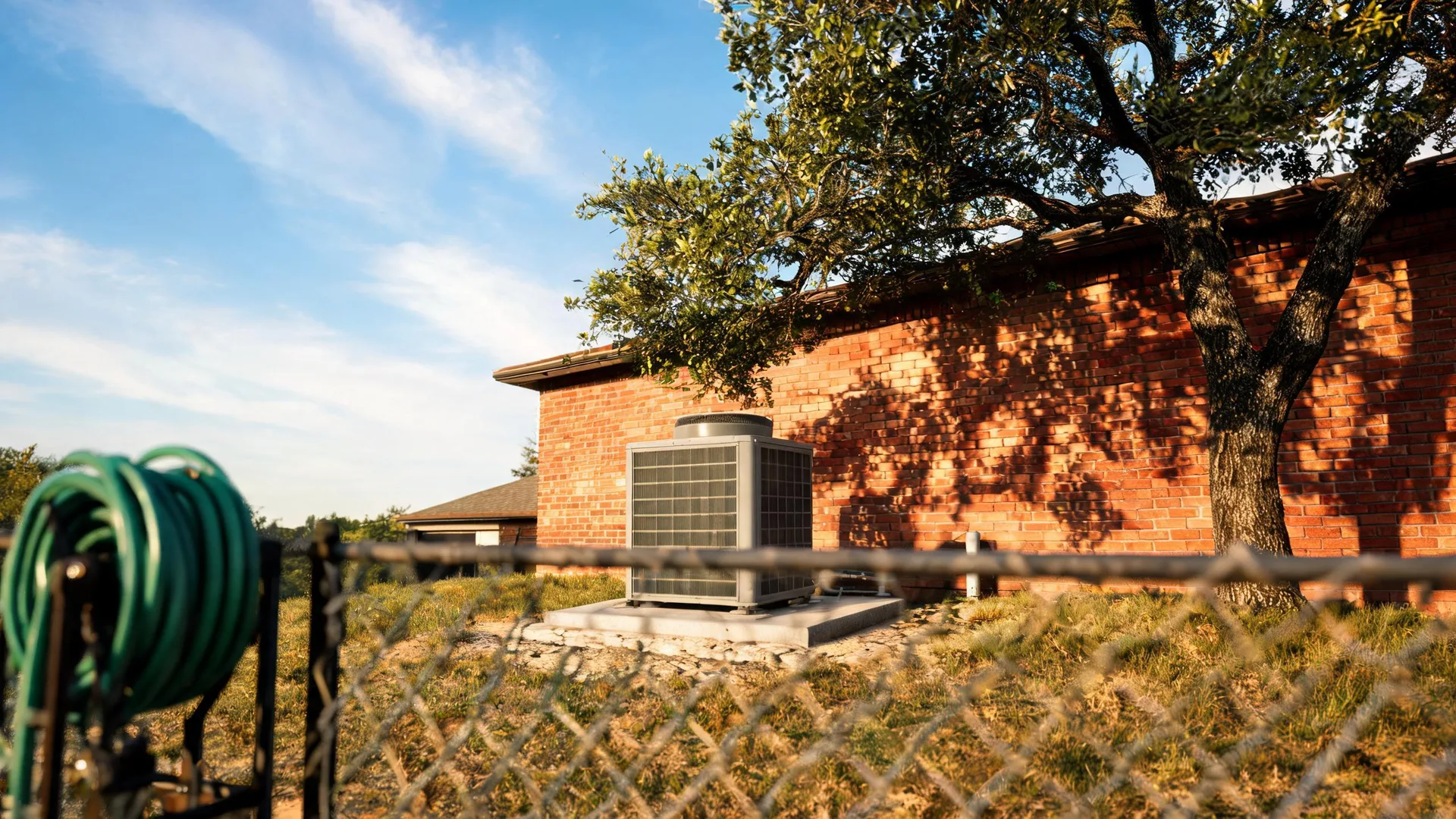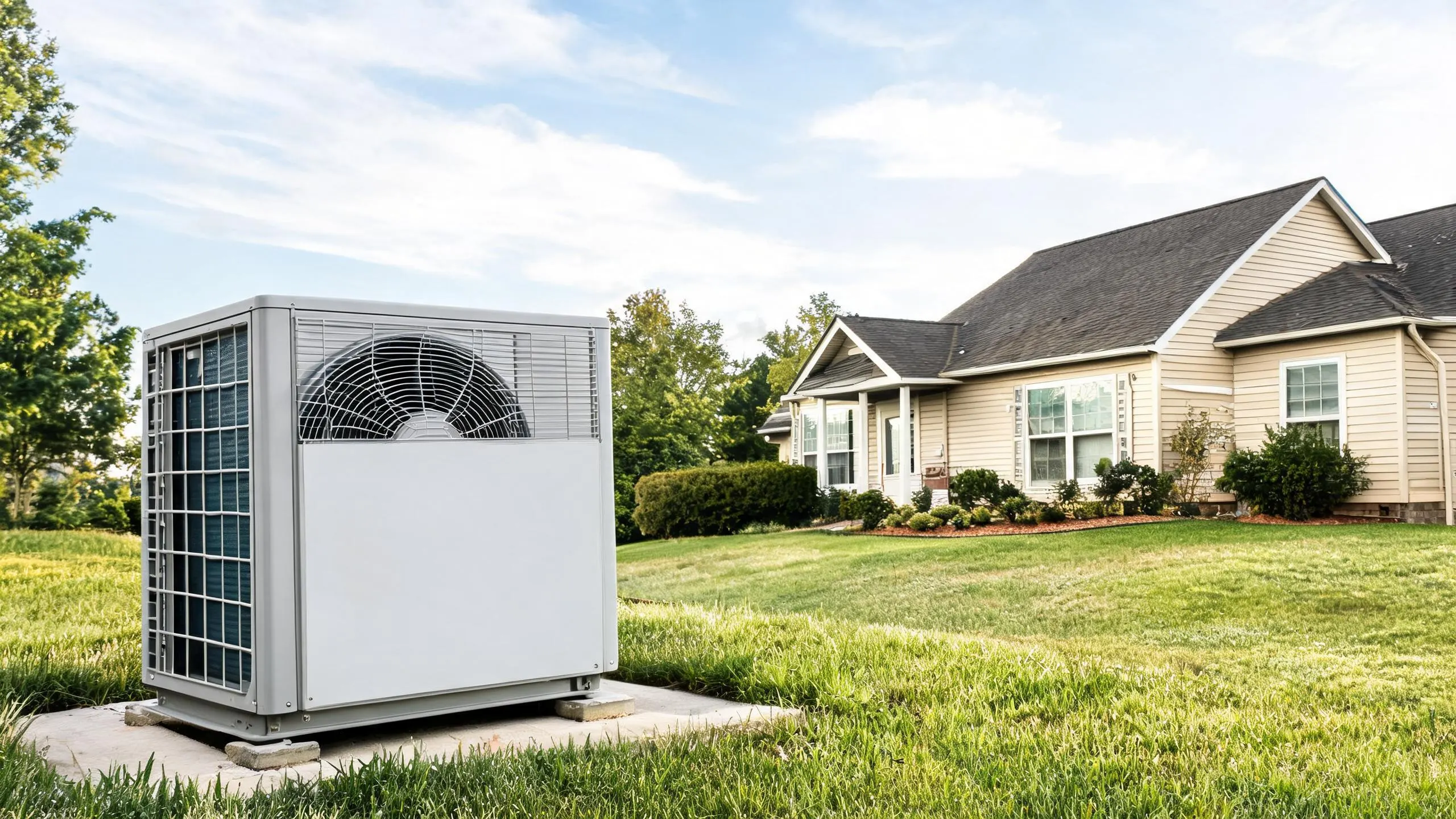
An outdoor heat pump unit mounted on a concrete pad in front of a single-story suburban house with beige siding.

Heat Pump Repair in Abbeville, SC

Tell us about the job

Takes about a minute. No obligation.

RepairHeat PumpAbbeville County, SC
Step 1 of 2

What ZIP code is the job in?

October is when a weak heat pump shows itself

Your heat pump switches over to heat in November, and October is when it's worth a look first. A unit that's been coasting through the warm months can have a bad capacitor or a low charge that only shows up once it has to work.


Catching it before the switchover matters

A heat pump that struggles the first cold week in Abbeville usually had that problem waiting all along. Getting it looked at in October means the repair happens before you need the heat, not during the week you need it most.

5 months
November through March, your system heats
5 months
May through September, it cools
35°F
the average winter night it heats against
89°F
the average summer afternoon it cools against
Isometric cutaway illustration of a small house showing ducted air distribution, an indoor air handler, and an outdoor condenser unit connected by lines, with a sofa and bed in the rooms.
Your system heats November through March and cools May through September.

NOAA nClimDiv, 1991–2020 normals

A heat pump that blows air but never gets warm is running on the backup strip, not the compressor.

The backup strip can carry the house alone for a while, but a heat pump stuck on it needs the compressor looked at soon.

Half these homes predate the heat pump. The repairs they need don't.

Half the homes here were built by 1980
Power costs 14.23 cents a kWh statewide
Climate zone 3A

Age is the first thing to weigh, but not the only thing. A compressor that fails outright is usually a replacement, since that's the heart of the system and swapping it costs most of what a new unit would. A bad capacitor, a stuck reversing valve, a low charge from a slow leak, those are repairs, and a heat pump otherwise running fine is worth fixing for them. What matters more is the pattern. One repair after years of running fine is normal wear. A unit that's back on the schedule again and again is telling you something the next repair won't fix. If it's low on refrigerant for a second time, the leak is the problem, not the charge, and topping it off again just delays the real conversation.

Get it looked at early

Problems tend to show up in the first weeks of the season, when the load hits a part that was already weak.

Find a contractor
A man in a dark shirt and tan pants carries a canvas tool bag up stone steps toward a dark blue front door, with a potted shrub beside the entry.

What you can check first

Look at the outdoor unit before anything else. If ice is covering the coil, flip the system off and let it thaw rather than running it through a cycle. Check that nothing is blocking the unit. Leaves packed against the coil or shrubs crowding it close will do the same thing as a bad part. Inside, pull the filter and hold it up to the light. A filter you can't see through is choking airflow and making the whole system work harder than it should.

What tells you to stop and call

A breaker that trips more than once is the system telling you not to force it. Ice that won't go away after a few hours off is not normal. A burning smell is not normal. A reversing valve that clunks and won't settle into one mode is not a filter problem or a clogged vent. Something inside the unit needs a tech with gauges and a meter. Running it anyway usually turns a repair into a bigger one.

A compressor working against a low charge runs hotter than it should. That heat breaks down the oil that's supposed to protect the moving parts inside, and it keeps breaking it down every minute the unit runs. A reversing valve that's starting to stick gets worse each time it's forced through a cycle it can't complete. Ice on the coil blocks airflow, so the system pulls harder to do the same job, and that pulls more cold air across a part that's already struggling. None of this resets when you shut the system off for the night. It picks up where it left off, a little further along, the next time it runs.

A diagnostic visit starts outside at the unit itself, with gauges hooked up to check the charge and a meter run across the electrical parts. The tech is looking for a reading that's off, not guessing from the sound it makes. Inside, they'll check the air coming out of the vents against the air going in, which tells them whether the system is actually moving heat or just moving air. If the reversing valve is the suspect, they'll run the system through both modes and watch whether it switches clean or hangs up partway. A capacitor gets tested under load, not just looked at, since a weak one can still look fine sitting still. Most of this takes longer to explain than to do. What takes time is chasing a problem that only shows itself once the system has been running a while, which is why a tech sometimes asks to let it cycle before they call it.