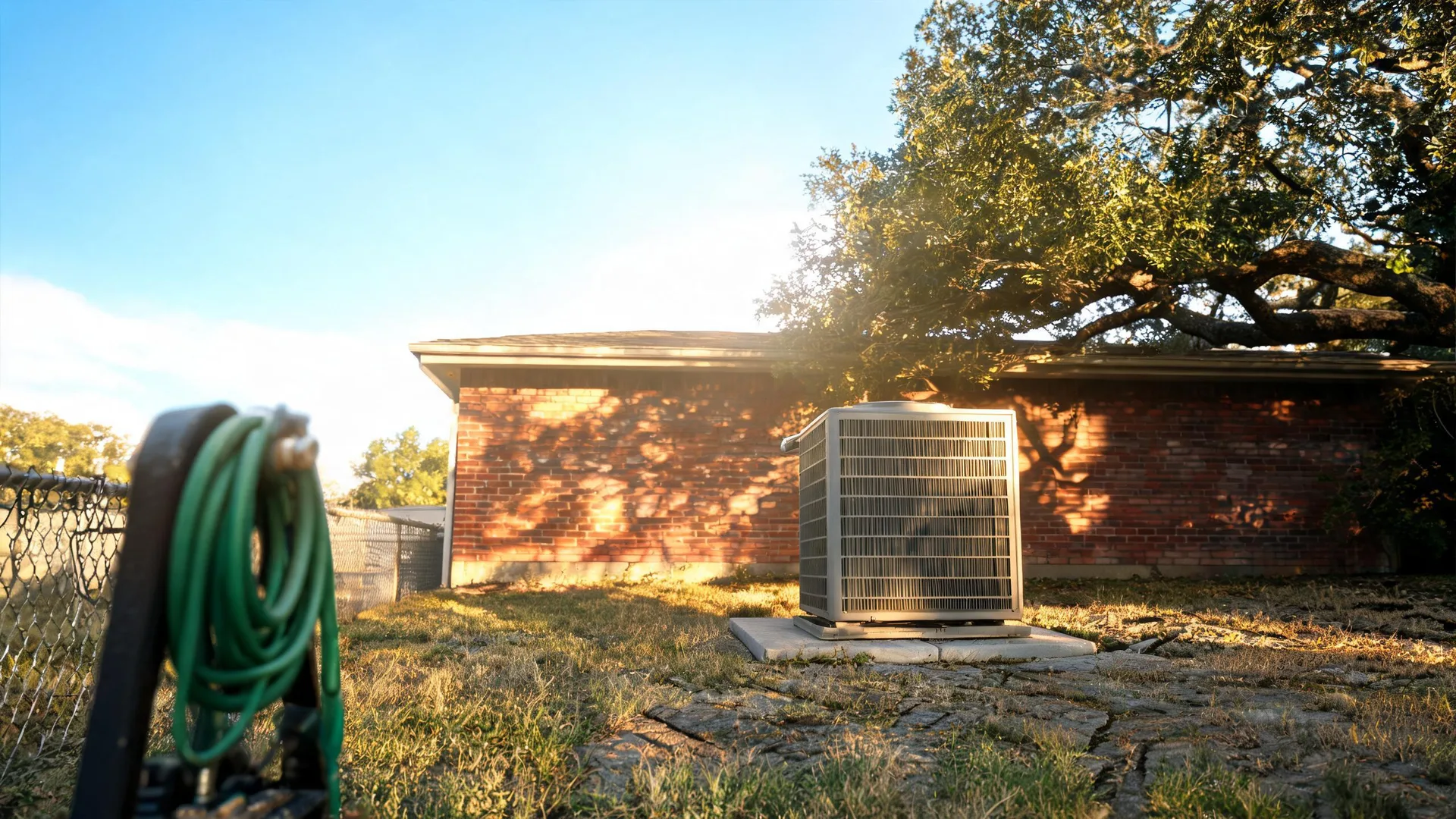
Weather here is hard on outdoor units
Fairfield County logged 166 severe weather events between 2015 and 2024, most of them damaging wind. Wind-blown debris and hail can dent the cabinet or bend the fins on a heat pump's outdoor unit.
Takes about a minute. No obligation.
Fairfield County logged 166 severe weather events between 2015 and 2024, most of them damaging wind. Wind-blown debris and hail can dent the cabinet or bend the fins on a heat pump's outdoor unit.
A heat pump needs electricity for the compressor and for the backup heat strip on cold nights. Close to half of South Carolina households went at least 24 hours without power in 2024, and when the power goes, so does the heat.
Heat pumps in Fairfield County start working hard in November.
Have it checked in October, before that first cold month asks anything of it.



A quick visit gets you a filter check and a glance at the thermostat. That's it. A thorough one has the tech pull the panel and check refrigerant charge, because a unit low on charge will run long and still underheat the house. They'll check the reversing valve, since that's the part that lets a heat pump switch between heating and cooling, and a sticking valve shows up as weak heat on the coldest mornings. They should check the defrost cycle too, watching that the outdoor coil clears itself of frost instead of icing over for good. And they'll check the backup heat strip, since that's what carries the house when the outdoor temperature drops too low for the heat pump alone. If the visit is over before you've had time to pour a cup of coffee, it was the quick kind.
The fins and cabinet on your outdoor unit take the brunt of what comes through Fairfield County. Get it looked at before storm season, not after, so bent fins or a cracked cabinet get caught while they're still a small fix.
Find a contractor
The filter is the one piece of this system that touches every mode it runs in. Heating or cooling, the air crosses that filter first, and a filter packed with dust makes the blower work harder to pull air through it. That strain shows up on the coil next. The indoor coil needs air moving across it steadily, and when the filter starves it, the coil can frost over in cooling mode or lose its grip on heat in winter mode. A dirty outdoor coil causes its own version of the same problem, since the compressor pushes harder to move heat through fins that are caked with dirt or choked with leaves. The drain is the quiet one. It only matters when it stops working, and then it matters all at once. Condensate has to go somewhere, and a clogged drain line backs that water up into the pan under the coil, sometimes past the pan and into the ceiling or closet below. None of this fails on a schedule. It fails when something gets in the way, which is why the filter, the coils and the drain are worth checking before one of them forces the issue.
A dirty filter blocks airflow, and a heat pump with blocked airflow has to run longer to heat the house. Check the filter monthly and swap or rinse it whenever it looks gray. This is the one job the homeowner can handle between visits.
Refrigerant charge, the reversing valve, the defrost cycle and the backup heat strip all sit behind a panel or need gauges to test. Opening that panel without the right tools risks the wiring or the refrigerant line, so those checks wait for the yearly visit.
A tech will also look at things that never show up on a thermostat reading. A capacitor that's starting to swell or bulge gets caught before it fails outright and leaves the compressor unable to start. A contactor with pitted points gets caught before it starts sticking, which is what causes a unit to run nonstop when it should have shut off. They'll check that the outdoor fan motor spins freely instead of straining, since a motor working harder than it should wears out faster than one left alone. Loose wiring connections get tightened too, the kind that cause a breaker to trip for no obvious reason. None of that shows up unless someone pulls the panel and looks.
A tune-up also covers what the tech can hear and smell, not just what the gauges read. A compressor that hums before it starts, instead of starting clean, is drawing harder than it should. A burning smell near the air handler usually means a motor bearing or a wiring connection, not something that waits until next year. The tech will check the condensate drain too, since a clogged one backs up and drips where it shouldn't. And they'll tighten the electrical connections at the disconnect box outside, because a loose one heats up under load and that heat is what eventually takes out the connection for good.