The refrigerant charge gets checked, not just the filter
A quick visit swaps the filter, glances at the outdoor unit, and calls it done. A thorough one checks refrigerant charge against the manufacturer's spec, measures airflow across the indoor coil, and runs the reversing valve in both heating and cooling mode. That valve is what lets a heat pump do a furnace's job and an air conditioner's job with the same equipment, and it has to be tested both ways, not just looked at.
What gets skipped still runs today
Dirty coils, a weak contactor, or a capacitor on its way out won't stop the system from working right now. Left alone, they put more strain on the compressor, the one part a heat pump cannot run without. A tune-up that only checks whether air comes out of the vents misses all of this.
Union County winters are short and mild, so a heat pump here spends most of its year cooling, not heating.
One yearly visit can check both jobs the system does, the heating side and the cooling side, before the next season needs it.
Half the homes here were built in 1972 or earlier, old enough that the equipment has likely been swapped at least once
Half the homes here were built by 1972Power costs 14.23 cents a kWh statewideClimate zone 3A
Skip the yearly visit and the heat pump doesn't fail right away. It just keeps running the way it was left. A contactor with some pitting still closes the circuit. A capacitor testing weak still kicks the compressor on, most mornings. The system adapts to whatever state it's in, and that's the problem. It doesn't get worse in a way you can hear or feel until the part that was struggling finally gives out, usually on the day it's working hardest. By then the repair isn't the small part that failed. It's the compressor that ran stressed for however long nobody was checking the numbers behind the parts that still looked fine.
A system that's been swapped once has also been sized, wired, and connected to ductwork that was already there. None of that shows up on an inspection unless someone's looking for it. A yearly check gets eyes on the connections and the charge before a small mismatch turns into a compressor replacement.
Static builds on the outdoor coil before airflow drops
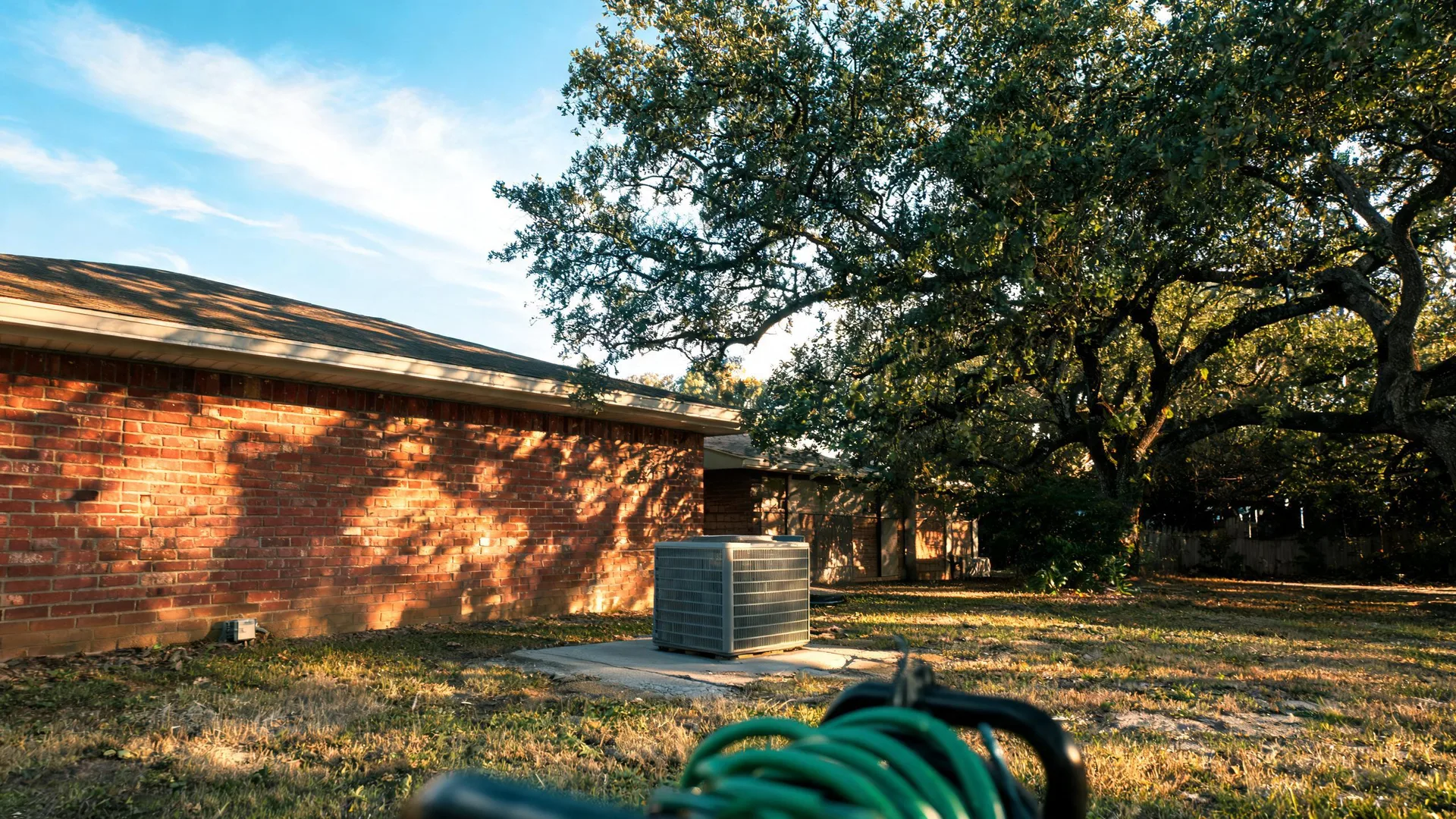
Dust and pollen settle between the fins on the outdoor unit, and from a few feet away it still looks clean. That buildup makes the coil work harder to move heat in both directions, cooling and heating, and the system draws more power to do the same job. A tech checks coil temperature against outdoor temperature to catch this before the fins need a deep cleaning instead of a rinse.
Low charge shows up as a number, not a symptom
A heat pump low on refrigerant still blows air and still changes the temperature some, so nothing feels wrong by hand. The compressor just runs longer to get there, cycling more than it should. Measuring the charge against what the manufacturer specifies is the only way to catch this before the compressor logs the extra hours.
A heat pump that's about to need a repair usually tells you first. Listen for a click when the reversing valve switches between heating and cooling, or a hum that wasn't there before. Watch the outdoor unit after a cold snap. A little frost is normal, but ice that doesn't melt off during the defrost cycle means something's off with that cycle or the sensor that runs it. Short cycling, where the system kicks on and off every few minutes instead of running a steady stretch, points to a problem with airflow or charge, not something that fixes itself. Warm air out of the vents when the system's set to heat, or weak air when it's set to cool, means the compressor is struggling even though the system is technically running. None of these stop the system from working today. They're what a check is for, catching them before the compressor does the hard labor of that neglect.
A tune-up also covers the small parts that cause most no-heat and no-cool calls. The contactor gets checked for pitting, since that's what feeds power to the outdoor unit and it wears with every cycle. The capacitor gets tested under load, not just looked at, because a capacitor can read fine sitting still and still fail to start the compressor. Wiring connections get snugged down, since a loose one heats up and burns before it ever trips a breaker. The condensate drain gets checked too, so it isn't adding a second problem on top of whatever the compressor is already dealing with. None of this takes long when it's done on a schedule. Caught during a repair instead, the same part can take the compressor down with it.