Check the filter yourself
Pull the filter and hold it up to a light. If light barely gets through, it needs changing. This is the one part of the system meant to be handled by whoever lives there, no tools and no panel covers involved.

Takes about a minute. No obligation.
Skip maintenance long enough and a heat pump doesn't fail all at once, it loses ground slowly. Dust and pollen build up on the coils like a blanket, so the system has to work harder to move the same heat. A dirty filter chokes airflow, and the indoor coil can ice over before anyone notices anything wrong. A slow refrigerant leak goes undiagnosed without someone checking pressures, and the compressor ends up doing extra work to make up for it. None of this shows up as a sudden breakdown. It shows up as a house that never quite feels right, and a compressor that wears out years before it should have.
A heat pump that runs constantly but never quite hits the set temperature is already telling you something.
A yearly check catches the worn part before it becomes the breakdown you call in for.




Saluda County saw 103 severe weather events between 2015 and 2024, most of them damaging wind. The outdoor unit sits through all of it, taking hail and wind-blown debris while the fan and coil stay exposed to whatever comes through. Power cuts hit hard here too, and a heat pump that loses power loses heat or cooling along with it. A yearly check is the time to look over the outdoor unit for bent fins, cracked housing, or anything built up around it from the last storm.
It starts running hard in the first month of the season here. Book the check the month before.
Find a contractor
The filter is the cheapest part of this machine and the one doing the most work. Air has to pass through it every time the system runs, and once it loads up with dust, the blower has to pull harder to move the same air. Starved airflow lets the indoor coil drop below freezing, and ice builds up right where heat is supposed to transfer. A coil wearing a layer of ice can't do its job, so the system runs longer to get nowhere. The outdoor coil has its own version of this problem. It sits outside collecting dust, grass clippings, cottonwood, whatever blows through, and a coated coil can't shed or absorb heat the way a clean one does. Then there's the drain. The indoor coil pulls moisture out of the air, and that water has to go somewhere. A clogged drain line backs it up into the pan, and from there it either trips a safety switch and shuts the system down or finds its way onto the floor. None of these failures look dramatic from the outside. They just mean the system runs longer, works harder, and wears out sooner than it should have.
Pull the filter and hold it up to a light. If light barely gets through, it needs changing. This is the one part of the system meant to be handled by whoever lives there, no tools and no panel covers involved.
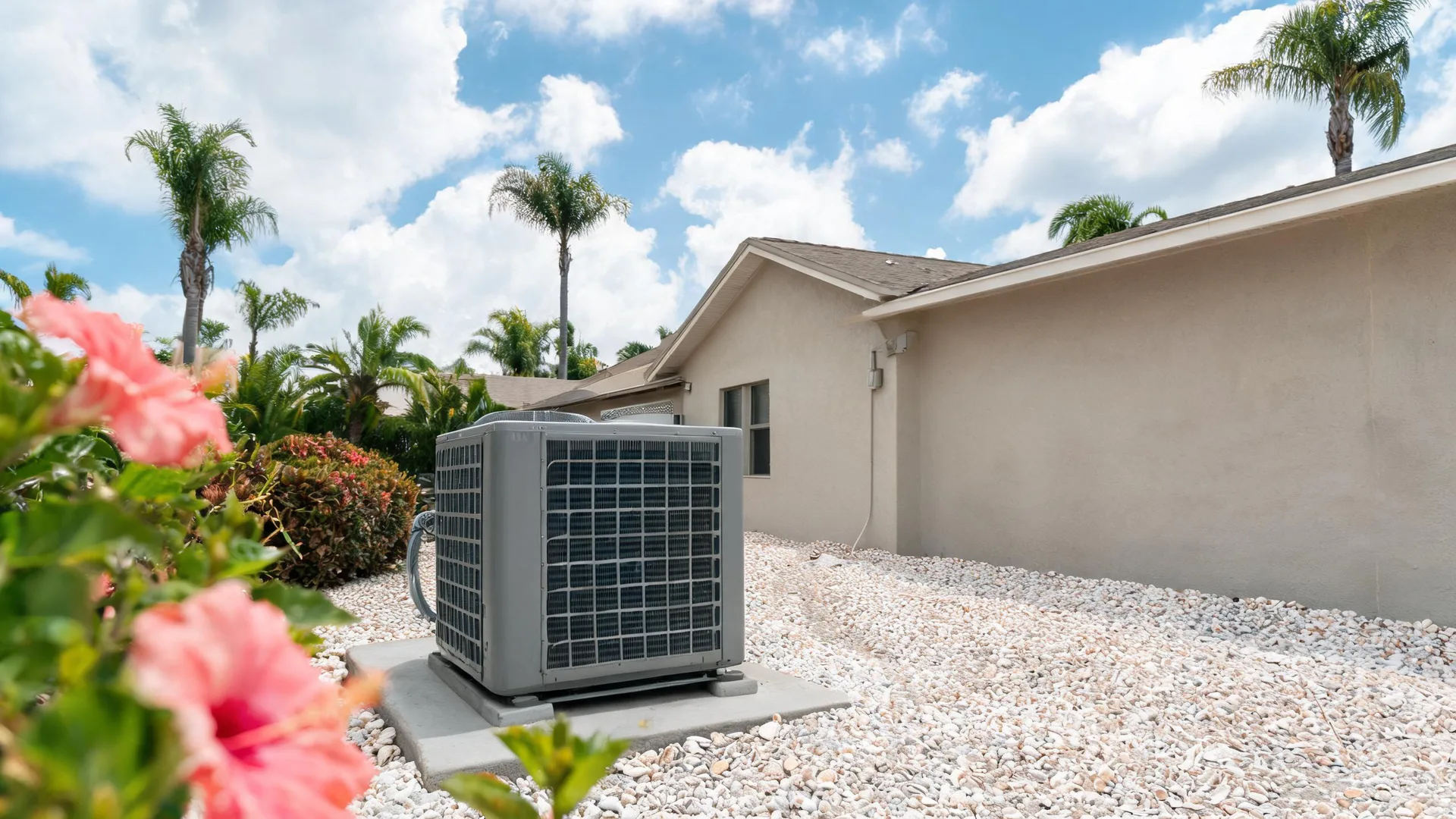
Grass clippings, leaves, and anything piled against the outdoor unit block airflow the same way a dirty coil does. Keeping the area around it open, and brushing off loose debris by hand, is safe to do anytime without opening the cabinet.
A quick visit means someone glances at the outdoor unit, checks that air is moving, and calls it done. A thorough one means the panels come off. The refrigerant pressures get checked against what the system is supposed to run at, not just glanced over. The electrical connections get tightened, because a loose connection generates heat and eventually fails right at the wire. The contactor gets looked at for pitting, since that's the part switching the compressor on and off every cycle. The condensate drain gets flushed, not just eyeballed. Someone also checks the refrigerant charge itself, because a system that's low won't show it right away. It just loses capacity slowly, and nobody notices until the system is struggling to keep up. If the visit looked the same every time regardless of what the system needed, something got skipped.
A heat pump has one job in winter and the opposite job in summer, and a tune-up has to check both directions, not just whichever one is running that day. The reversing valve is what switches between them, and it's one of the few parts that can fail quietly, sticking partway so the system gets stuck trying to heat when it should cool, or the other way around. Checking it properly means running the system in heat and in cooling, not just whichever mode the weather happens to call for. The defrost cycle gets checked too, since that's what clears frost off the outdoor coil in cold weather. A defrost control that's failing lets ice build up until the coil can't pull heat from the air anymore. The fan motor gets tested under load, not just switched on and listened to for a second. A check that only looks at the mode the system is already in has missed the part doing nothing that day.