






A row of single-story houses, the nearest of red brick with a covered porch and others with light siding, set behind a mowed lawn and a tall trimmed hedge, with large oak trees draped in Spanish moss overhead.

Heat Pump Maintenance in Myrtle Beach, SC

Tell us about the job

Takes about a minute. No obligation.

Tune-up, service, or cleaningHeat PumpHorry County, SC
Step 1 of 2

What ZIP code is the job in?

A tune-up starts outside, at the outdoor coil. Dirt and grass clippings build up on those fins where you can't see them, and once airflow through the coil drops, the system has to work harder to move heat in either direction. A tech will also check the refrigerant charge. Too little and the heat pump loses capacity without ever throwing an error. The reversing valve gets tested too, since that's the part that switches the system between heating and cooling, and a valve that's starting to stick won't announce itself until the day it won't switch at all. Electrical connections get checked for corrosion, because a loose or corroded connection creates resistance, and resistance makes heat. None of this shows up from the thermostat.

The filter is the one part that's on you, not the tech.

A clogged filter starves the coil of airflow between visits, so check it every month and swap it when it's gray.

Half the homes here were built by 1999, so a lot of heat pumps still have years left to protect

Half the homes here were built by 1999
111 damaging wind events from 2015 to 2024
49 hail events from 2015 to 2024
Book the checkup in AprilCooling starts running in May here, and the heat pump needs to be ready before it does

Horry County saw 111 damaging wind events between 2015 and 2024, more than any other kind of storm here. That outdoor unit sits outside through all of it, and wind-driven debris works into the fins and the fan whether the system is running or not. A tune-up is a chance to catch that buildup before it cuts airflow. Storms here also knock out power for stretches, and a heat pump that's already maintained comes back on clean when it does.

The weather here doesn't skip your heat pump. Your maintenance shouldn't either.

Wind hit this county 111 times between 2015 and 2024, and hail came with some of those storms. An outdoor unit takes that straight on, year after year, and worn parts don't wait for a convenient time to show up. A checkup now catches what the weather's already started.

Find a contractor
A man in a cap, long-sleeve navy shirt and tan work pants walks up porch steps toward a dark front door, carrying a canvas tool bag in his right hand, with a potted shrub to the left.
A gray heat pump outdoor unit mounted on a concrete pad next to the stone-accented exterior wall of a house.

What wears on this system every day it runs

The filter sits in the return air path, and everything downstream depends on it staying clear. Once it loads up with dust, the blower pulls less air across the indoor coil, and a coil starved of airflow can ice over in cooling mode or lose capacity in heating mode. The outdoor coil has the same airflow problem but no filter to protect it, so dirt and leaf debris sit right on the fins until someone cleans them off. The condensate drain is the part people forget entirely. It carries water away from the indoor coil, and when it clogs with algae or dirt, that water backs up into the pan and sometimes into the house. A system can have a strong compressor and a full refrigerant charge and still run poorly because the filter, a coil, or the drain got ignored.

A struggling system still runs, until it doesn't

A heat pump with a dirty coil or a low charge doesn't shut off and tell you something's wrong. It just runs longer to make the same heat or the same cold, pulling more than it should through parts that were never cleaned or checked. That goes on for months, sometimes longer, and the system compensates the whole time. The day it stops compensating is the day you notice, usually the day you needed it most.
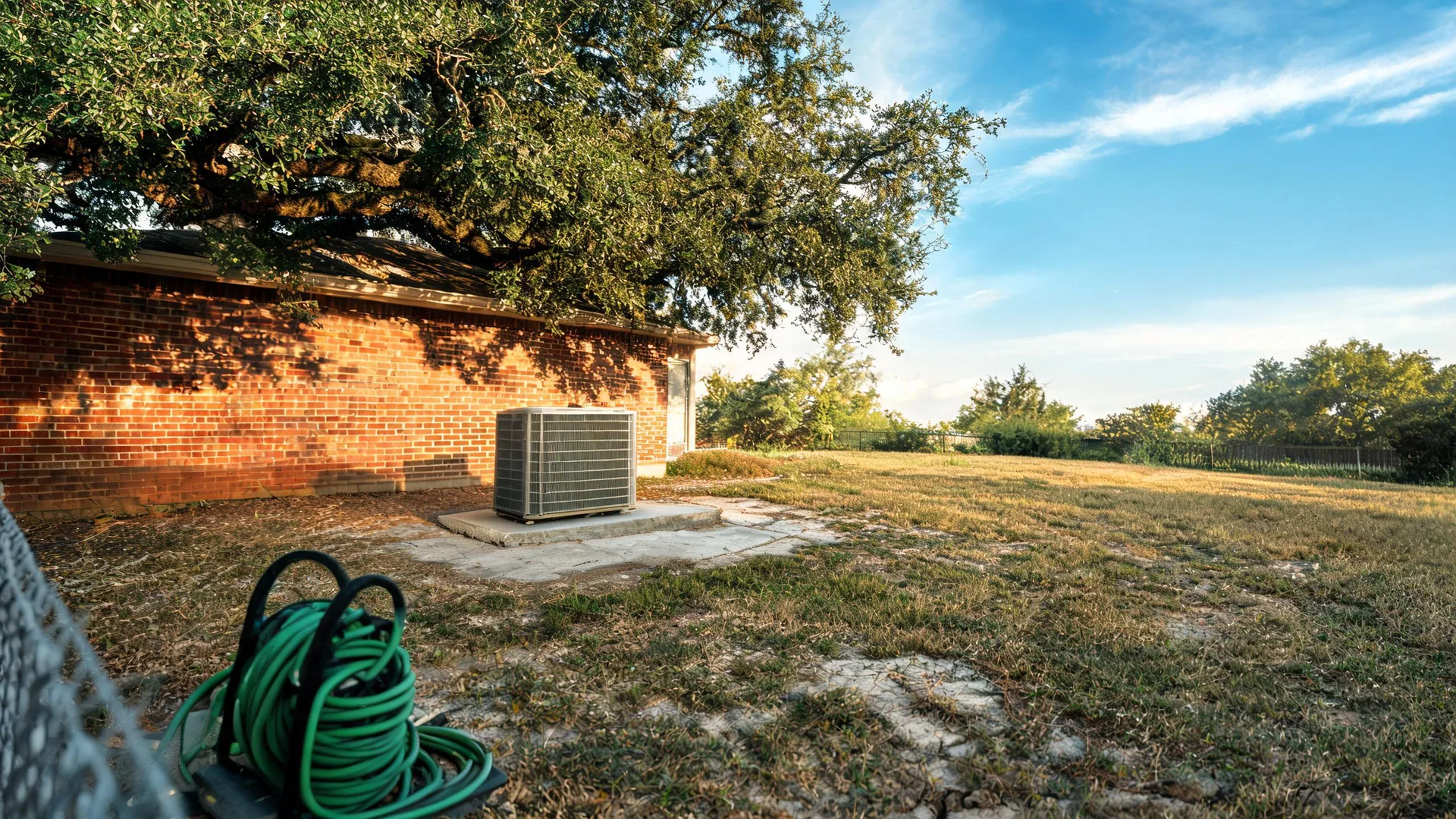
The compressor pays for what got skipped

Low refrigerant, weak airflow, a sticking reversing valve, none of that stays contained to one part. The compressor is what absorbs the strain when the rest of the system isn't right, and it's the part that keeps the whole system running. A yearly check catches the small failures while they're still small. Skip enough of them and the one part that was fine all along ends up taking the damage.

A quick visit checks that the system turns on and blows air in both modes, then it's over. A thorough one checks why it's running the way it is. That means pulling the panel instead of just reading the thermostat, checking refrigerant pressure against what the system's actually rated for, and measuring airflow instead of guessing at it by hand in front of a vent. It means taking amp draw on the compressor, not just listening for it to kick on. A thorough tech tests the reversing valve under both calls, heating and cooling, instead of trusting that it worked last time. The coil gets looked at close, not glanced at from a few feet back. If the visit took less time than it takes to explain what was checked, something on that list got skipped.

A full tune-up also checks the defrost cycle, which only matters on a heat pump and never comes up on an AC-only visit. The system has to sense when frost is building on the outdoor coil, switch into defrost, and switch back once it's clear. A sensor reading wrong or a control board timing it badly means the coil ices over and stays iced, which kills heating capacity right when it's needed. The tech also checks the auxiliary or backup heat, since that's what carries the house when the heat pump can't keep up on its own, and it should kick in smoothly instead of fighting the main system for control. Refrigerant charge matters more here than on a cooling-only system too, because the same charge has to work correctly in both directions, not just one.