A lit antebellum-style two-story house with white columns and a wraparound porch at night, framed by live oak trees draped in Spanish moss.

Heat Pump Maintenance in Manning, SC

Tell us about the job

Takes about a minute. No obligation.

Tune-up, service, or cleaningHeat PumpClarendon County, SC
Step 1 of 2

What ZIP code is the job in?

Keep the filter clean

A dirty filter chokes airflow across the indoor coil, and a heat pump depends on steady airflow for both heating and cooling. Check it on a regular schedule and replace or rinse it when it looks gray or clogged. This is the one job a homeowner can do that actually prevents service calls.


Leave the rest to a contractor

The refrigerant charge, the reversing valve, and the defrost cycle all need gauges and a trained eye to check properly. Opening the outdoor unit or adding refrigerant without that training can damage the compressor. Between visits, keep leaves and debris cleared from around the outdoor unit so it can breathe, and keep shrubs back far enough that air moves freely through the coil.

Your heat pump starts working through the night in November, right when cold snaps and power cuts are most likely here.

Get it checked in October, before that first cold month asks the most of it.

Manning sees 98 damaging wind events a decade, and every one risks the power your heat pump needs to run

98 damaging wind events from 2015 to 2024
Power costs 14.23 cents a kWh statewide
Climate zone 3A

Once a year, outside of storm season, a contractor should check the heat pump over fully. Refrigerant charge, the reversing valve, the defrost cycle, the electrical connections. That one visit is enough for most homes in the county. It matters just as much whether your place is older or newer. Half the homes in Clarendon County were built in 1990 or earlier, half in 1990 or later, and a heat pump does not care which decade it came from. What it needs is the same yearly look regardless of the house around it.

Book it before the season

It starts running hard in the first month of the season here. Book the check the month before.

Find a contractor
A man in a dark long-sleeved shirt and olive work pants carries a canvas tool bag up steps toward a blue-gray front door of a shingled house, with a potted shrub beside the entry.
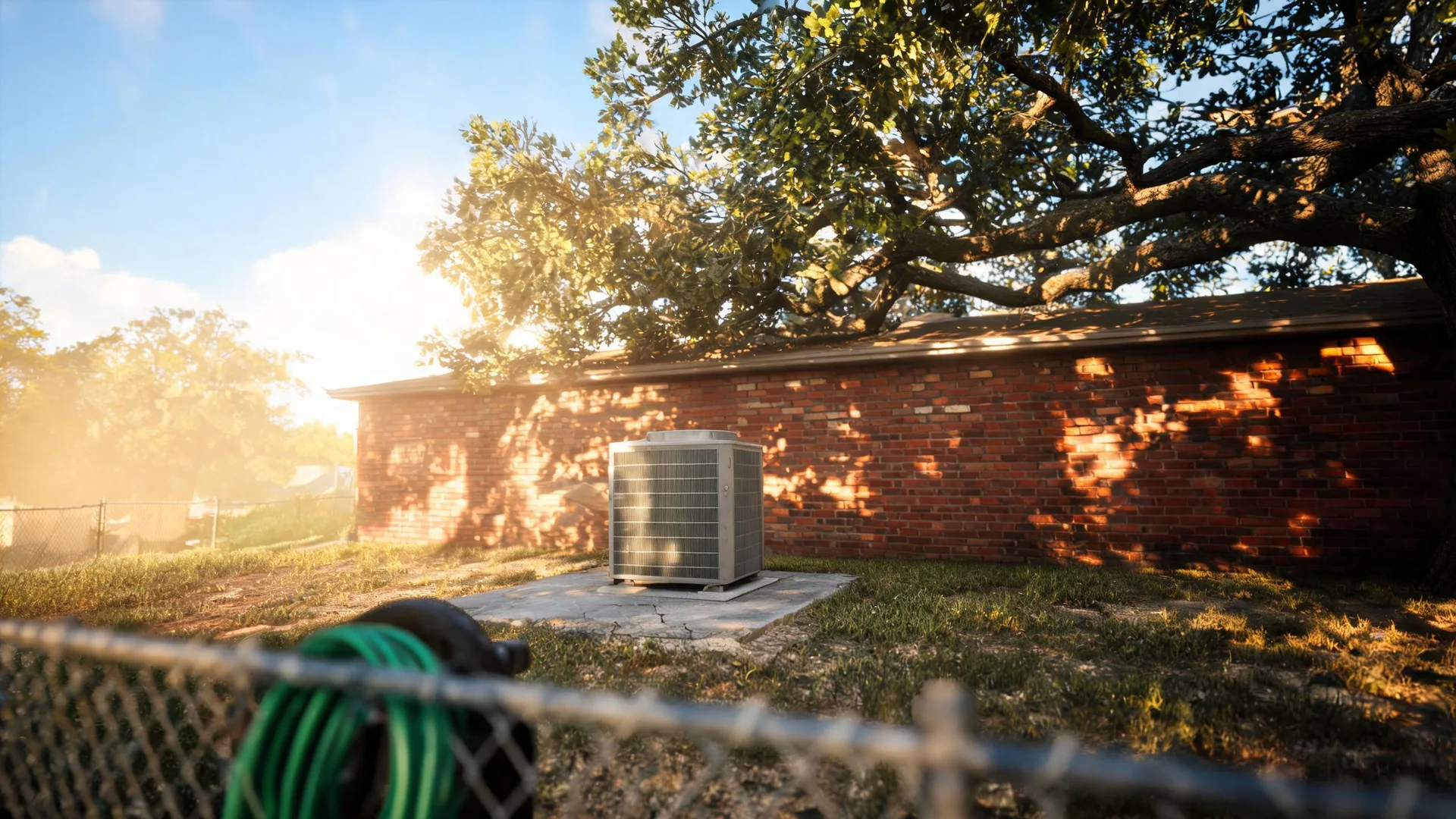
A gray air-source heat pump mounted on a concrete pad next to a house with gray vinyl siding, surrounded by gravel and flanked by green shrubs and white hydrangea flowers.

A heat pump here barely gets a season off

This machine runs nearly year round here, cooling from spring through fall and heating through the winter months. The outdoor unit sits through whatever the weather brings, including the wind that knocks out power 98 times a decade in this county. Every outage means a restart, and every restart puts a load on the same capacitor and contacts. A yearly check catches a weak part before it fails on a cold night with the power already back on.

A quick visit checks that it runs

A fast tune-up gets the system blowing cold or warm air and calls it done. That tells you the unit turned on, nothing more. A weak capacitor, a reversing valve that sticks halfway, a defrost cycle that doesn't end right, none of that shows up unless someone looks for it on purpose.

A thorough visit checks how it runs

A full tune-up has the contractor hook up gauges to read the refrigerant charge against what the unit calls for, test the reversing valve both directions, and watch a full defrost cycle start and end clean. They check amp draw on the compressor and tighten electrical connections that work loose over a year of cycling. That is the visit that catches a part failing before it fails.

The coil and the drain matter as much as the filter, even though a homeowner can't do much about either one. The indoor coil has to be cold enough to pull moisture out of the air during cooling, and that water has to go somewhere. It runs off the coil into a drain pan and out through a condensate line. If that line clogs with algae or dirt, water backs up into the pan and can overflow into the house. A dirty filter makes this worse before it makes it obvious, because choked airflow across the coil can let the coil ice over, and a coil covered in ice stops moving air or moisture at all. By the time a homeowner notices, the fix is usually a wet one. Checking the drain line is a normal part of a yearly visit, not something to open up on your own.

A tune-up also covers the outdoor fan motor and blade, which push air through the coil in both heating and cooling. A motor running slow or wobbling on its mount won't show up until airflow drops and the system struggles to hit temperature. The contractor checks mounting bolts, looks at the blade for cracks, and listens for bearing noise that means the motor is wearing out. Belts aren't part of this, heat pumps run the fan and compressor direct off the motor, so there's nothing to tension or replace there. Refrigerant lines get a look too, for rubbing, corrosion, or insulation that's worn through, since bare line loses efficiency and can sweat enough to drip. None of this takes long when a technician knows where to look, but skipping it means the first sign of trouble is the system itself failing to keep up.