Two illuminated white Southern-style houses with wraparound porches and staircases, framed by a Spanish moss-draped tree on a quiet street at night.

Heat Pump Maintenance in Laurens, SC

Tell us about the job

Takes about a minute. No obligation.

Tune-up, service, or cleaningHeat PumpLaurens County, SC
Step 1 of 2

What ZIP code is the job in?

Refrigerant charge runs low before anything acts broken

A heat pump that's a little low on charge still blows air and still switches between heating and cooling. It just works harder to get there. A gauge set at the service ports shows what the thermostat never will, and a tech checks that charge against what the unit is rated for, not against a guess.


The reversing valve only gets tested one way

The reversing valve is what switches the unit between heating and cooling, and a lot of homeowners run their system in one mode for months at a time without ever asking it to switch. A tune-up checks the valve in both directions. That's the only way to find one that's stuck before the first cold morning when the house needs heat and gets none.

A heat pump here runs its heat from November through March.

October is when a tech can still get to it, before the first cold morning asks it to switch over.

Half these homes are older than the system itself, so one visit a year has to catch what the years have added

Half the homes here were built by 1985
59 damaging wind events from 2015 to 2024
Power costs 14.23 cents a kWh statewide
One visit a year is enough hereLaurens County runs warm most of the year with a short mild winter. This system doesn't need more than one visit to stay ahead of trouble.

Some signs don't wait for a maintenance visit to show up. A heat pump that runs long cycles without warming the house the way it used to is losing ground somewhere. Ice on the outdoor unit during a defrost cycle is normal for a few minutes, but ice that stays is not, and it means the defrost sensor or the control that triggers it needs a look. A hissing or bubbling sound near the lines points to refrigerant escaping, not just running low. Short cycling, where the unit starts and stops instead of running a full cycle, wears on the compressor every time it happens. None of these mean the system is done. They mean it's telling you something before it fails outright, and that's worth a look before the morning it doesn't come on at all.

Book it before the season

It starts running hard in the first month of the season here. Book the check the month before.

Find a contractor
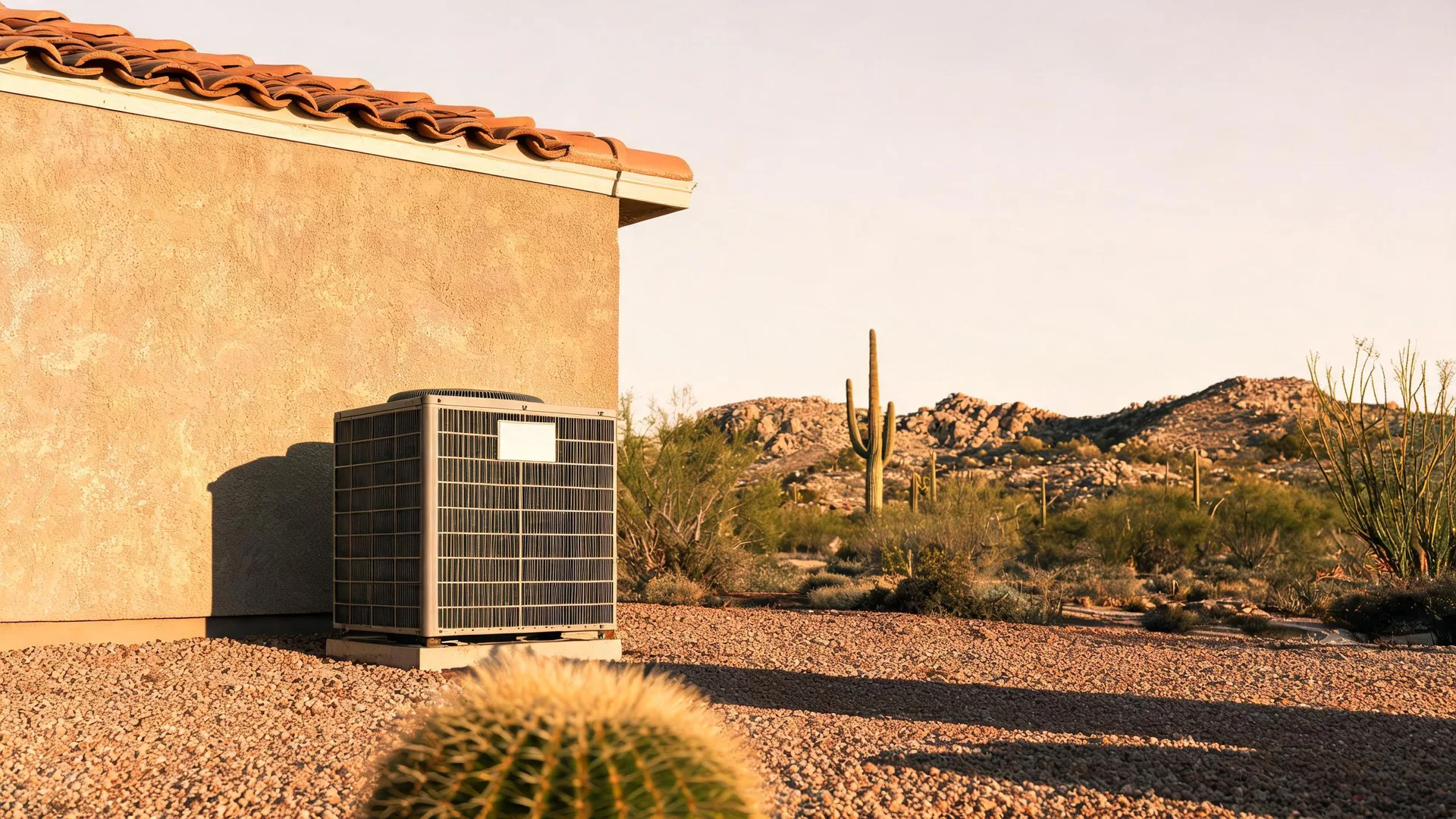
A gray heat pump condenser unit mounted on a concrete pad against the gray lap-siding exterior wall of a house.

What you can check, and what to leave alone

Keep the outdoor unit clear. Leaves, pine straw and grass clippings pull into the coil and block airflow, and a unit that can't breathe works harder in both directions. A couple feet of open space on all sides is enough. Check the filter and change it when it looks gray or clogged. A dirty filter is the most common reason a heat pump runs long and still can't keep up. Walk past the outdoor unit after a hard freeze and look at it. A light coat of frost during defrost is normal. A solid layer of ice that doesn't melt off within an hour means something else is wrong, and that's not a wait-and-see problem. Keep furniture and curtains away from the indoor vents so the air actually gets where it's going. Beyond that, leave the refrigerant lines, the valve and the electrical side alone. That part is a tech's job, not because it's a secret, but because it takes gauges and training to do without causing damage.

A quick visit checks that it runs

A fast tune-up gets the unit powered on, blowing air, and switching modes once. That tells you it isn't dead. It doesn't tell you whether the charge is right, whether the contactor is pitted, or whether the condensate drain is draining instead of backing up toward a stand full of water.

A thorough one checks why it's still running well

A full tune-up has a tech pull the panels, check amp draw on the compressor and fan motor, clean the condenser coil, and test the capacitor under load instead of just looking at it. Those are the parts that fail quietly over a few seasons, not overnight, and a visual check from across the room won't catch any of them.

The filter is the one part of this system the homeowner controls, and it affects everything downstream of it. A clogged filter starves the indoor coil of airflow, and a coil that can't move enough air will eventually ice over even outside of a defrost cycle. That ice then blocks airflow further, so the problem feeds itself. The outdoor coil has the same weak spot in reverse. Dirt and matted debris on its surface make the unit work harder to pull heat from the air or push it out, depending on the mode. The condensate drain gets less attention but causes its own kind of trouble. It carries moisture away from the indoor coil, and when it clogs with algae or sediment, that water backs up into the pan and sometimes past it, into the ceiling or the closet the air handler sits in. None of these fail loudly. They just make the system run longer and worse until something downstream gives out.

A tune-up covers more than the coils and the charge. The contactor that feeds power to the outdoor unit pits a little every time it closes, and a pitted contactor can stick or fail to make contact at all. The capacitor that gets the compressor and fan motors started weakens over time without any sign until the day it can't do the job. A tech checks both, along with the condensate drain, the blower wheel for dust buildup, and the electrical connections for anything loose or corroded. Thermostat calibration gets checked too, since a thermostat reading a few degrees off will run the system longer than it needs to and still leave the house feeling wrong. None of these parts announce themselves when they're failing. That's the point of having someone check them before they do.