






A nighttime street scene featuring a row of lit white colonial-style houses with wrap-around porches, flanked by oak trees draped in Spanish moss.

Heat Pump Maintenance in Hardeeville, SC

Tell us about the job

Takes about a minute. No obligation.

Tune-up, service, or cleaningHeat PumpJasper County, SC
Step 1 of 2

What ZIP code is the job in?

A quick visit usually means a filter check and a glance at the thermostat before the tech moves on. A thorough one means the panels come off. The tech checks refrigerant pressure on both the high and low side, because a heat pump that runs cooling and heating cycles needs the charge right for both. They should pull the reversing valve into both positions to make sure it actually shifts, since a valve that sticks will leave you with heat when you want cooling or the other way around. The outdoor coil gets cleaned, not just looked at, because a dirty coil makes the system work harder to move heat in either direction. They check the defrost control and test that it cycles properly, since that part only matters in cold weather and gets skipped more than anything else. If nobody touches the reversing valve or the defrost board, you got the quick version.

Heat pumps in Hardeeville switch over and start earning their keep in November.

Get the defrost control and reversing valve checked in October, before the first cold night asks them to work.

Half the homes in Jasper County were built by 2003. Your heat pump is probably younger than the house.

Half the homes here were built by 2003
Climate zone 2A
Power costs 14.23 cents a kWh statewide
Built for StormsDamaging wind hit Jasper County 206 times between 2015 and 2024.

Jasper County saw 224 severe weather events between 2015 and 2024, and damaging wind was behind most of them. The outdoor unit sits right where that wind, and whatever it carries, can reach it. Hail is rare here, but wind and tropical storms are a real pattern, not a one-time thing. Power cuts follow the same storms, and a heat pump that loses power needs to come back on and run right, which means it needs to have been running right before the power went out. Have the outdoor unit checked for bent fins, loose panels or debris worked into the coil before storm season puts it to the test again.

A newer system still needs the yearly check

A system that age still needs a yearly check to keep running the way it should. Have the reversing valve, defrost control and refrigerant charge looked at before cold weather asks more of it.

Find a contractor
A man seen from behind in a dark sweatshirt and tan work pants climbs porch steps toward a gray paneled front door, carrying a canvas tool bag in his right hand, with a potted shrub to the left.
A white mini-split heat pump outdoor unit mounted on a concrete pad beside a gray-sided house, surrounded by gravel and green shrubs.

What you can check without a tech

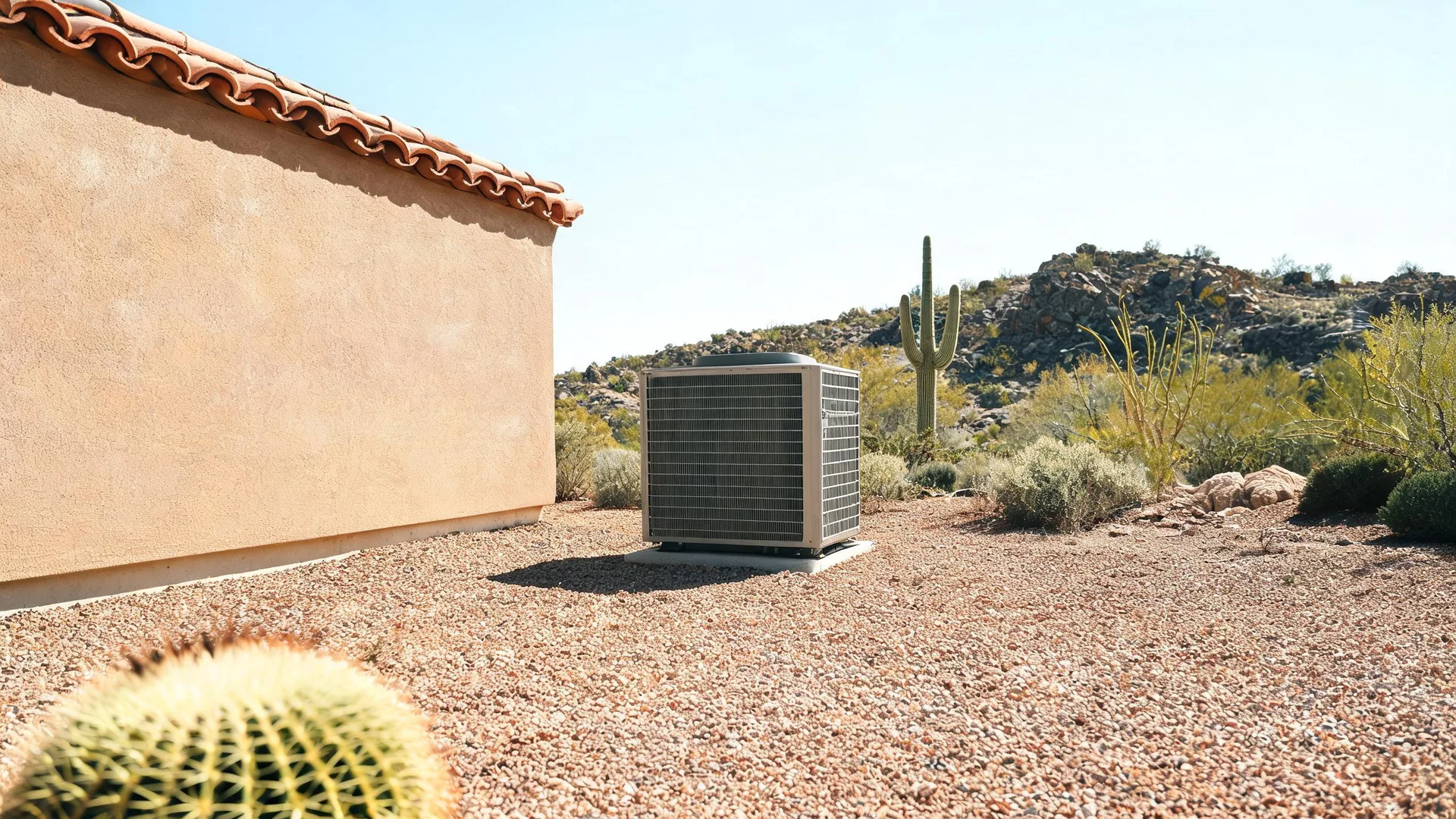
Keep the outdoor unit clear. Leaves, pine straw and cut grass pull into the coil and block airflow, and a heat pump that can't pull air through the coil has to run longer to do the same job. Leave a couple feet of open space around the cabinet and keep shrubs trimmed back. Check the filter every month and swap it when it looks gray or clogged, since a dirty filter restricts airflow on the indoor side the same way debris does outside. Walk past the outdoor unit after a hard storm and look for bent fins, a loose panel or anything pinned against the coil by wind. Inside, keep the vents open and unblocked by furniture or rugs so air moves the way the system expects. None of that replaces the yearly check, since refrigerant charge and the reversing valve need gauges and tools to test right, but it keeps the system from working harder than it has to between visits.

The filter is the easy failure

A heat pump moves air across the indoor coil to heat or cool it, and everything upstream of that coil runs through the filter first. A filter clogged with dust and pet hair starves the blower, so less air crosses the coil and the system has to run longer to reach the same temperature. Left long enough, that restriction can ice the indoor coil over, even in heating mode.
The coil and drain fail quietly

The outdoor coil gives up or pulls in heat depending on the mode, and anything coating it, dust, grass clippings, a film of grime, slows that exchange down. The indoor coil pulls moisture out of the air as it works, and that water has to leave through the condensate drain. A drain line clogged with algae backs up, and the overflow either trips a safety switch that shuts the system off or finds its way into the ductwork or the ceiling below.

Some signs show up before the system ever struggles. Short cycling is one, where the heat pump turns on, runs a few minutes, and shuts off again instead of completing a full cycle. That usually traces back to a sensor reading wrong or a control board that isn't timing things the way it should. A hissing or bubbling sound from the outdoor unit points to refrigerant escaping somewhere in the line, and that's not a problem that waits well, since a system low on charge runs its compressor harder than it's built for. Ice on the outdoor coil in weather that isn't especially cold means the defrost cycle isn't doing its job. A burning or musty smell when the system kicks on is worth a look too, since it can mean dust baked onto the heat strips or moisture sitting somewhere it shouldn't. None of these mean the system is done. They mean it's telling you something before it gets worse.

A tune-up is more than a once-over. The tech checks the capacitor and contactor in the outdoor unit, since a weak capacitor makes the compressor or fan struggle to start and a pitted contactor can fail to pull in at all. They check the blower motor and wheel for dust buildup, because a dirty blower wheel moves less air even when the motor itself is fine. The thermostat gets tested against the system, not just looked at, to make sure the call for heat or cooling actually reaches the right stage. Electrical connections get checked for anything loose or corroded, since a connection that's barely holding can run hot or drop out under load. All of it works together. A heat pump with a strong capacitor and a clean coil but a failing contactor still won't start reliably, and that's the kind of thing a quick filter check never finds.