





Night view of illuminated white Southern-style houses with wraparound porches beneath Spanish moss-draped oak trees.

Heat Pump Maintenance in Greenwood, SC

Tell us about the job

Takes about a minute. No obligation.

Tune-up, service, or cleaningHeat PumpGreenwood County, SC
Step 1 of 2

What ZIP code is the job in?

Greenwood County saw 69 severe weather events between 2015 and 2024, and most of that was wind. A heat pump keeps its outdoor unit sitting outside through all of it. Wind drives debris into the coil and fan, and hail dents the cabinet and bends the fins. None of that stops the unit from running right away, but it adds up, and damage sitting unnoticed is damage that gets worse.

A dirty filter makes the whole system work harder to move the same air.

Check it monthly and the coil behind it stays clean too, so the heat pump doesn't have to fight for every degree.

A once-a-year checkup suits a heat pump half this old or more

Half the homes here were built by 1977
Power costs 14.23 cents a kWh statewide
Climate zone 3A
Your heat pump works year-round hereCooling starts in May, heat starts in November. Book service in April or October.

A heat pump that needs attention usually says so before it quits. Weak airflow from the vents is one of the first signs, even with a clean filter. Short cycling is another, where the unit kicks on, runs a few minutes, and shuts off before the house feels any different. Ice building up on the outdoor coil outside of a defrost cycle means something is off with the refrigerant charge or the reversing valve. A system that runs long stretches without ever seeming to catch up is losing capacity somewhere, and that's worth having a tech look at before the compressor takes the strain.

Check it before storm season

Storm season beats up outdoor units here. Have it checked for damage and debris before you need it.

Find a contractor
A white mini-split heat pump outdoor unit mounted on a concrete pad beside a gray-sided house, surrounded by gravel and green shrubs.

Skip enough checkups and small problems become the only kind left

A heat pump that never gets looked at doesn't fail all at once. The reversing valve sticks a little more each season. Refrigerant seeps out slowly from a fitting that was never checked, and the system keeps running on less charge than it needs, so the compressor works harder to move the same heat. Dust builds up on the indoor coil and blower wheel, and airflow drops bit by bit without anyone noticing until it's too weak to keep up. None of this announces itself early. It shows up later as a compressor that's been straining for a long stretch, or a coil so restricted the system can't hold temperature on the harder days.

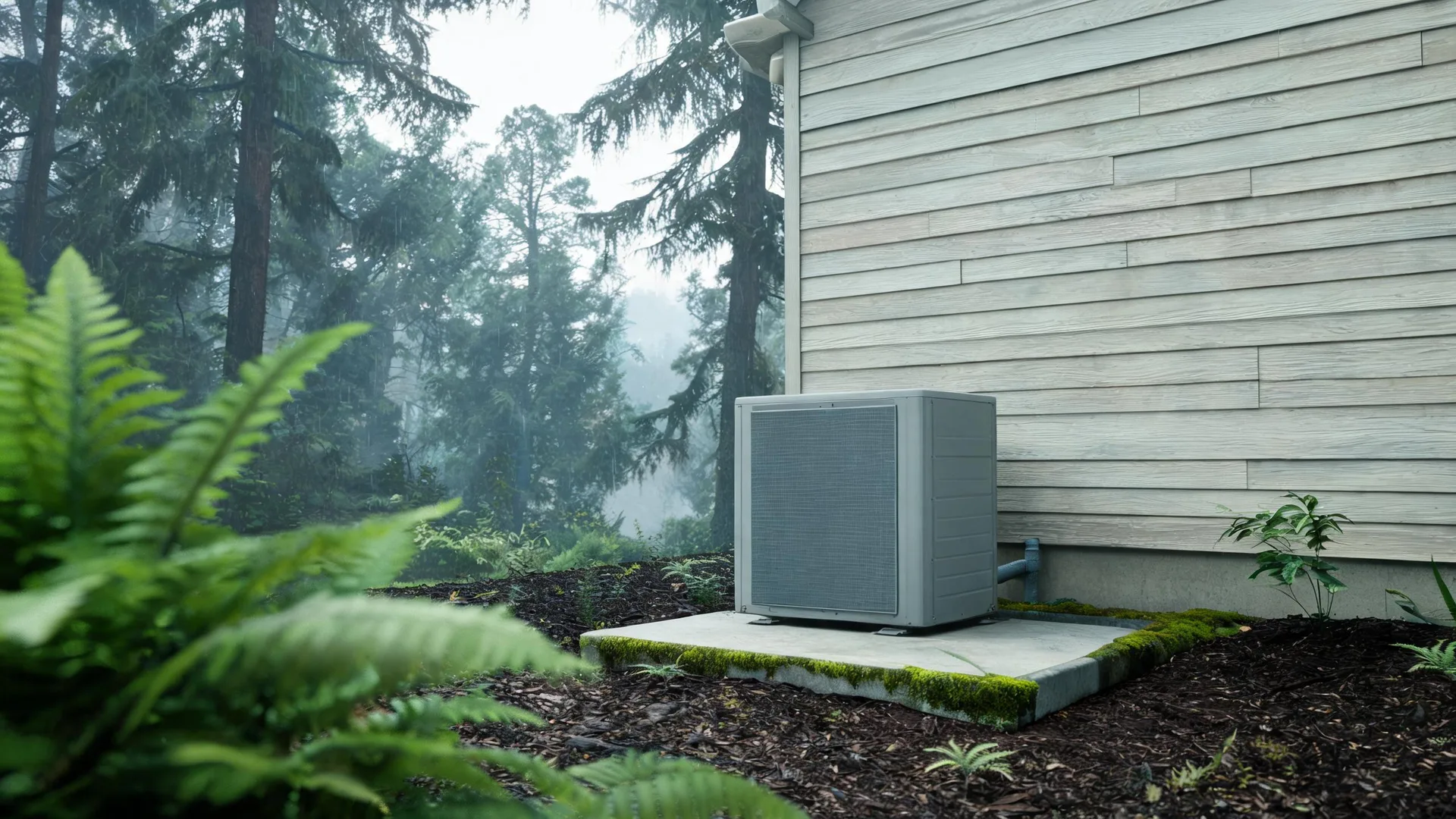
Keep the outdoor unit clear

The outdoor unit needs open space to breathe. Keep leaves, grass clippings and mulch away from the cabinet, and leave room on all sides so air can pull through the coil. After a storm, check for branches or debris caught in the fan grille before the system runs again.
Watch the vents and the drain

Walk the house once in a while and feel the air coming out of each vent. A room that used to feel fine and now doesn't is worth noting, even if you can't say why yet. If the system has a condensate drain line you can see, check that it's draining and not backed up, since a clogged line can shut the system down on its own.

A quick visit checks that the system runs and the readings look fine on the gauges. A thorough one gets into why they look fine. That means pulling the panel to check the contactor and capacitor for wear, not just listening for a hum. It means measuring refrigerant charge against what the system calls for, not eyeballing the line temperature. The reversing valve should get tested in both directions, since a valve that's starting to stick often still shifts, just not cleanly. The indoor coil and blower wheel get looked at directly, not assumed clean because the filter was. A tune-up that skips these and still takes as long as the one before it is spending that time somewhere else.

A tune-up also means checking things that have nothing to do with refrigerant or coils. The outdoor fan motor gets checked for play in the bearings, since a wobbling blade wears out faster and pulls more current than it should. Electrical connections get tightened, because a loose lug at the disconnect or inside the air handler heats up under load and that heat damages wire insulation over time. The condensate drain gets flushed even if it looks clear, since algae builds up inside the line before it ever shows at the opening. Refrigerant line insulation gets checked too, since bare or cracked insulation makes the compressor work to overcome heat gain before the refrigerant even reaches the coil. None of these steps show up in how the system sounds or feels on the day of the visit. They show up months later, in a motor that failed early or a drain pan that overflowed.