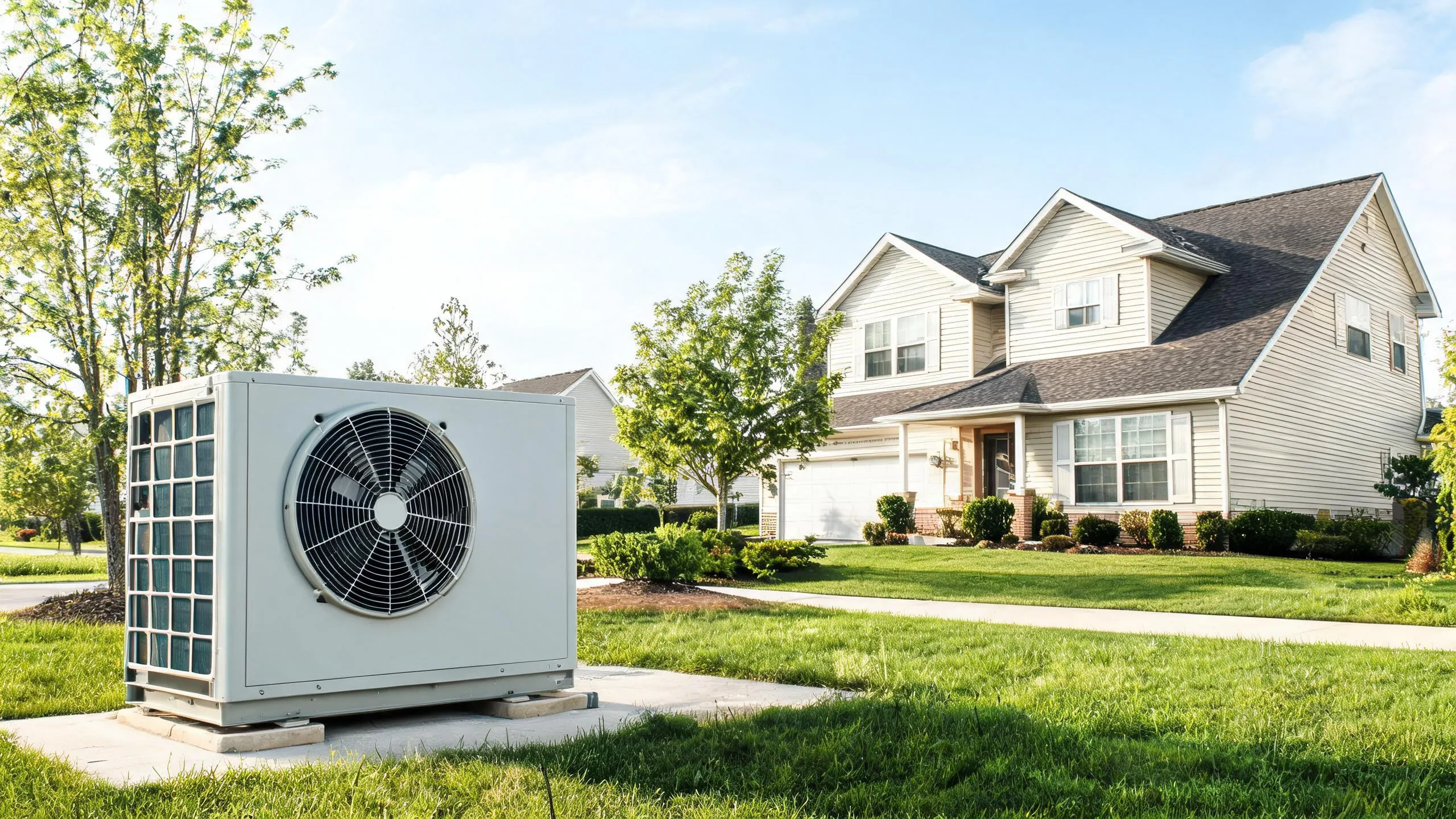





An outdoor heat pump unit mounted on a concrete pad in front of a two-story suburban house with a landscaped lawn.

Heat Pump Maintenance in Florence, SC

Tell us about the job

Takes about a minute. No obligation.

Tune-up, service, or cleaningHeat PumpFlorence County, SC
Step 1 of 2

What ZIP code is the job in?

Florence County saw 120 severe weather events between 2015 and 2024, and most of that was damaging wind. Your heat pump's outdoor unit sits right in the path of that, with coils and fan blades exposed to whatever blows through. Hail and tornadoes have hit here too, so it's not just wind the cabinet has to take. It can look fine from a few feet away and still have a bent fin or a dented coil cutting into how it runs. Worth having someone check it over before the next system rolls through, not after.

Half the homes in Florence County were built in 1986 or later.

A heat pump that came with a newer home still has years of working life in it, and a yearly check keeps it running that way.

A heat pump switches over in May and again in November, so get it checked in April and October

Cooling runs May through September
Heat runs November through March
97 damaging wind events from 2015 to 2024

Keep a newer system running like one

A yearly check is what keeps a heat pump that still has years ahead of it from losing any of them early. Have it looked at this spring before the switch to cooling.

Find a contractor
A man in a dark shirt and brown pants carries a worn canvas tool bag up concrete steps toward a gray-blue front door of a house with horizontal siding and a potted shrub.
A gray air-source heat pump mounted on a concrete pad next to a house with gray vinyl siding, surrounded by gravel and flanked by green shrubs and white hydrangea flowers.

What you can check yourself, and what to leave alone

Between visits, the main thing worth doing is keeping the outdoor unit clear. Grass clippings, leaves, pine straw, anything blown against the cabinet blocks airflow through the coil, and the system has to work harder to move the same amount of air. Keep a couple feet of open space around all sides. Check the air filter and swap or clean it on a regular schedule, since a clogged filter does the same thing from the inside. After a storm, take a look at the fan on top. It should sit flat and spin freely. If it looks bent or you hear a new rattle or scrape, shut the system off at the thermostat and get it looked at rather than running it that way. Inside, keep the vents and returns open, not blocked by furniture or rugs. None of this replaces a proper inspection, but it keeps the system from losing ground between them.

Airflow has to make it all the way through

A heat pump only works if air can move through the filter, across the indoor coil, and out through the vents. A clogged filter or a dirty coil forces the system to run longer to move the same amount of air, and the parts inside end up working harder than they were built to.

The drain line gets forgotten

The indoor coil collects condensation whenever the system is cooling, and that water has to run out through a drain line. Algae and dust build up in that line over time, and when it clogs, water backs up into a pan that was never meant to hold much. A system that was running fine can start leaking into the house for no other reason than that.

A heat pump that never gets looked at doesn't fail all at once. The refrigerant charge drifts low, the coil cakes over with dust, and the system keeps running anyway, just worse each month. It pulls more current to move the same amount of air, and the compressor runs hotter and longer than it was built to. Nothing shuts off right away. What happens instead is the parts wear toward failure faster, and the breakdown shows up in whichever season asks the most of the system, usually the first real cold snap or the first stretch of heat. A yearly check catches the drift before it turns into a part that has to be replaced.

A proper tune-up starts outside. The technician checks refrigerant charge against what the system calls for, since too little or too much makes the compressor work harder either way. The outdoor coil gets cleaned so air can actually pass through it, and the fan motor and blades get checked for wobble or wear. Electrical connections get tightened, because a loose connection heats up and burns over time. The contactor and capacitor get tested, since those are the parts that wear out from simple cycling, on and off, season after season. Inside, the technician checks the indoor coil, the blower wheel, and the drain line, then confirms the system actually switches between heating and cooling the way it should. That reversing valve is what makes a heat pump different from a plain air conditioner, and it's worth someone actually running the system in both directions to be sure it shifts over clean.