





A nighttime street scene featuring a row of lit white colonial-style houses with wrap-around porches, flanked by oak trees draped in Spanish moss.

Heat Pump Maintenance in Columbia, SC

Tell us about the job

Takes about a minute. No obligation.

Tune-up, service, or cleaningHeat PumpRichland County, SC
Step 1 of 2

What ZIP code is the job in?

Richland County saw 440 severe weather events between 2015 and 2024. Most of that was damaging wind, and your outdoor unit sits right in its path year-round. Wind-blown branches and grit can bend the fins or scar the coil. Hail gets added to that mix some years too, and a dented cabinet is often the first sign something inside got knocked loose as well. A heat pump here has to shrug off more than most, and checking it over before the next round of storms is worth doing while it is still just checking.

A heat pump that short cycles, running a few minutes and shutting off, is fighting a problem it can't clear on its own.

Short cycling like that usually traces back to a stuck sensor or blocked airflow, and the compressor wears down faster the longer it runs that way.

A heat pump here works both sides of the year, so it needs two checkups, not one

Cooling runs May through September
Heat runs November through March
360 damaging wind events from 2015 to 2024
A county built on newer groundHalf the homes in Richland County went up in 1989 or later.

A pre-storm checkup is only half of it. After a bad storm rolls through, it is worth another look before you trust the unit to run on its own again. Nearly half of South Carolina households lost power for a day or more in 2024, and a heat pump that sat dead for that long, or kicked back on through a surge when the power returned, can have problems that were not there before the storm hit. Tornadoes and hurricanes both reached Richland County in the years counted, on top of the wind and hail. A unit that looks fine from the yard can still have a loose connection or a coil that took a hit nobody saw.

Check it before storm season

Storm season beats up outdoor units here. Have it checked for damage and debris before you need it.

Find a contractor
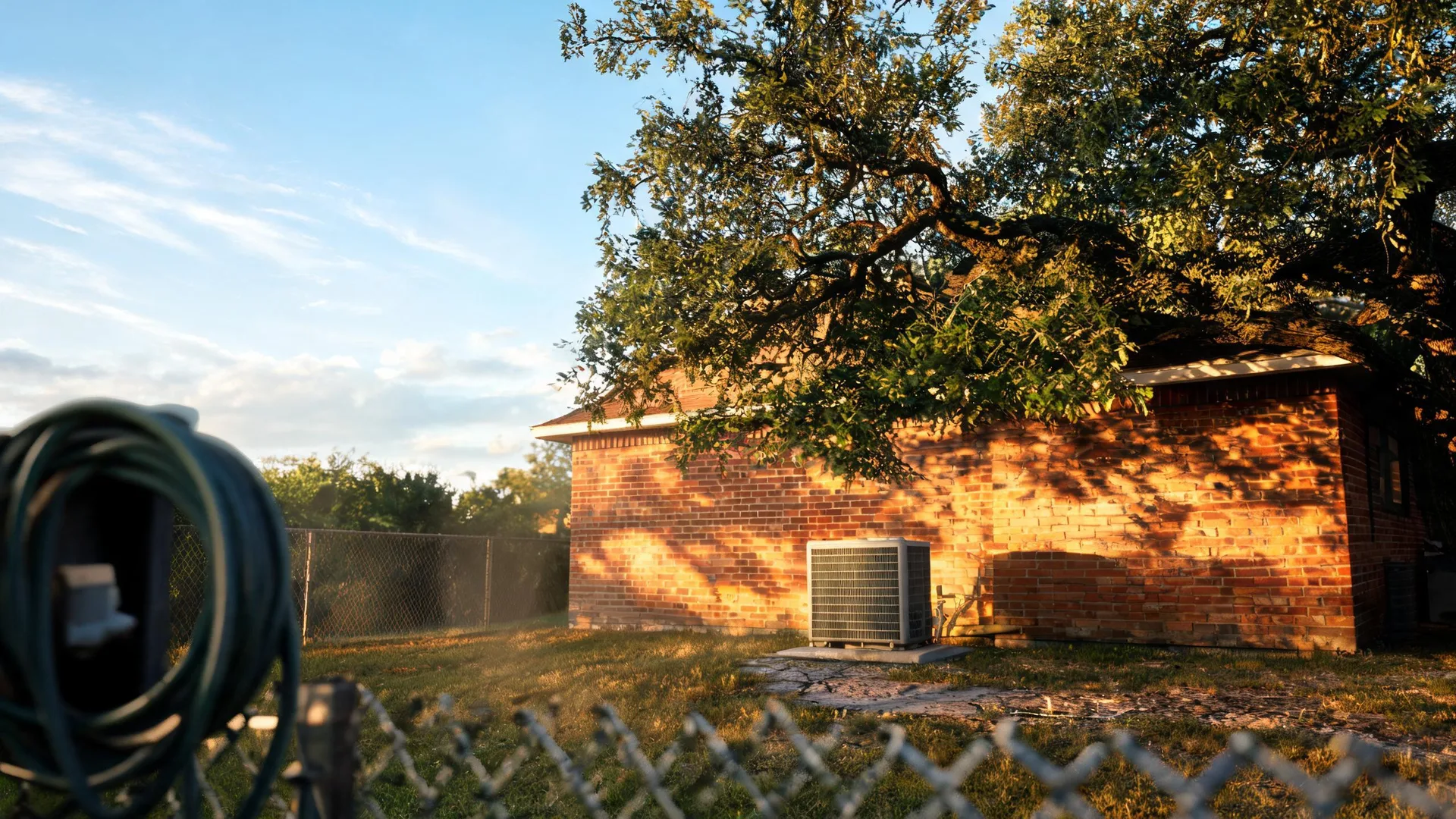
A gray heat pump condenser unit mounted on a concrete pad against the gray lap-siding exterior wall of a house.

A real tune-up opens the cabinet

A quick visit gets you a filter check and a glance at the readout. A thorough one gets the panels off. That matters because the coil and the blower wheel collect dirt where you can't see them, and dirt on either one makes the system work harder to move the same heat. A thorough tune-up checks refrigerant charge against what the manufacturer specifies, not just whether the house feels cool or warm. It checks the capacitor and contactor in the electrical compartment, since those wear out quietly and take the compressor with them when they fail. It checks the reversing valve, the part that lets a heat pump switch between heating and cooling, because a valve that sticks halfway shows up as a system that won't warm the house even though it runs fine in summer. Someone who just listens to the unit and checks the thermostat setting has not done any of that.

The wear happens either way

A heat pump with a dirty coil or a low charge still heats and cools the house. It just runs longer to do it, and the compressor and blower motor log more hours than they should for the same job. Nobody notices until one of those parts quits.
What a skipped visit misses

A stuck reversing valve, a weak capacitor, a refrigerant charge that has drifted off spec. None of these show up as a warning on the thermostat. They show up as a system that struggles in one season and seems fine in the other, until the day it doesn't start at all.

A tune-up also checks things a homeowner has no way to see from the thermostat. Static pressure in the ducts, for one. Too high and the blower strains against air that has nowhere to go, even if every vent in the house is open. Amp draw on the compressor is another. A motor pulling more current than it should is wearing out bearings right now, long before it trips a breaker or stalls out. The temperature split between the air going into the system and the air coming out tells its own story, and a split that's too small or too large points at a problem the homeowner would never feel as anything but a house that takes a little longer to warm up or cool down. None of this shows up on a wall thermostat. It only shows up when someone opens the unit and measures it.

A full tune-up on a heat pump covers the outdoor coil and the indoor coil both, since either one caked with dirt or lint makes the system move less air for the same effort. It covers the defrost cycle too, the part that only matters in winter, when the outdoor coil has to shed frost on a schedule or ice builds up and blocks airflow for good. A technician checks that the unit actually reverses when asked to, switching from blowing hot air to cold and back, because that valve is the one part a straight air conditioner never had to deal with. The blower wheel gets pulled and looked at, not just wiped down, since caked-on dust throws it out of balance and wears the motor bearing early. Refrigerant lines get checked for oil residue, which is often the first sign of a slow leak long before the charge runs low enough to hurt performance.