A tune-up gets into places you'd never think to check. The tech pulls the panel and checks refrigerant charge with gauges, because a system can be low enough to lose efficiency without ever tripping a fault code. They check the reversing valve, the part that switches the system between heating and cooling, since a sticky one will leave you with heat when you wanted cool air and no warning beforehand. They check the defrost cycle, the sensors and board that tell the outdoor coil when to shed ice, because a defrost that doesn't fire right turns the coil into a block of ice by the middle of winter. They'll check capacitors and contactors too, the electrical parts that wear down slowly and give no sign until the day they don't close the circuit at all. None of this shows up from looking at the thermostat or feeling the air out of a vent. It shows up when someone opens the unit and tests it.
Winter stays short and mild here, summer runs long.
Your heat pump switches between the two jobs all year, so one yearly check before the loads hit is what keeps it ready for both.
Half the homes here were built by 1988, so the heat pump probably still has years left in it
Half the homes here were built by 1988111 damaging wind events from 2015 to 202433 hail events from 2015 to 2024
Book the heat pump check in April or OctoberCooling starts in May and runs to September, heat starts in November and runs to March
Between checks, the system usually tells you something is off before it fails outright. It might run longer than it used to without quite reaching the temperature you set. The outdoor unit might blow warm air in winter instead of cycling into defrost like it should, or build up frost that never melts off during the day. Indoors, the air coming out might feel weaker than it used to, even with the thermostat set the same as always. A hissing or bubbling sound near the lines can mean refrigerant escaping somewhere in the circuit. Short cycling, where the system kicks on and off every few minutes instead of running a full cycle, is another one worth paying attention to. None of these mean the system is done for. They mean it's asking for a look before the small problem becomes the one that leaves you without heat or cooling altogether.
Between checks, the filter and the clearance around the unit are yours to watch
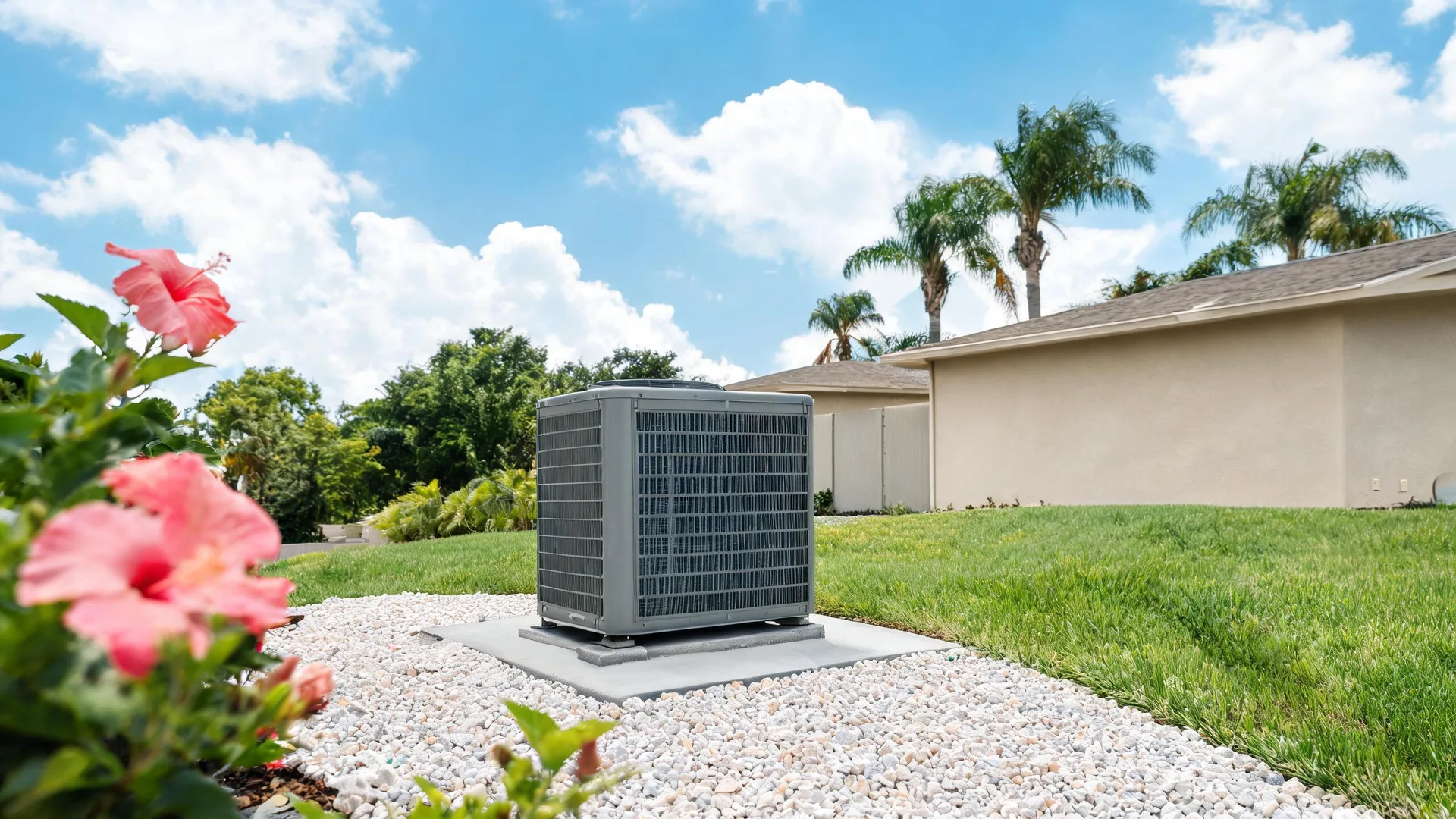
The filter is the one job that falls on you, and it's the one that matters most. A clogged filter starves the indoor coil of airflow, and a heat pump moving too little air has to run longer to do the same work. In cooling that coil can ice over. In heating it just struggles and wears the blower motor down faster than it should. Check it monthly and swap it when it looks gray instead of white. Outside, keep the area around the unit clear. Leaves, grass clippings and anything piled against the cabinet block the airflow the outdoor coil needs to do its job, whether it's shedding heat in summer or pulling heat from the air in winter. After a storm or a mow, take a look and clear off anything sitting against the fan grille. Don't pack mulch or plantings tight against the sides either, the coil needs space to breathe on every side. Past that, leave the panel closed. Charge, the reversing valve, the defrost board, those need gauges and meters and someone who knows what the readings should be.
A thorough visit ends with numbers, not a checklist
A tech who checked the charge can tell you what the pressure was. One who tested the compressor can tell you the amp draw and what it should be. A quick visit gets you a filter swap and a nod at the outdoor unit. If nobody can hand you a reading, nothing was measured.
Watching the system switch takes minutes a quick visit skips
Seeing the reversing valve actually switch the system from heat to cool and back takes a few minutes of standing there watching it happen. A visit that is in and out in no time never saw that. The valve either works or it was never asked to.
The filter, the coils and the drain all work together, and a problem with one shows up as trouble in the others. A dirty filter cuts airflow across the indoor coil, and a coil that isn't getting enough air can drop below freezing and ice over even when the system is working to cool the house. That ice blocks airflow further, so the problem feeds itself. The outdoor coil has its own job, shedding heat or pulling it from the air depending on the season, and it needs to stay clear to do either. As the indoor coil cools the air, it pulls moisture out of it, and that water has to go somewhere. The drain line carries it out. Algae and dirt build up inside that line over time, and when it clogs, the water backs up into the pan under the coil and from there into the house instead of outside where it belongs.
A tune-up isn't just the gauges and the electrical checks. The tech cleans the outdoor coil fins, because dirt and pollen matted into them cuts how well the coil can shed or pull heat, no matter how good the charge is. They'll flush or check the condensate drain so it isn't the thing that backs up water into the house later. Blower wheel gets a look too, since dust builds up on the blades over time and that alone can cut airflow the same way a dirty filter does. They'll check the thermostat calibration against an actual thermometer, run the system in both heating and cooling to see it switch clean, and check amp draw on the compressor and fan motors against what they should pull. A system can run and still be drifting toward trouble. That's what the check is for.