





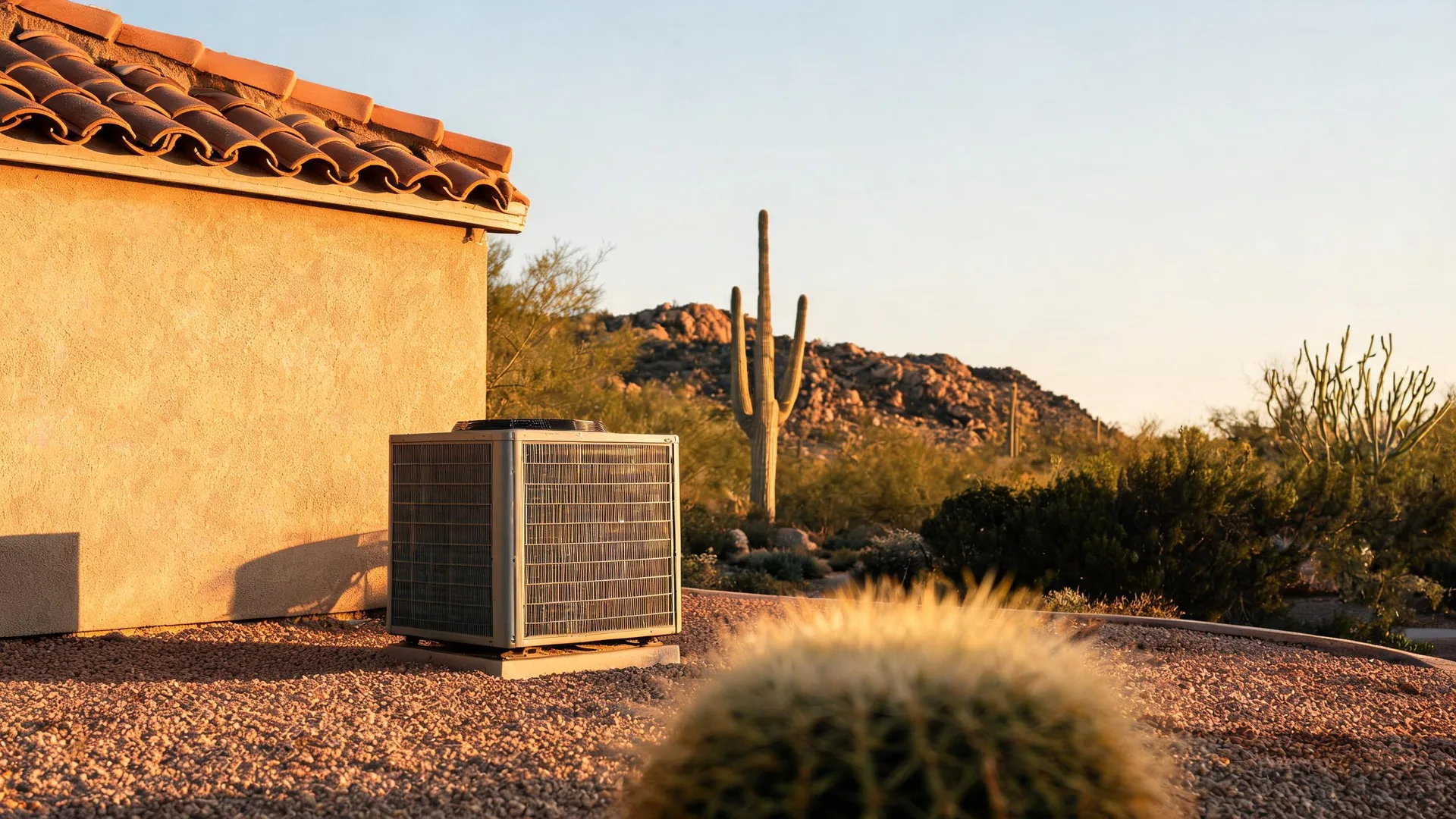
A grey outdoor HVAC unit mounted on a concrete pad beside the beige-sided exterior wall of a suburban house.

Heat Pump Installation in Winnsboro, SC

Tell us about the job

Takes about a minute. No obligation.

New system or replacementHeat PumpFairfield County, SC
Step 1 of 2

What ZIP code is the job in?

Electricity in South Carolina ran 14.23 cents per kilowatthour in 2024, cheaper than most of the country. That changes the math on a heat pump. A higher-efficiency model still costs less to run month to month, but the gap in the bill is smaller here, so it takes longer for the higher price tag to pay for itself. That makes the decision less about chasing the top efficiency number and more about picking a system that holds up and fits the house. Worth asking a contractor to size the unit to your home rather than sell you on the rating alone.

5 months
November through March, your system heats
5 months
May through September, it cools
34°F
the average winter night it heats against
90°F
the average summer afternoon it cools against
Isometric cutaway illustration of a gray house showing interior rooms, a central air handler with ducts in the attic, and refrigerant lines running to an outdoor condenser unit beside the building.
Your system heats November through March and cools May through September.

NOAA nClimDiv, 1991–2020 normals

Fairfield County saw damaging wind 131 times between 2015 and 2024.

A standard heat pump, properly installed, is built to take that. No need to pay more for a bigger or fancier unit.

Half these homes were built by 1984. A standard heat pump still fits them.

Half the homes here were built by 1984
131 damaging wind events from 2015 to 2024
Power costs 14.23 cents a kWh statewide

Electricity already heats 68.3% of occupied homes in Fairfield County. If yours is one of them, a heat pump is not a stretch for the wiring or the panel, it's doing what the house already does, just with a different machine. That makes installation simpler and keeps you on the same fuel the house was built around. If your home uses gas or propane for heat now, switching over means adding electric capacity for the heat pump, worth asking a contractor to check before you settle on a system.

A new heat pump here starts at 14.3 SEER2, by code

Any heat pump installed here now has to hit 14.3 SEER2 and 7.5 HSPF2 at minimum, and 14.3 SEER2 is already the higher Southeast standard for units under 45,000 Btu/h. That's the floor, not a choice to make. A contractor working in zone 3A will size and install to meet it.

Find a contractor
A gray heat pump outdoor unit mounted on a concrete pad next to a residential house with lap siding and stone accents.

Two seasons, one machine

This one heat pump covers both jobs here. It runs cooling May through September, then switches over and runs heat November through March. October and April are the only months it sits idle. Those are the months to put in a new one. Install it before November and it's already proven itself on cooling before it has to carry the house through winter, instead of going in cold during the first hard freeze.

The old unit gets disconnected and hauled off

Whoever installs the new heat pump recovers the refrigerant from the old outdoor unit rather than venting it, then disconnects the lines and the electrical whip and takes the old equipment off site. The pad, the line set and the disconnect box often get replaced too rather than reused.
Existing ductwork usually carries over

A heat pump moves air a little differently than a gas furnace or electric strip system did, so a contractor checks the duct sizing and the condition of the vents before installing. Most of the time the ducts already in the house do the job without changes, and swapping the equipment doesn't mean tearing into the duct runs.

The unit size does more to set the price than any feature on the spec sheet. A contractor runs a load calculation on the house, the square footage, the windows, the insulation, and that number decides the tonnage. Go too big and the system short cycles, never running long enough to dehumidify right. Go too small and it runs constantly and still can't keep up on the coldest or hottest days. Beyond sizing, the line set length, how the old equipment gets removed, and whether the electrical panel can handle the new load all add or cut cost. Houses the same size can still land on different installs once a contractor sees what's actually behind the walls.

Install day starts with the old equipment coming out and the new outdoor unit going in on the pad. Refrigerant lines get run or reused and connected to the indoor coil. Then the electrical work. A dedicated circuit, a disconnect box outside, a whip run to the unit. Once it's wired and the lines are brazed and pressure tested, the system gets evacuated to pull all the moisture and air out before any refrigerant goes in. It's charged to the exact weight the manufacturer specs, not just until the gauges look right. Last comes startup. Airflow at the vents gets checked, the temperature split between the air going in and the air coming out gets checked, and the thermostat has to be talking to the unit the way it should. A contractor doesn't call the job done until all of that checks out, not just because the unit is bolted down and running.