White two-story houses with wraparound porches and Spanish moss-draped oak trees photographed along a residential street at night.

Heat Pump Installation in Sumter, SC

Tell us about the job

Takes about a minute. No obligation.

New system or replacementHeat PumpSumter County, SC
Step 1 of 2

What ZIP code is the job in?

Bigger isn't better

A heat pump sized too large for the house will short cycle. It kicks on, satisfies the thermostat fast, and shuts off again before it finishes pulling moisture out of the air. The house ends up clammy even though the temperature looks right. One sized too small just runs long and never quite catches up on the coldest or hottest days.

The work behind the number

A contractor sizes the system with a load calculation. It looks at the square footage, the windows, the insulation, the ceiling height, and which way the house faces. Houses that look the same size on paper can need different equipment once someone accounts for how much sun hits the walls or how much air leaks through the attic.

5 months
November through March, your system heats
5 months
May through September, it cools
36°F
the average winter night it heats against
90°F
the average summer afternoon it cools against
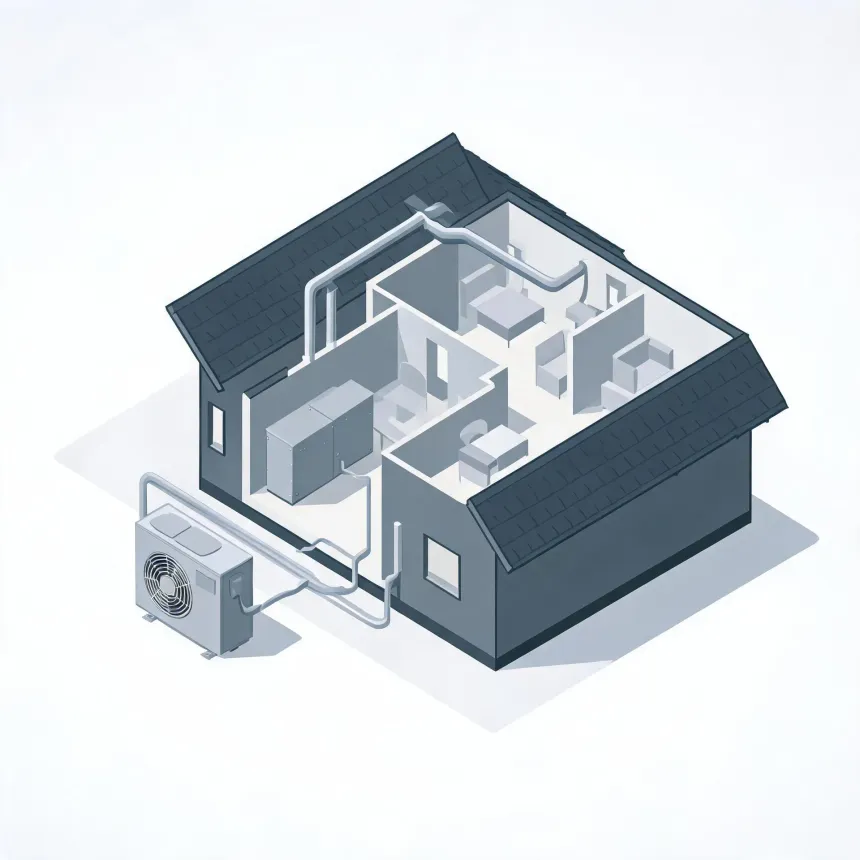
Isometric grayscale illustration of a cutaway house showing interior rooms, ductwork and an indoor air handler connected by lines to an outdoor condenser unit on the ground outside.
Your system heats November through March and cools May through September.

NOAA nClimDiv, 1991–2020 normals

Electricity in South Carolina runs 14.23 cents a kilowatt-hour, below the national average.

A heat pump still earns its keep on comfort and backup power, not on shaving a power bill that's already low.

Most homes here already run on electricity, so a heat pump is not a change in fuel

85.3% of homes heat with electricity
182 damaging wind events from 2015 to 2024
Power costs 14.23 cents a kWh statewide

Heat runs here from November through March, so October is the month to get a new system in. Wait until the first cold snap and you're choosing from whatever's in stock, on whoever's schedule has an opening. A contractor doing the work in October can size it right, test it, and walk you through the thermostat before you need any of it. The same goes for summer, with April as the month to beat before the heat sets in come May. Either way, the system is already running right by the time the house needs it to be.

Reliability first

Power is cheaper here, so the most efficient model takes longer to pay off. Reliability and fit matter more.

Find a contractor
A man in a dark long-sleeve shirt and tan work pants, seen from behind, climbs wooden porch steps toward a navy front door while carrying a canvas tool tote, with a potted flowering plant beside the entry.
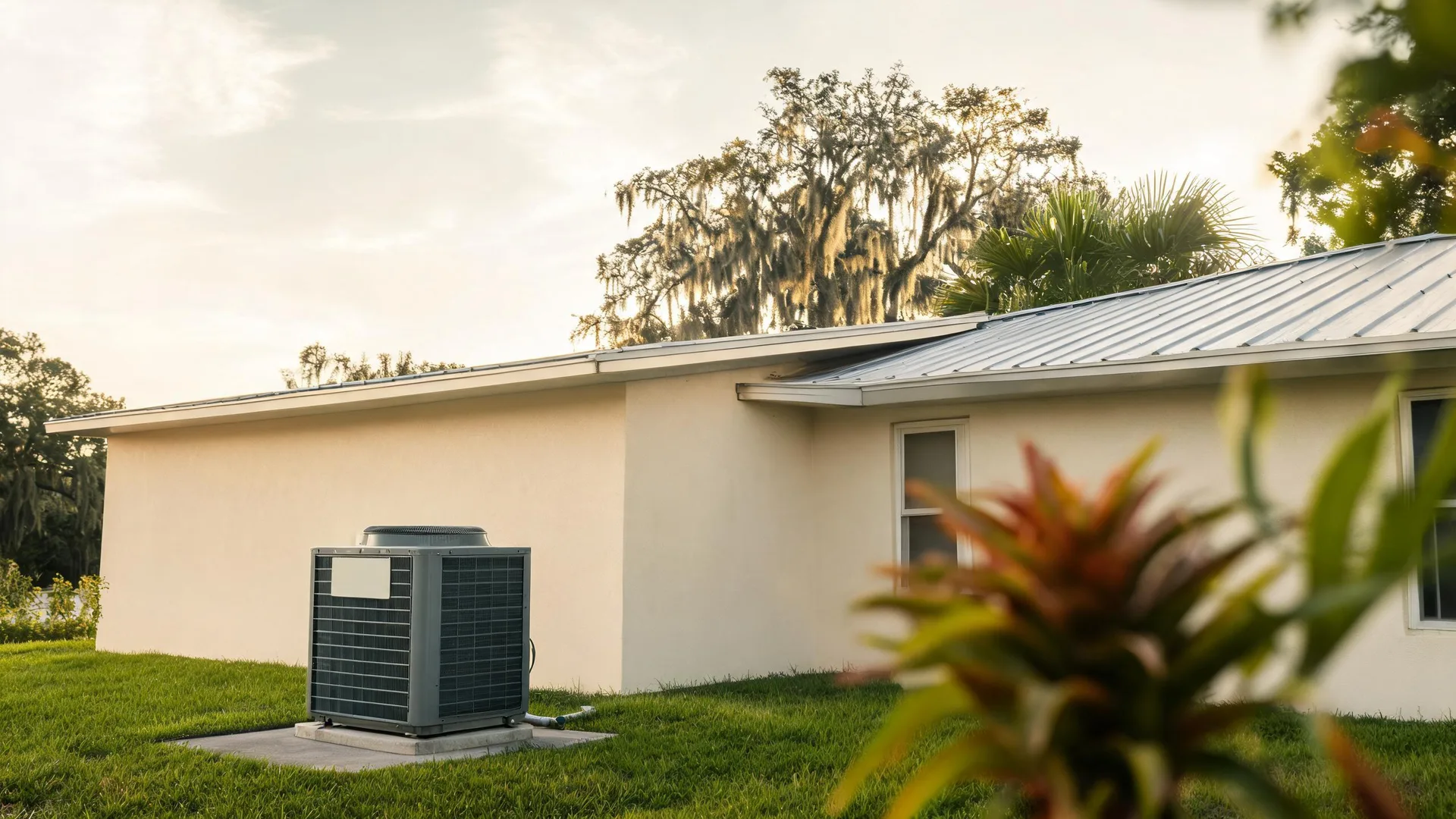
A residential heat pump outdoor unit mounted on a concrete pad next to a house with gray vinyl siding.

This runs through storms, not just seasons

Sumter County saw damaging wind 182 times between 2015 and 2024. That's weather moving through hard enough to knock out power, and a heat pump that loses power stops heating or cooling until it's back. Backup matters here more than in a calmer county. A contractor can wire in a generator connection or talk through battery backup options when the system goes in, rather than leaving it for the first outage to sort out.

Ask what happens below freezing

Every heat pump loses capacity as the outdoor temperature drops, and some lean on electric backup heat strips to make up the difference. Ask what the backup heat source is, when it kicks in, and whether the system was sized with that cold-weather drop in mind. A unit that looks efficient on paper can end up running expensive strip heat more often than it should if the sizing didn't account for it.

Ask what the warranty actually covers

A compressor warranty and a labor warranty are not the same thing, and a long parts warranty means little if the homeowner pays for the diagnostic and the hours to install the replacement part. Ask who registers the warranty, what voids it, and whether labor is covered and for how long. Some manufacturers require the original installer to do warranty work, which matters if that company is still around to call.

The old equipment does not just get left behind. A contractor recovers the refrigerant from the outdoor unit before disconnecting anything, since it is against the law to let it vent into the air. The outdoor unit, the indoor coil, and the old line set get hauled off, usually to a scrap recycler that strips out the copper and aluminum. If the house had a gas furnace paired with the old air conditioner, there is a choice to make. The furnace can come out, or it can stay in place as backup heat alongside the new heat pump. The old thermostat comes off the wall last, once the new one is wired in and tested.

Installation day starts outside with the pad and the electrical disconnect, then moves to setting the new outdoor unit and running the line set to the indoor coil. The lines get connected, pressure tested, then pulled into a vacuum to clear out moisture and air before any refrigerant goes in. Skip that step and moisture sits in the system, which eats at the compressor over time. Once the charge is in, the crew wires the thermostat, fires up the system, and checks the temperature split between the air going in and the air coming out. That number tells them whether the system is actually moving the heat it should, not just making noise. Before anyone leaves, the thermostat gets programmed and someone walks through how to use it, since a heat pump thermostat often works differently than what was on the wall before.